
Hydrothermal vent: deep-sea hot springs and their ecosystems
Seafloor openings where heated, mineral-rich water escapes; hosts unique chemosynthetic life, forms black/white smokers, influences ocean chemistry, and informs origin-of-life research.
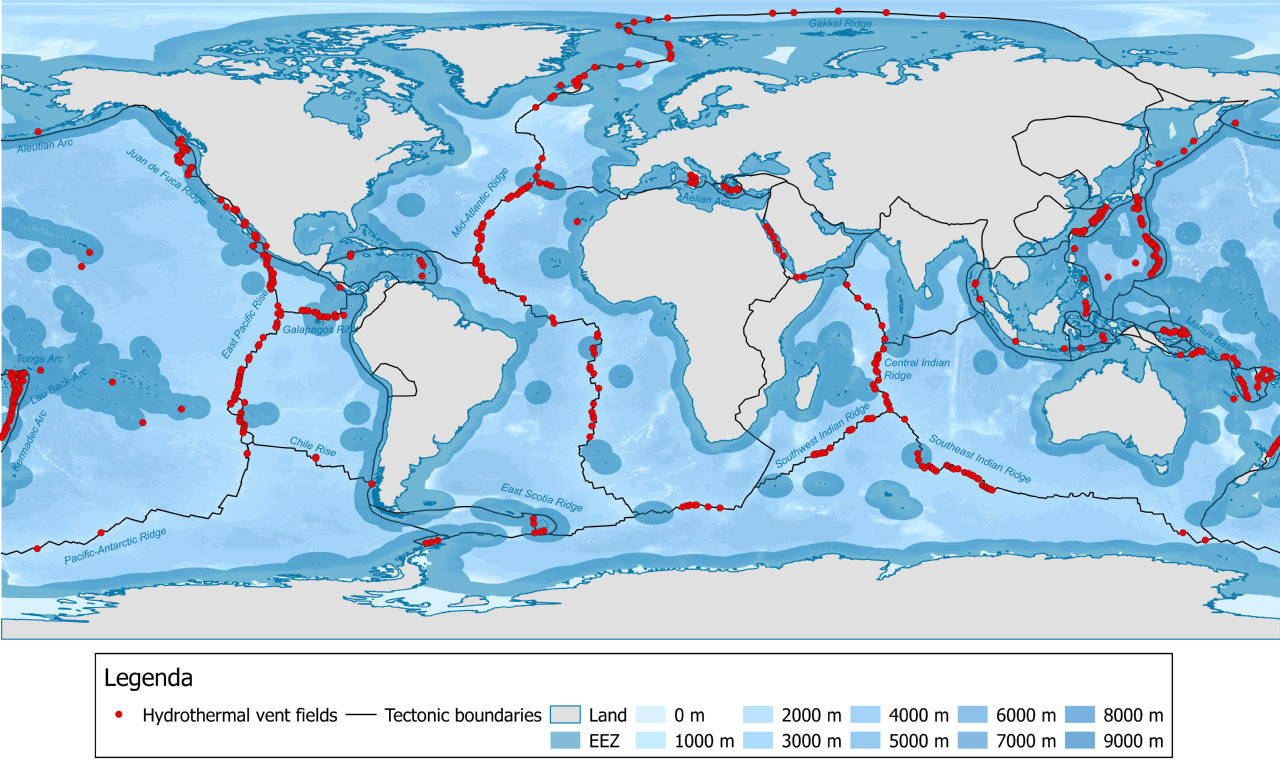
A hydrothermal vent is an opening in the Earth's crust on the ocean floor where seawater circulates into hot rock, is heated by geothermal energy, and flows back into the ocean carrying dissolved minerals. These features occur along mid-ocean ridges, volcanic arcs and other tectonically active areas. On land, similar processes produce hot springs, geysers and fumaroles; see hot springs, geysers and fumaroles for terrestrial analogues.
Image gallery
10 Images





Formation and types
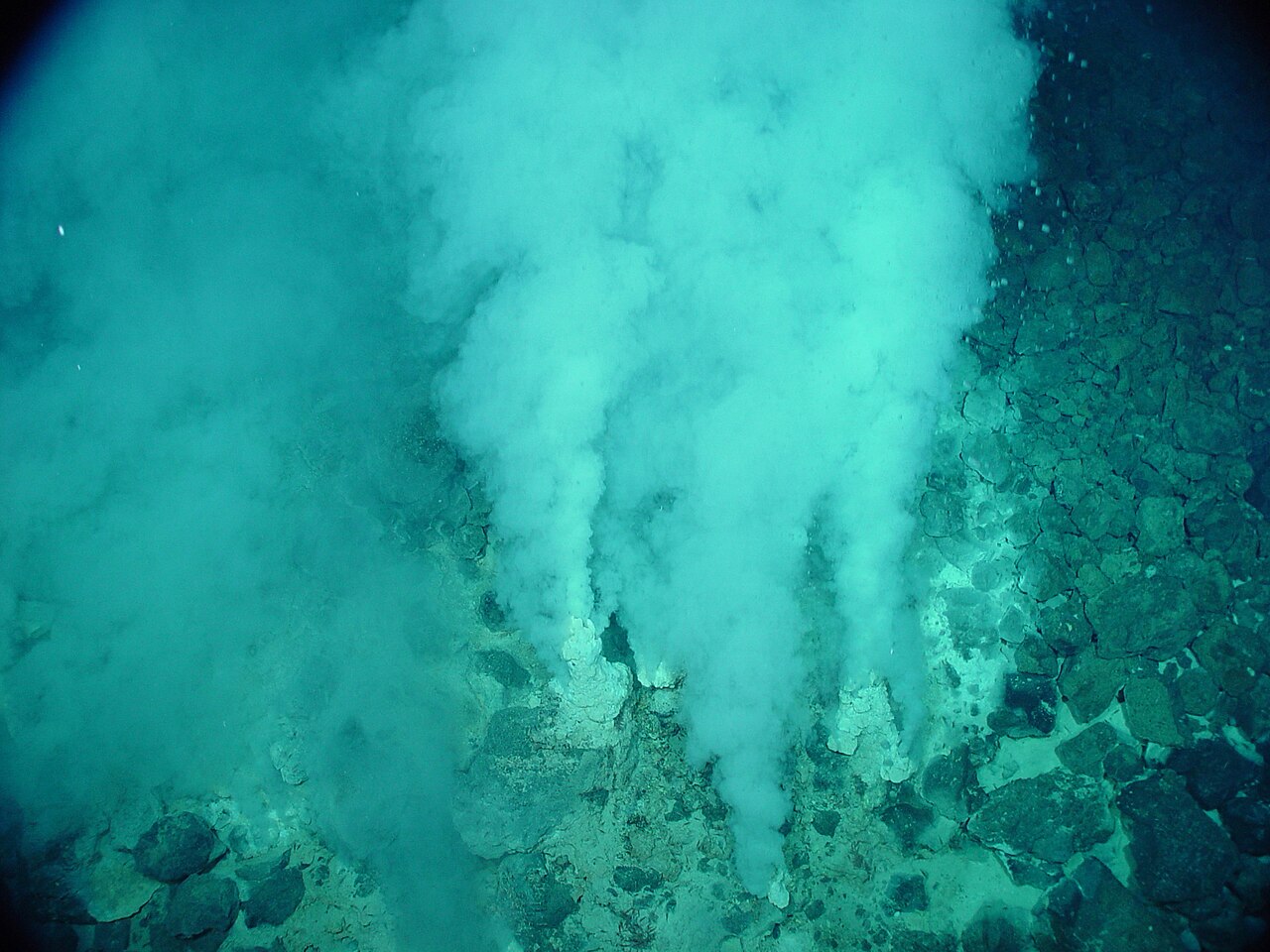
Seawater percolates through fractures in the seabed and is heated by magma or very hot rock. The heated fluid dissolves metals and sulfur compounds, then rises and mixes with cold seawater, precipitating minerals as it cools. High-temperature vents that emit dark, metal-rich plumes are called black smokers; see black smokers. Lower-temperature vents that deposit lighter minerals are sometimes labelled white smokers. Vents may also appear as diffuse-flow fields rather than focused chimneys.
Chemistry and physical characteristics
Vent fluids are chemically distinct from surrounding seawater: they can be enriched in sulfides, iron, manganese and other elements and can reach several hundred degrees Celsius before mixing lowers their temperature. The vent orifice itself is an opening in the seabed; geological surveys and maps note these features on the seabed and oceanic crust. Heat for vent circulation comes from geothermal energy released from the Earth's interior; see general background on geothermal energy.
Biological communities
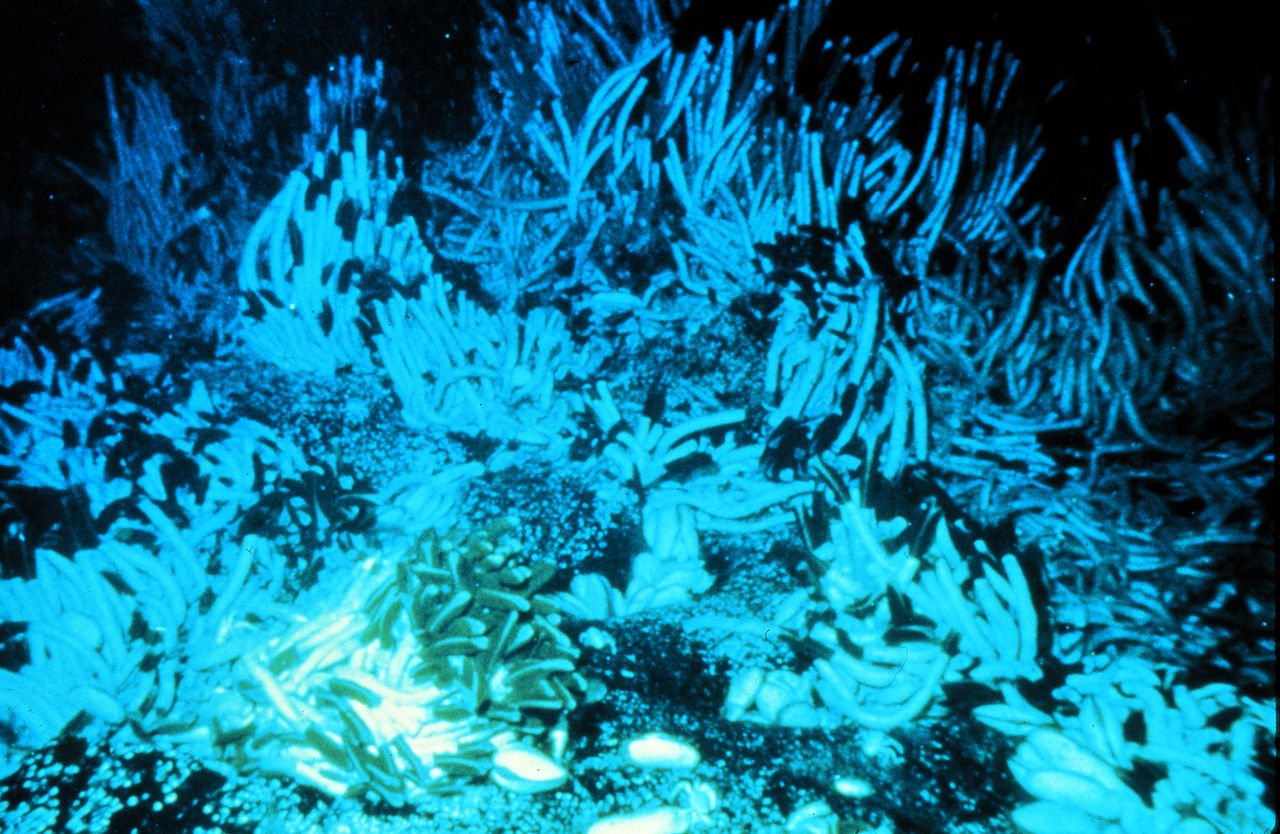
Hydrothermal vents sustain rich ecosystems that rely on chemosynthesis rather than sunlight. Archaea and bacteria oxidize hydrogen sulfide or methane to produce organic matter, supporting dense assemblages of animals such as tube worms (e.g., Riftia), clams, mussels, and vent shrimp. Microbial mats and endosymbiotic microbes are central to these communities. See links on specific groups: archaea, bacteria, tube worms, clams, shrimp, and other eukaryotes.
Scientific importance and human relevance
Vents are studied for their roles in ocean chemistry, mineral deposition, and as natural laboratories for extremophiles. Some researchers hypothesize that early life on Earth may have originated near vents because of steady chemical energy sources; this idea links vents to discussions about the origin of life. Vents also draw interest for biotechnology, novel compounds, and potential mineral resources, raising questions about conservation and deep-sea mining.
Observation and protection
Hydrothermal vents are explored by remotely operated vehicles and submersibles. Scientists map vent fields, sample fluids and organisms, and monitor environmental impacts. Many nations and international bodies are working to balance research, protection and resource use in vent regions.
- Key distinctions: black smoker (high-temperature, metal-rich) vs white smoker (cooler, different minerals).
- Typical inhabitants: chemosynthetic microbes, tube worms, clams, mussels, shrimp, and specialized predators and scavengers.
For more detailed summaries and visual material, consult oceanographic resources and expedition reports via institutional portals: seabed studies, ridge research, and dedicated geothermal and marine biology pages.
Questions and answers
Q: What is a hydrothermal vent?
A: A hydrothermal vent is an opening in the seabed of the Earth by which geothermal energy escapes.
Q: What happens when sea water enters a hydrothermal vent?
A: Sea water enters a hydrothermal vent, becomes very hot, and rises.
Q: What are black smokers?
A: The hottest vents carry many black chemicals and are called black smokers.
Q: What are white smokers?
A: Scientists have found fewer white smokers than black smokers.
Q: What other geothermal features are found on land?
A: If geothermal features are on land, they are usually hot springs, geysers, or fumaroles.
Q: What organisms live near hydrothermal vents?
A: Many archaea and bacteria live near hydrothermal vents, which support giant tube worms, clams and shrimp, and many other eukaryotes.
Q: What do scientists believe about the earliest known life forms?
A: Scientists believe that the earliest known life forms are thought to have lived near hydrothermal vents.
Related articles
Author
AlegsaOnline.com Hydrothermal vent: deep-sea hot springs and their ecosystems Leandro Alegsa
URL: https://en.alegsaonline.com/art/46124
Sources
- eprints.whiterose.ac.uk : "Evidence for early life in Earth's oldest hydrothermal vent precipitates"
- ui.adsabs.harvard.edu : 2017Natur.543...60D
- doi.org : 10.1038/nature21377
- nature.com : nature.com/articles/nature21377
- botos.com : "Life on a hydrothermal vent"
- divediscover.whoi.edu : "Hot Topics: Biogeography of deep-sea hydrothermal vent faunas"
- ncbi.nlm.nih.gov : "An obligately photosynthetic bacterial anaerobe from a deep-sea hydrothermal vent"
- doi.org : 10.1073/pnas.0503674102
- pubmed.ncbi.nlm.nih.gov : 15967984