
Giant panda (Ailuropoda melanoleuca)
Large black-and-white bear native to central China; bamboo specialist, conservation icon with distinctive adaptations, limited mountain range, and extensive protection and recovery efforts.
Overview
The giant panda (Ailuropoda melanoleuca) is a distinctive bear species known for its black-and-white coat, solitary habits and an unusual dietary specialization on bamboo. Endemic to south-central China, the giant panda is widely recognised as a flagship species for conservation and a cultural emblem. It occupies temperate mountain forests where dense bamboo growth provides the primary food source and the structural habitat it needs for shelter and breeding.
Image gallery
10 Images


Taxonomy and evolution
Taxonomically, the giant panda is placed within the bear family and is closely associated with other ursids; general overviews of the bear family are useful for context (bear family). Scientists classify the panda in the mammalian order taxonomic order and specifically identify it among the Carnivora, a group that includes many species with predominantly meat-based diets. Fossil evidence and molecular studies indicate that pandas diverged from other bears and developed their bamboo-specialist lifestyle over evolutionary time, retaining some carnivoran anatomical traits while adapting behaviourally and morphologically to plant feeding.
Physical description and adaptations
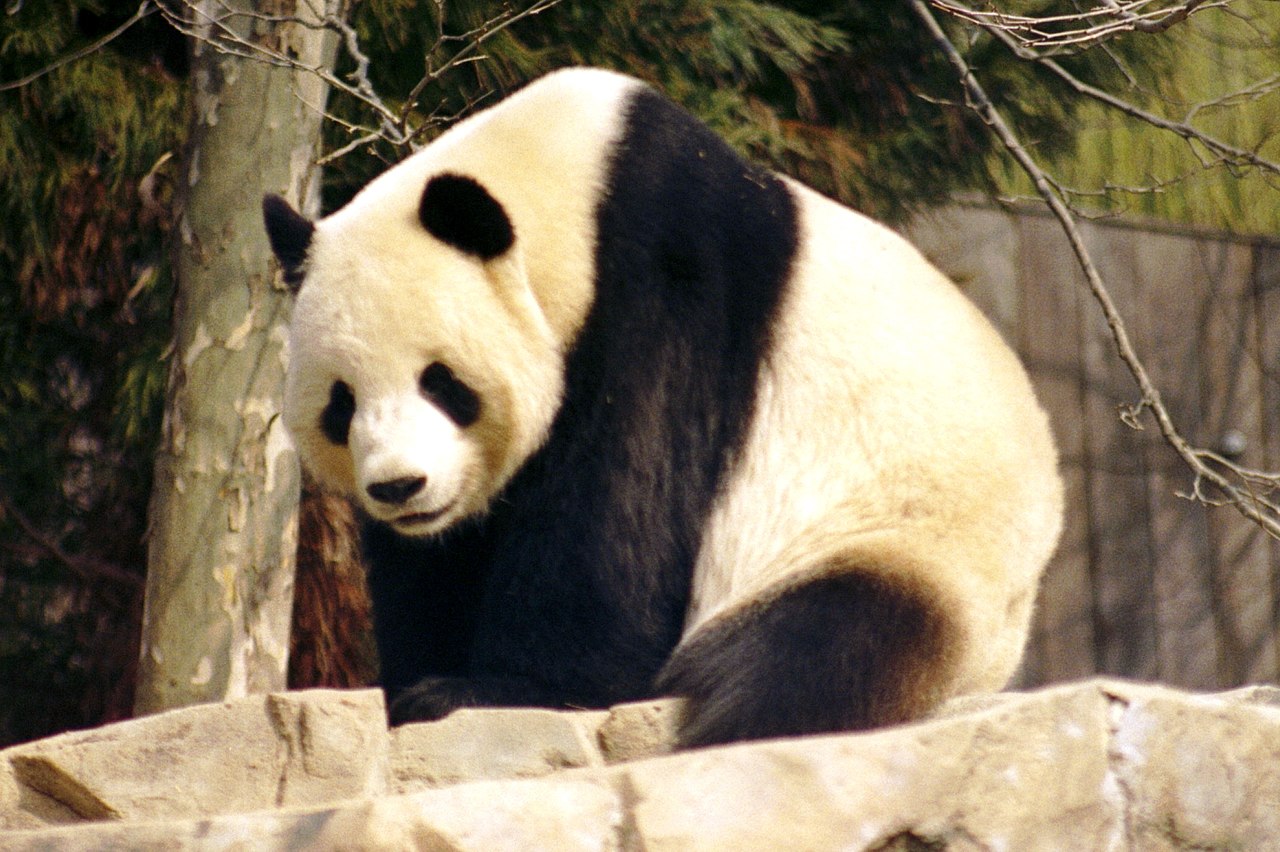
Giant pandas are robust, heavy-bodied mammals with thick fur that insulates them in cool, moist mountain environments. Their most conspicuous features are large dark eye patches, dark ears and limb markings set against a white body. They possess a modified wrist bone that functions as a pseudo‑thumb, allowing them to handle and strip bamboo stems more effectively. Despite their largely herbivorous feeding habits, pandas retain a carnivore-like digestive system and strong jaws and teeth adapted to crush tough bamboo.
Distribution and habitat
Wild giant pandas occur only in a few mountain ranges of central China. Most populations are found in Sichuan province, with smaller and more scattered groups in Shaanxi and Gansu. They prefer cool, moist forests at higher elevations where bamboo is abundant and accessible through the seasons. Historically, pandas occupied adjacent lowland woodlands as well, but agricultural expansion, infrastructure development and other human activities have fragmented and reduced their natural range; these regional ecosystems are often described under the broader heading of south-central China habitats.
Diet and feeding behaviour
Although classified among carnivores, giant pandas feed almost exclusively on bamboo species. They consume large quantities of leaves, shoots and stems to meet their energetic needs because their gut processes plant material inefficiently. In the wild, pandas may occasionally eat other wild plants, small animals such as rodents or birds, or carrion. In managed care, keepers supplement the diet with nutritionally appropriate items such as specially formulated biscuits, vegetables, eggs or fruit to ensure balanced intake and variety (captive diet), while research into bamboo ecology and seasonal food availability remains important for habitat management (bamboo ecology).
Reproduction and life history
Giant pandas are generally solitary outside the breeding season. Mating usually occurs during a specific period each year, and females give birth to one or two cubs after a short gestation. Twin births are not uncommon, but in the wild mothers typically rear one cub when resources are limited. Cubs are born very small, helpless and dependent on maternal care for many months; survival to independence requires protected habitat and undisturbed maternal nesting sites. Long-term survival also depends on maintaining habitat connectivity so young animals can disperse and find suitable territories.
Conservation status, threats and management
The species has faced threats from habitat loss, fragmentation, historic hunting and human encroachment. Deforestation and land conversion for agriculture, combined with infrastructure development, have been major drivers of range reduction and population isolation (deforestation and land-use change). In response, conservation measures include establishment of protected reserves, habitat restoration and corridor projects, captive-breeding programs and carefully managed reintroduction efforts, as well as legal protection and community-based conservation. These combined actions aim to reduce threats, improve habitat connectivity and support viable wild populations.
Research, cultural role and public engagement
Scientific study of the giant panda has provided insights into dietary specialization, behavioural ecology and the practical challenges of conserving large mammals in human-dominated landscapes. The species also plays an outsized role in culture and diplomacy, often featured in public education, international partnerships and what is sometimes referred to as "panda diplomacy". Public interest has helped mobilise funding and political support for broader biodiversity conservation programs that benefit many other species and ecosystems.
Further information
- Species: Ailuropoda melanoleuca, a bear with specialized bamboo feeding habits.
- Range: Restricted to mountain forests in central China with primary populations in Sichuan, and smaller groups in Shaanxi and Gansu.
- Diet: Nearly entirely bamboo, with occasional supplements in the wild and managed diets in captivity (bamboo, captive care).
- Conservation: Focused on protected areas, habitat recovery and captive-breeding as tools to maintain and expand wild populations (bear conservation context, taxonomic context, Carnivora context).
For general background and access to further references about the giant panda, its habitat and conservation programs, readers may consult authoritative institutional pages and regional ecosystem summaries (south-central China, threats and land use).
Questions and answers
Q: What is a giant panda?
A: The giant panda is a bear that lives in south central China.
Q: What is the giant panda's diet?
A: The giant panda's diet is 99% bamboo, but occasionally they eat other grasses, wild tubers, or even meat in the form of birds, rodents or carrion.
Q: What do captive pandas eat?
A: In captivity, pandas may get honey, eggs, fish, yams, shrub leaves, oranges, or bananas along with specially prepared food.
Q: Where does the giant panda live in China?
A: The giant panda lives in a few mountain ranges in central China, mainly in Sichuan province, but also in the Shaanxi and Gansu provinces.
Q: Why has the giant panda been driven out of certain areas?
A: The giant panda has been driven out of the lowland areas where it once lived as a result of farming, deforestation and other development.
Q: Is the giant panda a carnivore?
A: Although it belongs to the order Carnivora, the giant panda's diet is primarily bamboo, making it an herbivore.
Q: What are some other foods that pandas eat besides bamboo?
A: Pandas in the wild occasionally eat other grasses, wild tubers, or even meat in the form of birds, rodents or carrion. In captivity, they may get honey, eggs, fish, yams, shrub leaves, oranges, or bananas along with specially prepared food.
Related articles
Author
AlegsaOnline.com Giant panda (Ailuropoda melanoleuca) Leandro Alegsa
URL: https://en.alegsaonline.com/art/38712
Sources
- iucnredlist.org : "Ailuropoda melanoleuca"
- animal.discovery.com : "Giant Panda"
- nationalzoo.si.edu : "Giant Pandas"
- nationalzoo.si.edu : "Giant Pandas"
- english.people.com.cn : "Giant Panda, symbol of China, shed happiness at the world's zoos"
- news.xinhuanet.com : "Panda message make foreigners more aware of China"
- serendip.brynmawr.edu : "The Giant Panda"
- femexplorers.com : "The Panda Lady: Ruth Harkness (Part 1)"
- time.com : "China's Panda Diplomacy"
- giantpandazoo.com : "On this page you can find information about the giant pandas who live outside of China"
- giantpandazoo.com : "Zoologischer Garten Berlin"
- news.yahoo.com : "Panda gives surprise birth in Austria"
- lifeinthefastlane.ca : "Pandas sent off to Spain"
- msnbc.msn.com : "China experts say Thailand's panda cub healthy"
- physorg.com : "Giant panda pair headed for Tokyo zoo"