
Giant squid (Architeuthis): the deep‑ocean cephalopod
Large deep-ocean squid of the genus Architeuthis, known for great length, huge eyes, elusive behavior, and cultural impact; filmed alive only in the 21st century.
Overview
The giant squid is a common name applied to large deep-ocean cephalopods in the genus Architeuthis. These animals are notable for their extreme size, reclusive life in deep waters, and a long history of being known mostly from carcasses washed ashore or recovered from predators. Estimates of maximum length commonly cited put adult females at about 12–13 metres and males somewhat smaller, measured from the tail end of the mantle to the tips of the two long feeding tentacles. The group is cosmopolitan in cold and temperate oceans but is rarely seen by humans.
Image gallery
10 Images


Anatomy and distinguishing features
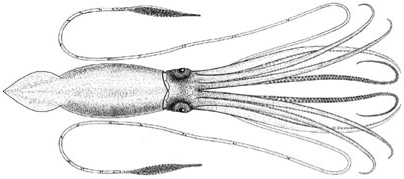
Giant squid share the standard cephalopod body plan: a muscular mantle enclosing most organs, a head with large eyes, eight short arms, and two long tentacles specialized for seizing prey. Their arms and tentacles bear rows of suckers, often reinforced with toothed rings that help grip slippery prey. A strong, chitinous beak sits at the base of the arms and is used to tear flesh. Giant squid also possess a radula (a tongue-like structure) and a complex nervous system typical of advanced molluscs.
- Major parts: mantle, fins, head, eyes, eight arms, two tentacles, beak.
- Vision: among the largest eyes in the animal kingdom, adapted for low-light deep water.
- Movement: jet propulsion by expelling water from the mantle cavity; fins for slow steering.
Behavior, diet, and ecology
Giant squid are deep-dwelling predators that feed on fish and other squid, using their long tentacles to snatch prey and pull it toward the beak. Much of what is known comes from stomach contents of predators such as sperm whales (which often carry scars from giant squid suckers), and from remains found floating or stranded. Reproductive behavior and many life-history details remain poorly documented because live animals are seldom observed.
History of observation and scientific study
For centuries giant squid existed primarily in sailors' tales and as finds of washed-up or net-caught carcasses. Photographic evidence of live animals in their natural habitat arrived only in the early 21st century: researchers captured the first still images of a live giant squid in 2004, and the same group obtained the first film of a live adult in 2006. Contemporary field work and deep-sea technology have gradually improved understanding of their behavior and distribution, but many aspects remain uncertain.
Research teams and institutions involved in these milestones are often cited in the scientific and popular literature; for example, the Japanese team that made early in situ observations is frequently mentioned in accounts of the 2004 and 2006 records (see report).
Taxonomy and related species
The taxonomy of giant squid is a subject of ongoing study. While Architeuthis dux is often used as a species name, genetic and morphological work has led some scientists to propose multiple species within the genus. A related and sometimes larger species, commonly called the colossal squid, belongs to a different genus and is notable for heavier, more robust body form.
Taxonomic and species-level questions are still debated and require broader sampling and genetic analysis to resolve; authoritative summaries can be found in modern cephalopod reviews and databases (taxonomic notes).
Cultural significance and notable facts
Giant squid have inspired nautical legends such as the kraken and have been portrayed in literature and art as mysterious leviathans. Scientific interest stems from their extreme adaptations to deep-sea life, their interactions with large predators, and their role in marine ecosystems. Museum specimens and educational exhibits often display beaks, tentacle scars, and skeletonized remains that provide important anatomical and ecological information.
For further reading on identification, occurrences, and historical records consult primary sources and compilations from research institutions (size and measurements, anatomy summaries, colossal squid comparison, myth and folklore, genus overview, field accounts, taxonomy resources).
Questions and answers
Q: What is a giant squid?
A: A giant squid is a deep-ocean dwelling squid that can grow to a tremendous size.
Q: What is the maximum size of a female giant squid?
A: The maximum size of a female giant squid is estimated to be 12-13 meters (39-43ft) from caudal fin to the tip of the two long tentacles.
Q: What is the maximum size of a male giant squid?
A: The maximum size of a male giant squid is estimated to be 10 meters (33ft) from caudal fin to the tip of the two long tentacles.
Q: When were the first images of a live giant squid taken?
A: The first images of a live giant squid were taken on September 30, 2004.
Q: Who took the first images of a live giant squid?
A: Researchers from Japan took the first images of a live giant squid.
Q: When was a live adult giant squid filmed for the first time?
A: A live adult giant squid was filmed for the first time on December 4, 2006.
Q: What is the Kraken?
A: The Kraken is believed to be a giant squid.
Related articles
Author
AlegsaOnline.com Giant squid (Architeuthis): the deep‑ocean cephalopod Leandro Alegsa
URL: https://en.alegsaonline.com/art/38714
Sources
- iucnredlist.org : "Architeuthis dux"
- doi.org : 10.2305/IUCN.UK.2014-1.RLTS.T163265A991505.en
- doi.org : doi.org/10.7717/peerj.715
- replay.waybackmachine.org : Amazing specimen of world's largest squid in NZ
- tonmo.com : "Giant Squid and Colossal Squid Fact Sheet".
- rspb.royalsocietypublishing.org : First-ever observations of a live giant squid in the wild.
- foxnews.com : "Japanese researchers capture giant squid"
- theage.com.au : "New squid on the (ice) block"
- anp.gov.br : A review of the records of giant squid in the north-eastern Atlantic and severe injuries in Architeuthis dux stranded after acoustic explorations.