
Gansu Province, China: geography, history, economy and culture
Gansu is a northwestern province of the People's Republic of China centered on the Hexi Corridor. It links the Chinese heartland to Central Asia and is known for Silk Road sites, deserts and large wind farms.
Gansu is a province in northwestern China with Lanzhou as its capital. Covering roughly 454,000 km², the province stretches from mountain ranges in the south to arid plains and desert in the north and serves as a transitional zone between the Tibetan Plateau and the Eurasian steppe. Its population is about 26 million people (recent estimates), most of whom are ethnic Han, alongside sizable Hui, Tibetan, Mongol and other minority communities. Lanzhou is the political and transport hub.

Image gallery
10 Images


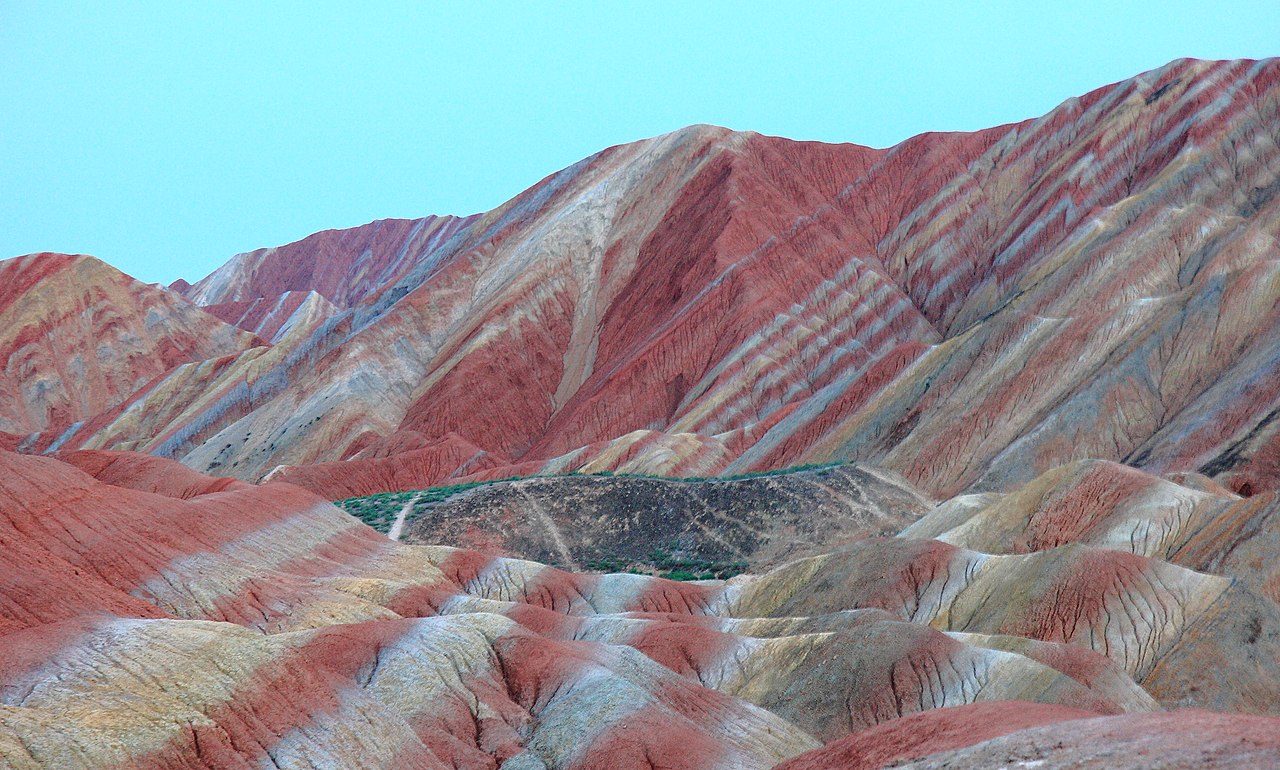


Geography and climate
Gansu's landscape is varied: rugged mountain chains and highland basins lie in the south, while the north opens onto the Gobi and semi-desert areas. The province contains the narrow, strategically important Hexi Corridor — a historic route for trade and migration. The Yellow River cuts across the southern part of Gansu, providing irrigation and fertile river valleys amid an otherwise dry region. The province experiences a continental, largely arid to semi-arid climate with cold winters and hot summers; precipitation is uneven and declines from southeast to northwest. For general climate context see continental climates.
History and cultural significance
Gansu occupies much of the overland routes collectively called the Silk Road; for centuries these corridors linked central China with Central Asia, the Middle East and farther west. Many of the region's most famous cultural sites—stone caves, ancient watchposts and frontier forts—grew from this role as a crossroads. Dunhuang's Mogao Caves, the Jiayuguan fort at the western end of the Great Wall, and Buddhist and Tibetan monasteries reflect the province's ethnic and religious diversity. The province's modern name appears in Chinese both in simplified and traditional characters; its pinyin spelling is shown via pinyin and older Romanizations such as Wade–Giles appear in historical sources.
Economy and infrastructure
Gansu's economy mixes agriculture, resource extraction and renewable energy. Irrigated valleys produce wheat, maize, fruits and vegetables where water allows; dryland areas support pastoralism. The province is also known for mineral deposits and energy projects. In recent decades large wind-energy developments have been built on the open northern plains; the multi-site Gansu wind project is among the largest onshore wind initiatives in the world. See more about regional energy projects at Gansu Wind Farm. Major rail and road corridors pass through Gansu, linking eastern Chinese industrial centers with western provinces and international routes.
Demographics and society
Ethnically, the province is majority Han Chinese with important minority populations, including Hui Muslims and Tibetan communities, each contributing language, cuisine and religious traditions. Urban centers such as Lanzhou concentrate industry, education and medical services, while rural areas remain less densely populated and more traditional in economy and lifestyle. For a basic demographic reference see Han Chinese and regional sources on minority groups.
Notable places and tourism
- Mogao Caves near Dunhuang — a world-famous complex of Buddhist grottoes and murals.
- Jiayuguan Pass — a major frontier fortification at the western end of the Ming Great Wall.
- Zhangye Danxia — colorful, layered rock formations valued for geology and scenery.
- Labrang and other monasteries in southern Gansu — important centers of Tibetan Buddhism.
- Yellow River landscapes and riverine agriculture where the Yellow River flows through the province.
Gansu's location has long made it a corridor of movement and exchange. Today it remains strategically important for transportation, energy and cultural heritage, with a mix of natural environments and historical sites that reflect its role between China's interior and the wider Eurasian world. For the province's role within the modern state see People's Republic of China, and for desert and steppe contexts consult resources on the Gobi Desert. Additional practical and historical references are available through regional studies and travel guides (simplified name, traditional name).
Readers seeking older transliterations or historical maps may find references under alternate spellings such as Wade–Giles. For an introductory pronunciation guide see pinyin.
Questions and answers
Q: What is the capital of Gansu?
A: The capital of Gansu is Lanzhou, located in the southeast part of the province.
Q: How many people live in Gansu?
A: As of 2010, about 25,575,000 people were living in Gansu; as of 2018, this number has increased to 26,257,000.
Q: What is the climate like in Gansu?
A: Gansu Province has a dry continental climate with cold winters and hot summers.
Q: What type of terrain can be found in Gansu?
A: The terrain in Gansu is mostly mountainous in the south but flat in the north. It also contains parts of both the Gobi Desert and Yellow River.
Q: What is unique about Gansu?
A: One unique feature about Gansu Province is that it contains the geographical centre of China. Additionally, it houses the world's biggest wind farm on land - known as 'Gansu Wind Farm'.
Q: What ethnic group makes up most of its population?
A: Most people living in Gansu are Han Chinese.
Q:What language do they speak there ? A:The primary language spoken by most people living inGan suis Mandarin Chinese
Related articles
Author
AlegsaOnline.com Gansu Province, China: geography, history, economy and culture Leandro Alegsa
URL: https://en.alegsaonline.com/art/37493
Sources
- chamiji.com : "2018年全国各省人口总数排行榜-世界人口大全-2017年 2018年"