
Giant salamander (family Cryptobranchidae)
Large, fully aquatic salamanders of the family Cryptobranchidae, including the Chinese and Japanese giants and the North American hellbender; notable for great size, flattened bodies, and conservation concerns.
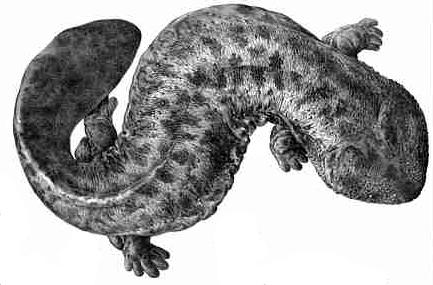
The giant salamanders are a small family of very large, fully aquatic amphibians, classified in the family Cryptobranchidae. These animals are the largest living amphibians: Asian species in the genus Andrias include individuals reported to reach great lengths, while the North American species is commonly known as the hellbender. Giant salamanders are adapted to life in cool, well‑oxygenated streams and lakes and are predominantly nocturnal predators.
Image gallery
10 Images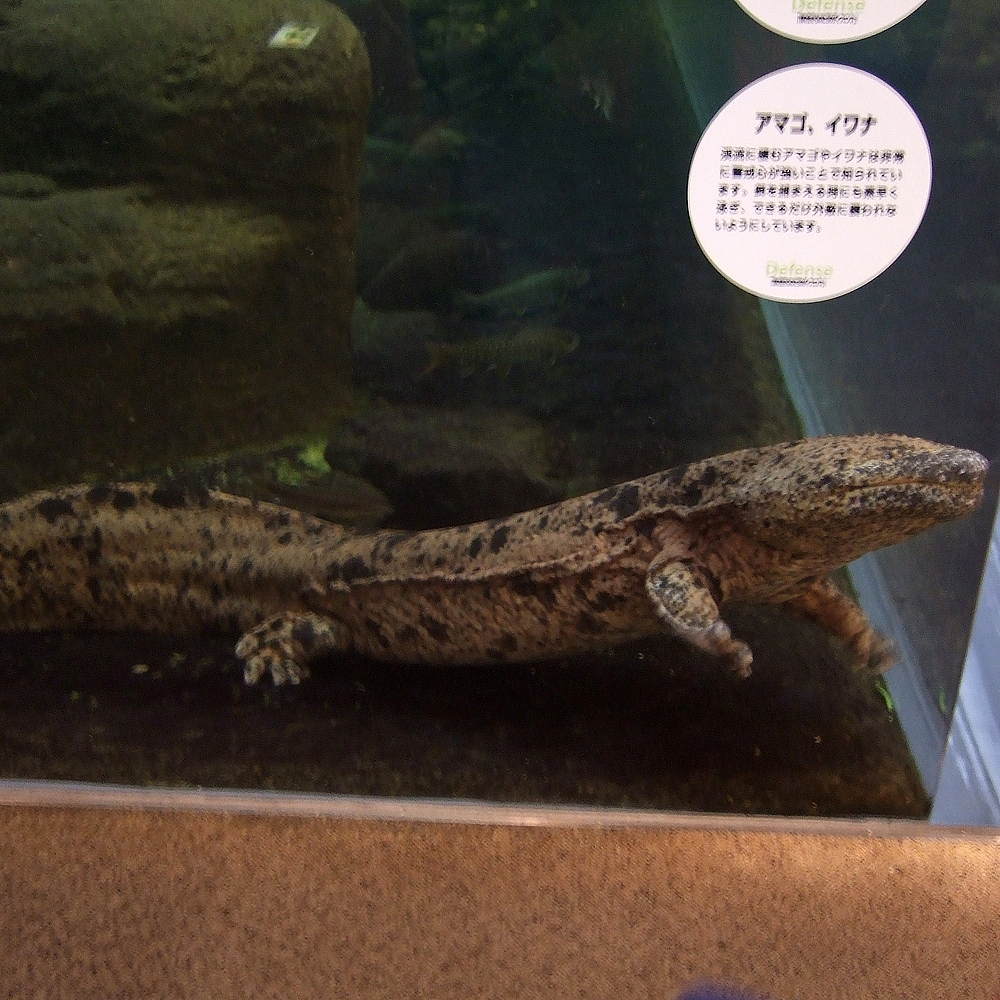



Key characteristics
Giant salamanders share a set of distinctive physical traits. They have broad, flattened bodies and heads, small eyes, and loose, wrinkled skin along the sides of the body that increases the surface area for cutaneous gas exchange. Adults lack external gills and rely largely on skin and mouth‑lining respiration. Their diet consists mainly of aquatic prey such as small fish fish and crustaceans crustaceans, and they use suction and ambush tactics to capture food.
Size, lifespan and examples
Size varies by species. The Japanese giant salamander can reach lengths reported up to about 1.44 m and has been recorded living more than 50 years in captivity. The Chinese giant salamander is larger still in some reports, with individuals approaching 1.8 m. The North American hellbender is markedly smaller than the largest Asian forms but is still one of the largest salamanders alive. These figures reflect maximum reported sizes; most adults are smaller.
Distribution and habitat
Members of the family are strictly aquatic and inhabit clear, fast‑flowing streams, springs and connected ponds with abundant cover such as large rocks and submerged logs. In general they are associated with cool, well‑oxygenated waters. Populations occur in eastern North America — the hellbender lives in rivers and brooks in the eastern United States — and in East Asia, notably in China and Japan. Their habitat preferences make them sensitive to changes in water quality and stream structure; they are not well adapted to warm, stagnant waters or heavily polluted systems. See also habitats described as brooks and ponds in regional guides.
Reproduction and life history
Reproductive behavior in giant salamanders typically involves seasonally timed breeding in flowing water. Many species exhibit nest‑building and parental care: males may prepare a nest under a rock or log, where females deposit eggs and the male guards them until they hatch. Young salamanders go through an aquatic larval stage before maturing into fully aquatic adults. Longevity is high for amphibians; in captivity some individuals have lived for decades.
Conservation and human interactions
Giant salamanders face a range of conservation threats, chiefly habitat degradation, water pollution, and overharvesting in parts of their range. The Chinese giant salamander, in particular, has experienced severe declines linked to harvesting and habitat loss, and many populations are fragmented and at risk. Conservation actions include habitat protection, captive‑breeding and reintroduction programs, and efforts to reduce pollution and illegal capture. These species also appear in local cultures and historical records, and they attract interest from researchers studying physiology, evolution and conservation biology. For more on their aquatic adaptations, see general references to aquatic amphibian biology.
Notable distinctions
- Taxonomy: The family includes genera such as Andrias (Asian giant salamanders) and Cryptobranchus (the hellbender in North America).
- Respiration: Adults rely heavily on cutaneous respiration aided by skin folds rather than external gills.
- Conservation status: Many populations are threatened or declining; their sensitivity to water quality makes them useful indicators of freshwater ecosystem health.
For species accounts and conservation resources consult specialist databases and regional amphibian guides; introductory overviews and taxonomic details are available through institutional and scientific references (Cryptobranchidae family summaries, regional species pages such as those for the eastern United States, China and Japan). Additional habitat and natural history information can be found in resources describing brooks and ponds and aquatic ecosystems (aquatic amphibian guides). Research and conservation organizations often provide species profiles and recovery plans (conservation, ecology).
Questions and answers
Q: What are giant salamanders?
A: Giant salamanders are a family of large aquatic amphibians, the Cryptobranchidae. They are the largest living amphibians.
Q: How big can the Japanese giant salamander grow?
A: The Japanese giant salamander can reach up to 1.44 m (4.7 ft) in length.
Q: What do giant salamanders feed on?
A: Giant salamanders feed on fish and crustaceans.
Q: How long can a Japanese giant salamander live in captivity?
A: A Japanese giant salamander has been known to live for more than 50 years in captivity.
Q: What is the Chinese giant salamander?
A: The Chinese giant salamander is a type of giant salamander that can reach a length of 1.8 m (5.9 ft).
Q: Where do giant salamanders live in the United States?
A: Giant salamanders live in brooks and ponds in the eastern United States, specifically the hellbender variety.
Q: What countries are giant salamanders found in?
A: Giant salamanders are found in China, Japan, and the eastern United States.
Related articles
Author
AlegsaOnline.com Giant salamander (family Cryptobranchidae) Leandro Alegsa
URL: https://en.alegsaonline.com/art/38713
Sources
- dec.state.ny.us : Eastern Hellbender Fact Sheet
- caudata.org : Japanese Giant Salamander
- caudata.org : Cryptobranchid Interest Group · web.archive.org · web.archive.org
- web.archive.org : Facts
- web.archive.org : Status