
Gentianaceae — the gentian family of flowering plants
Gentianaceae is a cosmopolitan family of about 80–90 genera and roughly 1,500 species of herbs, shrubs and occasional trees, notable for bitter compounds, showy tubular flowers and some mycoheterotrophs.
The Gentianaceae, commonly called the gentian family, comprises about 80–90 genera and roughly 1,500 species of flowering plants distributed worldwide. Members range from small alpine herbs to shrubs and a few tree-like forms. The family is especially noted for its often vivid, funnel-shaped or tubular flowers and for producing intensely bitter secondary metabolites that have long been used in traditional medicine and flavourings. For an accessible overview see family summary.
Image gallery
3 Images
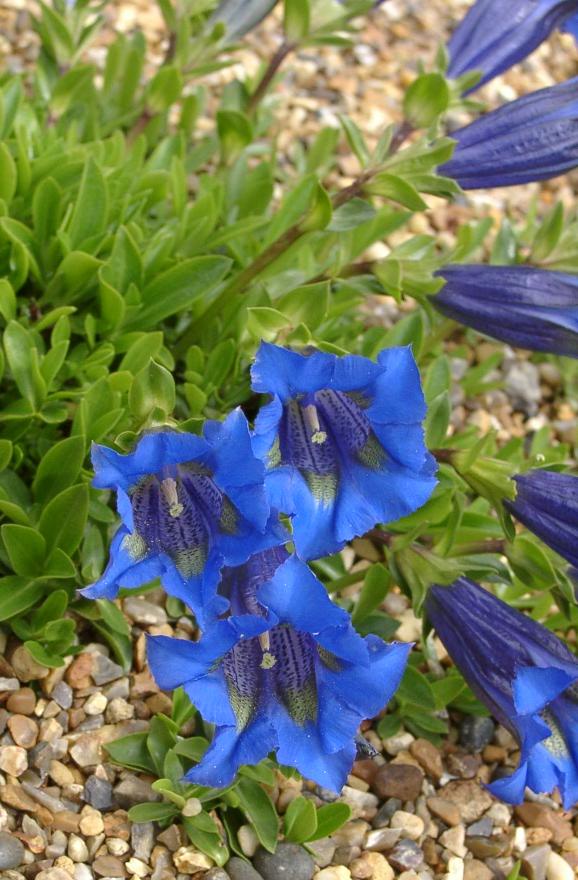

Key characteristics
Plants in the family share a suite of morphological traits that aid identification. Leaves are most often simple and opposite (occasionally alternate), and stipules are absent. Flowers are typically bisexual and sympetalous (petals fused into a corolla tube) with a calyx of four or five lobes. Stamens are usually equal in number to the corolla lobes and attached to the corolla, and the ovary is commonly superior. Fruits are most often dry capsules containing numerous small seeds.
- Leaves: simple, usually opposite; no stipules.
- Flowers: sympetalous corolla, tubular or funnel-shaped; often brightly coloured.
- Reproductive structures: stamens attached to corolla; superior ovary.
- Fruit and seed: typically a capsule with many minute seeds.
Distribution and habitat
The family is cosmopolitan and occurs on most continents, with diversity peaking in temperate regions and montane tropics. Many species are adapted to open, well-drained habitats such as alpine meadows, grasslands and rocky slopes, while others occupy forest understories or wetland margins. Regional floras and checklists provide detailed treatments for particular areas; consult regional references and global plant lists such as taxonomic databases.
Biology and ecology
Most gentians are photosynthetic and attract a range of pollinators — bees, butterflies and sometimes birds — with colourful corollas and nectar rewards. Floral shape and colour often reflect pollination syndromes. Seed dispersal is generally passive, by wind or surface movement of tiny seeds from dehiscent capsules.
Notably, several genera contain species that are achlorophyllous and mycoheterotrophic. These plants lack normal photosynthesis and obtain carbon and nutrients indirectly via symbiotic fungi that decompose organic matter or associate with other plants. Voyria and related taxa are examples of obligate mycoheterotrophs within the family.
Chemistry and human uses
Gentianaceae are rich in bitter iridoid glycosides (for example gentiopicroside and amarogentin) and other secondary metabolites. Bitters prepared from roots of some Gentiana species have traditional uses in treating digestive complaints and are ingredients in aperitifs and liqueurs. Several species are cultivated for ornamental value because of their showy flowers. For horticultural guidance see horticulture guides and for ethnobotanical information consult ethnobotanical sources.
Taxonomy, notable genera and conservation
The family is placed in the order Gentianales and has been subject to taxonomic revision as molecular studies refine relationships. Well-known genera include Gentiana, Gentianella, Swertia, Centaurium and Exacum. Ongoing research and checklists help clarify circumscription and species limits; see phylogenetic resources and taxonomic databases at reference databases.
Conservation concerns vary by region: some high-altitude specialists face habitat loss from land-use change and climate shifts, and wild harvesting for medicinal use can threaten local populations. Conservation assessments and priorities are documented in specialist portals and assessments; further information is available at conservation portals.
For further reading and detailed species information consult regional floras, monographs and major plant databases listed above.
Related articles
Author
AlegsaOnline.com Gentianaceae — the gentian family of flowering plants Leandro Alegsa
URL: https://en.alegsaonline.com/art/38070