
Ginseng (Panax): overview, species, uses and conservation
Ginseng (genus Panax) is a group of slow-growing perennial plants with fleshy roots prized in traditional medicine. This article summarizes species, appearance, uses, cultivation and conservation issues.
Ginseng is the common name for several species in the genus Panax, members of the family Araliaceae. These are slow-growing, shade-loving perennials with fleshy, often forked roots and compound leaves. Wild and cultivated plants occur across the Northern Hemisphere, especially in temperate woodlands, and have been used as medicinal and tonic herbs for centuries.
Image gallery
9 Images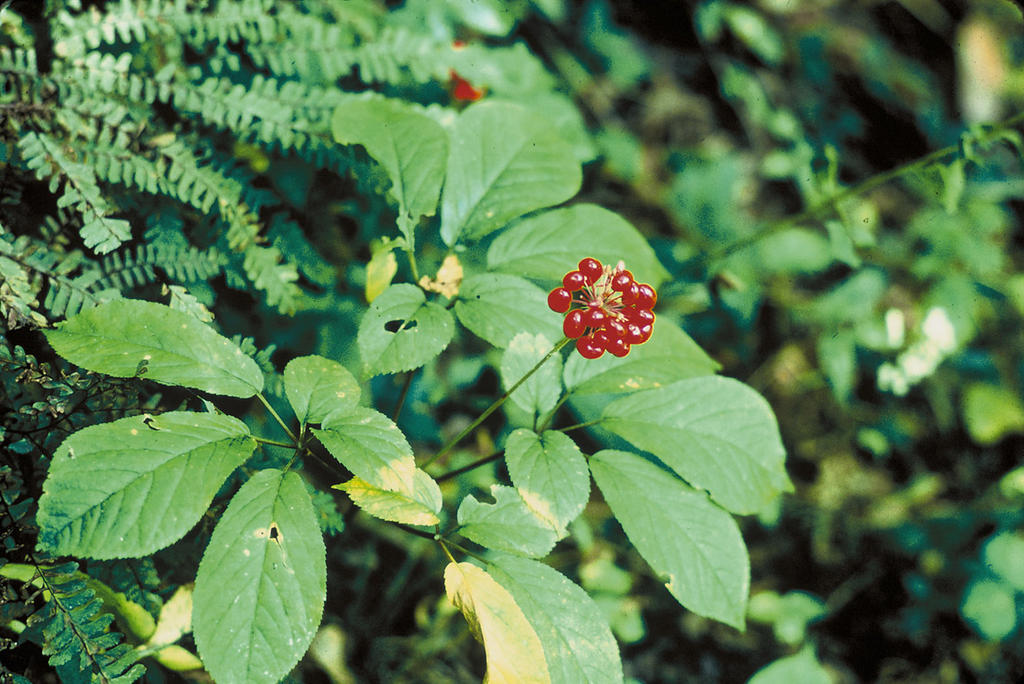


Characteristics
Ginseng plants typically form a single stem with paired leaflets, umbels of small flowers and red berries. The thickened root is the plant's most valued part; it contains a class of compounds known as ginsenosides, which are widely studied for pharmacological activity. In traditional systems ginseng is described as an adaptogen — a substance believed to help the body resist physical and mental stress — though modern research shows mixed results and varies by species and preparation.
Distribution and notable species
Most true ginseng species occur in eastern Asia, with centers of diversity including northern China and mountainous Korea. Some species reach eastern Siberia. North America is home to Panax quinquefolius (American ginseng). A southern outlier, Panax vietnamensis, was identified in Vietnam. Cultivated and wild-harvested varieties are both sold; distinguishing species can be important because traditional uses and chemical profiles differ.
Common species and distinctions
- Panax ginseng (Asian or Korean ginseng): commonly used in East Asian herbal medicine.
- Panax quinquefolius (American ginseng): native to eastern North America and used in different traditional contexts.
- Panax notoginseng and other species: used regionally for specific therapeutic purposes.
- Note: "Siberian ginseng" is a commercial name sometimes applied to unrelated plants (e.g., Eleutherococcus species) and is not a true Panax ginseng.
Uses, cultivation and conservation
Ginseng roots are sold fresh, dried, sliced, or as extracts and supplements. They appear in traditional formulations as well as in modern nutraceuticals. Evidence for health benefits varies by condition and by species; ginsenosides are active research targets. Because plants are slow to mature, wild populations have been reduced in some areas by overharvest and habitat loss. As a result, cultivation, regulated harvests and conservation measures exist in various jurisdictions to protect wild stocks and ensure sustainable trade.
Aside from scientific names, the word "ginseng" derives from an East Asian term often translated as "man root," a nod to the root's shape in some plants and its long cultural association with vitality. When using ginseng products, consumers should consider species identity, quality, and possible interactions with medications, and consult qualified health professionals for medical advice.
For further taxonomic or distribution details see links in this article: genus information (Panax), family overview (Araliaceae), broader range (Northern Hemisphere) and regional notes for eastern Asia, northern China, Korea, eastern Siberia and Vietnam.
Related articles
Author
AlegsaOnline.com Ginseng (Panax): overview, species, uses and conservation Leandro Alegsa
URL: https://en.alegsaonline.com/art/38903