
Gesneriaceae: the African violet family of flowering plants
A family of mostly tropical and subtropical flowering plants (about 147 genera, 3,200 species) notable for ornamentals such as African violets and gloxinias; overview, traits, taxonomy, uses.
The Gesneriaceae are a diverse family of flowering plants within the order Lamiales. Comprising roughly 147 genera and about 3,200 species, members of this family are primarily tropical and subtropical and range from small terrestrial herbs to somewhat woody shrubs and epiphytes. Several genera have become familiar in cultivation, most famously the African violets, as well as gloxinias and streptocarpus, prized for their showy, often tubular flowers.
Image gallery
9 Images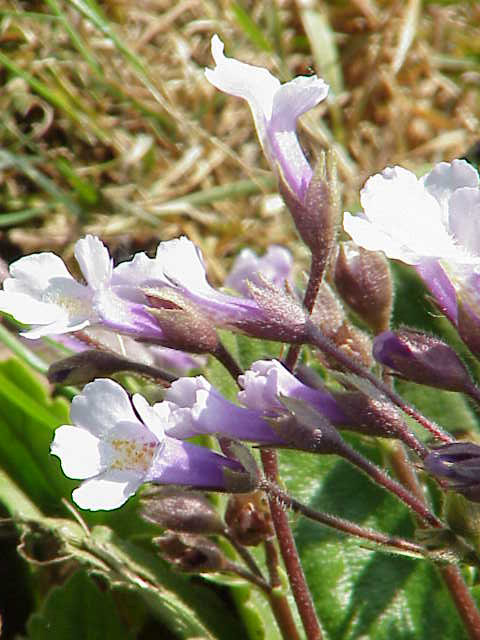


Characteristics
Plants in the Gesneriaceae typically have simple leaves arranged oppositely or in a rosette. Flowers are commonly bilaterally symmetrical (zygomorphic) and often form two-lipped (bilabiate) corollas adapted for pollination by insects or hummingbirds. Many species show specialized vegetative structures — tubers, rhizomes, stolons or fleshy roots — that aid survival and vegetative propagation. Fruit types vary and include capsules and fleshy berries.
Taxonomy and distribution
The family is split into several subgroups reflecting geographic and morphological differences, with major divisions between Old World and New World lineages. Gesneriaceae occur worldwide but are most diverse in tropical America, Africa, and Southeast Asia. Ongoing molecular studies continue to refine relationships among genera and to clarify biogeographic patterns across continents.
Uses, cultivation and importance
Beyond wild ecological roles, many gesneriads are valuable horticulturally. Species and hybrids are grown as houseplants and greenhouse ornamentals for their long-lasting flowers and attractive foliage. They are often propagated by seed, stem or leaf cuttings and require well-drained substrate, moderate humidity, and bright indirect light. Breeding programs have produced a wide array of flower colors and forms for the florist and home gardener.
Ecology and notable facts
- Pollination: flowers attract bees, butterflies and hummingbirds; corolla shape often indicates pollinator type.
- Habitats: members occupy forest understories, rocky outcrops and epiphytic niches on trees.
- Economic role: mainly ornamental value; some species are subjects of botanical and horticultural research.
For further botanical context see general references on flowering plants and detailed treatments of the family in floras and monographs. Contemporary classification and cultivation tips are available from specialist sources and horticultural societies. Lamiales-level studies and regional accounts help place Gesneriaceae within broader plant evolution and ecology discussions.
Related articles
Author
AlegsaOnline.com Gesneriaceae: the African violet family of flowering plants Leandro Alegsa
URL: https://en.alegsaonline.com/art/38548