
French Grand Prix
The French Grand Prix is the oldest motor racing Grand Prix, first held in 1906. It developed into a cornerstone of international Grand Prix and Formula One racing, held at many French circuits over time.
Overview
The French Grand Prix is a major motor racing event that originated in France and is widely recognised as the oldest Grand Prix-style automobile race. First run on 26 June 1906 under the auspices of the Automobile Club de France, it established a template for international Grand Prix competition and later became a recurring round of the Formula One World Championship organised by the FIA. For much of the 20th century the race alternated its official name between the Grand Prix de l'ACF and, from 1968 onward, the Grand Prix de France.
Image gallery
10 Images



Characteristics
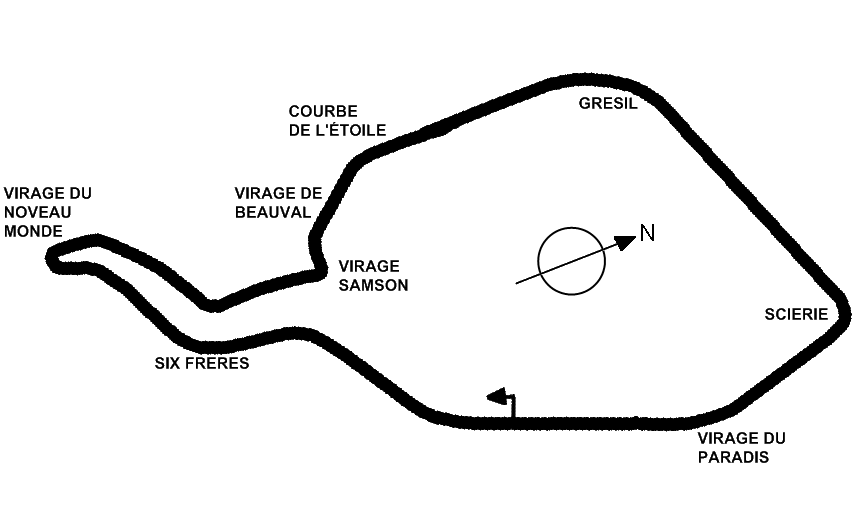
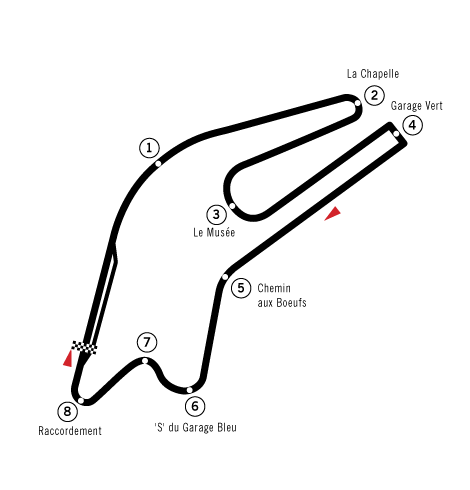
Unlike single-venue events, the French Grand Prix has been hosted on a variety of circuit types: closed public-road circuits, semi-permanent tracks, and purpose-built race circuits. Distances, formats and regulations evolved with advances in automotive technology and sporting governance. The race has been a testbed for vehicle engineering, pit strategy and driver skill, with both short, intense road circuits and long, high-speed layouts featured at different times.
History and development
The event traces its origin to early 20th-century motor sport in France, the country where organised Grand Prix racing developed as a concept. The inaugural 1906 meeting in the Sarthe region assembled a large starting field and attracted international interest, helping to codify rules and race organisation that influenced later events. Over decades the French Grand Prix survived world wars, changed technical regulations, and adapted to safety and commercial pressures. It became a fixture on the international calendar and was included in the world championship era of Grand Prix racing.
Venues and notable circuits
The Grand Prix has been staged at many well known French circuits and road circuits, reflecting regional motorsport traditions and evolving track safety standards. Venues have included but are not limited to:
- Reims-Gueux and other historic public-road circuits
- Rouen-les-Essarts and Clermont-Ferrand (Charade)
- Permanent facilities such as Paul Ricard and Magny-Cours
- Various street circuit and temporary layouts used for national events
Early races began in Sarthe, near Le Mans, a region synonymous with endurance and Grand Prix history (Sarthe).
Legacy, importance and examples
The French Grand Prix has been important both for its sporting prestige and for its role in automotive and racing innovation. Many of motor racing's most famous drivers and constructors have sought victory at the event, and changes trialled at the Grand Prix level often influenced broader technical and safety standards. The race helped to internationalise motor sport and contributed to the global standing of Formula One and other top-tier series discussed under the broader topic of Grand Prix motor racing.
Distinctive notes
The Grand Prix has not been held continuously every year; interruptions and venue changes reflect periods of war, shifting commercial interests and the rising costs and safety requirements of top-level racing. Its historic status remains widely acknowledged, and the event continues to be referenced for its role in the origins and evolution of international single-seater racing.
| Events with the official title "Grand Prix de l'A.C.F." | ||||||||
| Circulation | Year | Route | Class | Winner | Second | Third | ||
| (1) | 1895 | Paris-Bordeaux-Paris | GP | Third French Republic | Third French Republic | German Empire | Interval start | Distance race |
| (2) | 1896 | Paris-Marseille-Paris | GP | Third French Republic | Third French Republic | Third French Republic | Interval start | Distance race |
| 1897 | no French Grand Prix | |||||||
| (3) | 1898 | Paris-Amsterdam-Paris | GP | Third French Republic | Third French Republic | Third French Republic | Interval start | Distance race |
| (4) | 1899 | Tour de France Automobile | GP | Third French Republic | Third French Republic | Third French Republic | Interval start | Distance race |
| (5) | 1900 | Paris-Toulouse-Paris | GP | Third French Republic | Third French Republic | Third French Republic | Interval start | Distance race |
| (6) | 1901 | Paris-Berlin | GP | Third French Republic | Third French Republic | Third French Republic | Interval start | Distance race |
| (7) | 1902 | Paris-Vienna | GP | Third French Republic | Third French Republic | Third French Republic | Interval start | Distance race |
| (8) | 1903 | Paris-Madrid | GP | Third French Republic | Third French Republic | Third French Republic | Interval start | Distance race |
| 1904 till 1905 | no French Grand Prix | |||||||
| (9) | 1906 | Le Mans | GP | Hungary 1867 | Italy 1861 | Third French Republic | set | Third French Republic |
| (10) | 1907 | Dieppe | GP | Italy 1861 | Hungary 1867 | Third French Republic | Italy 1861 | Belgium |
| (11) | 1908 | Dieppe | GP | German Empire | Third French Republic | Third French Republic | set | German Empire |
| 1909 till 1911 | no French Grand Prix | |||||||
| (12) | 1912 | Dieppe | GP | Third French Republic | Third French Republic | Third French Republic | set | United States |
| (13) | 1913 | Amiens | GP | Third French Republic | Third French Republic | Third French Republic | set | Third French Republic |
| (14) | 1914 | Lyon | GP | German Empire | Third French Republic | German Empire | set | German Empire |
| 1915 till 1920 | no French Grand Prix | |||||||
| (15) | 1921 | Le Mans | GP | United States | United States | Third French Republic | United States | United States |
| (16) | 1922 | Strasbourg | GP | Italy 1861 | Spain 1875 | Third French Republic | Italy 1861 | Italy 1861 |
| (17) | 1923 | Tours | GP | United Kingdom | Third French Republic | Third French Republic | Third French Republic | Italy 1861 |
| (18) | 1924 | Lyon | GP | Italy 1861 | Third French Republic | Third French Republic | set | United Kingdom |
| (19) | 1925 | Linas-Montlhéry | GP | Third French Republic | Third French Republic | Italy 1861 | United Kingdom | Third French Republic |
| (20) | 1926 | Miramas | GP | Third French Republic | Italy 1861 | - — | Third French Republic | Third French Republic |
| (21) | 1927 | Linas-Montlhéry | GP | Third French Republic | Third French Republic | Third French Republic | United Kingdom | Third French Republic |
| (22) | 1928 | Saint-Gaudens | SW | United Kingdom | Third French Republic | Third French Republic | unknown | United Kingdom |
| (23) | 1929 | Le Mans | GP | United Kingdom | Third French Republic | Italy 1861 | Third French Republic | United Kingdom |
| (24) | 1930 | Pau | FL | Third French Republic | Third French Republic | Chile | France | United Kingdom |
| (25) | 1931 | Linas-Montlhéry | GP | Monaco | Italy 1861 | Italy 1861 | United Kingdom | Italy 1861 |
| (26) | 1932 | Reims-Gueux | GP | Italy 1861 | Italy 1861 | German Empire | Third French Republic | Italy 1861 |
| (27) | 1933 | Linas-Montlhéry | GP | Italy 1861 | Third French Republic | United Kingdom | United Kingdom | Italy 1861 |
| (28) | 1934 | Linas-Montlhéry | GP | Monaco | Italy 1861 | Italy 1861 | NS State | Monaco |
| (29) | 1935 | Linas-Montlhéry | GP | German Empire NS | German Reich NS | Italy 1861 | Italy 1861 | Italy 1861 |
| (30) | 1936 | Linas-Montlhéry | SW | Third French Republic | Third French Republic | Italy 1861 | unknown | Third French Republic |
| (31) | 1937 | Linas-Montlhéry | SW | Monaco | Italy 1861 | Third French Republic | Third French Republic | Monaco |
| (32) | 1938 | Reims-Gueux | GP | German Reich NS | German Empire NS | German Reich NS | German Reich NS | German Reich NS |
| (33) | 1939 | Reims-Gueux | GP | German Reich NS | German Reich NS | Third French Republic | German Reich NS | German Reich NS |
| 1940 till 1946 | no French Grand Prix | |||||||
| (34) | 1947 | Lyon-Parilly | GP | Monaco | Third French Republic | Third French Republic | Third French Republic | Italy |
| (35) | 1948 | Reims-Gueux | F1 | Third French Republic | Italy | Italy | Third French Republic | Third French Republic |
| (36) | 1949 | Saint-Gaudens | SW | Third French Republic | United Kingdom | Third French Republic | Third French Republic | Monaco |
| 37 | 1950 | Reims-Gueux | F1 | Argentina | Italy | United Kingdom | Argentina | Argentina |
| 38 | 1951 | Reims-Gueux | F1 | Argentina | Argentina | Italy | Argentina | Argentina |
| 39 | 1952 | Rouen-les-Essarts | Italy | Italy | Italy | Italy | Italy | |
| 40 | 1953 | Reims-Gueux | United Kingdom | Argentina | Argentina | Italy | Italy | |
| 41 | 1954 | Reims-Gueux | F1 | Argentina | Germany | France | Argentina | Germany |
| 1955 | no French Grand Prix | |||||||
| 42 | 1956 | Reims-Gueux | F1 | United Kingdom | Italy | France | Argentina | Argentina |
| 43 | 1957 | Rouen-les-Essarts | F1 | Argentina | Italy | United Kingdom | Argentina | Italy |
| 44 | 1958 | Reims-Gueux | F1 | United Kingdom | United Kingdom | Germany | United Kingdom | United Kingdom |
| 45 | 1959 | Reims-Gueux | F1 | United Kingdom | Australia | United Kingdom | United Kingdom | |
| 46 | 1960 | Reims-Gueux | F1 | Australia | Belgium | New Zealand | Australia | Australia |
| 47 | 1961 | Reims-Gueux | F1 | Italy | United States | United Kingdom | ||
| 48 | 1962 | Rouen-les-Essarts | F1 | United States | Sud Africa 1961 | United States | United Kingdom | United Kingdom |
| 49 | 1963 | Reims-Gueux | F1 | United Kingdom | Sud Africa 1961 | United Kingdom | United Kingdom | United Kingdom |
| 50 | 1964 | Rouen-les-Essarts | F1 | United States | United Kingdom | Australia | United Kingdom | Australia |
| 51 | 1965 | Charade | F1 | United Kingdom | United Kingdom | United Kingdom | United Kingdom | United Kingdom |
| 52 | 1966 | Reims-Gueux | F1 | Australia | United Kingdom | New Zealand | Italy | Italy |
| 53 | 1967 | Le Mans | F1 | Australia | New Zealand | United Kingdom | United Kingdom | United Kingdom |
| Events with the official title "Grand Prix de France | ||||||||
| 54 | 1968 | Rouen-les-Essarts | F1 | Belgium | United Kingdom | United Kingdom | Austria | Mexico |
| 55 | 1969 | Charade | F1 | United Kingdom | France | Belgium | United Kingdom | United Kingdom |
| 56 | 1970 | Charade | F1 | Austria | New Zealand | Australia | Belgium | Australia |
| 57 | 1971 | Paul Ricard | F1 | United Kingdom | France | Brazil | United Kingdom | United Kingdom |
| 58 | 1972 | Charade | F1 | United Kingdom | Brazil | New Zealand | New Zealand | New Zealand |
| 59 | 1973 | Paul Ricard | F1 | Sweden | France | Argentina | United Kingdom | New Zealand |
| 60 | 1974 | Dijon-Prenois | F1 | Sweden | Austria | Switzerland | Austria | Sud Africa 1961 |
| 61 | 1975 | Paul Ricard | F1 | Austria | United Kingdom | Germany | Austria | Germany |
| 62 | 1976 | Paul Ricard | F1 | United Kingdom | France | United Kingdom | United Kingdom | Austria |
| 63 | 1977 | Dijon-Prenois | F1 | United States | United Kingdom | United Kingdom | United States | United States |
| 64 | 1978 | Paul Ricard | F1 | United States | Sweden | United Kingdom | United Kingdom | Argentina |
| 65 | 1979 | Dijon-Prenois | F1 | France | Canada | France | France | France |
| 66 | 1980 | Paul Ricard | F1 | Australia | France | France | France | Australia |
| 67 | 1981 | Dijon-Prenois | F1 | France | United Kingdom | Brazil | France | France |
| 68 | 1982 | Paul Ricard | F1 | France | France | France | France | Italy |
| 69 | 1983 | Paul Ricard | F1 | France | Brazil | United States | France | France |
| 70 | 1984 | Dijon-Prenois | F1 | Austria | France | United Kingdom | France | France |
| 71 | 1985 | Paul Ricard | F1 | Brazil | Finland | France | Finland | Finland |
| 72 | 1986 | Paul Ricard | F1 | United Kingdom | France | Brazil | Brazil | United Kingdom |
| 73 | 1987 | Paul Ricard | F1 | United Kingdom | Brazil | France | United Kingdom | Brazil |
| 74 | 1988 | Paul Ricard | F1 | France | Brazil | Italy | France | France |
| 75 | 1989 | Paul Ricard | F1 | France | United Kingdom | Italy | France | Brazil |
| 76 | 1990 | Paul Ricard | F1 | France | Italy | Brazil | United Kingdom | United Kingdom |
| 77 | 1991 | F1 | United Kingdom | France | Brazil | Italy | United Kingdom | |
| 78 | 1992 | F1 | United Kingdom | Italy | United Kingdom | United Kingdom | United Kingdom | |
| 79 | 1993 | F1 | France | United Kingdom | Germany | United Kingdom | Germany | |
| 80 | 1994 | F1 | Germany | United Kingdom | Austria | United Kingdom | United Kingdom | |
| 81 | 1995 | F1 | Germany | United Kingdom | United Kingdom | United Kingdom | Germany | |
| 82 | 1996 | F1 | United Kingdom | Canada | France | Germany | Canada | |
| 83 | 1997 | F1 | Germany | Germany | United Kingdom | Germany | Germany | |
| 84 | 1998 | F1 | Germany | United Kingdom | Finland | Finland | United Kingdom | |
| 85 | 1999 | F1 | Germany | Finland | Brazil | Brazil | United Kingdom | |
| 86 | 2000 | F1 | United Kingdom | Finland | Brazil | Germany | United Kingdom | |
| 87 | 2001 | F1 | Germany | Germany | Brazil | Germany | United Kingdom | |
| 88 | 2002 | F1 | Germany | Finland | United Kingdom | Colombia | United Kingdom | |
| 89 | 2003 | F1 | Germany | Colombia | Germany | Germany | Colombia | |
| 90 | 2004 | F1 | Germany | Spain | Brazil | Spain | Germany | |
| 91 | 2005 | F1 | Spain | Finland | Germany | Spain | Finland | |
| 92 | 2006 | F1 | Germany | Spain | Brazil | Germany | Germany | |
| 93 | 2007 | F1 | Finland | Brazil | United Kingdom | Brazil | Brazil | |
| 94 | 2008 | F1 | Brazil | Finland | Italy | Finland | Finland | |
| 2009 until 2017 | no French Grand Prix | |||||||
| 95 | 2018 | Paul Ricard | F1 | United Kingdom | Netherlands | Finland | United Kingdom | Finland |
| 96 | 2019 | Paul Ricard | F1 | United Kingdom | Finland | Monaco | United Kingdom | Germany |
| - – | 2020 | cancelled due to COVID 19 pandemic | ||||||
| 97 | 2021 | Paul Ricard | F1 | Netherlands | United Kingdom | Mexico | Netherlands | Netherlands |








| Legend | ||
| Abbreviation | Class | Comment |
| F1 | Formula 1 | Formula 1 World Championship from 1950 |
| F2 | ||
| FL | Formula libre | Vehicle class usually advertised by the organizer |
| SW | Sports car | |
| TW | Touring car | |
| GP | Grand Prix vehicles | |
| ↓ Solid gray lines indicate when a new course was taken in history. ↓ | ||
| Entries with a light red background were not rounds of the automobile or Formula 1 World Championship. | ||
| Entries with yellow background were runs to the European Championship. | ||
- ↑ a b c d e f g h The first race organized as Grand Prix de l'ACF took place in 1906. However, in the 1920s, the "great" city-to-city races of the early period between 1895 and 1903 were also retroactively given this title (see formula1results.co.za, accessed May 28, 2015), although the founding date of the ACF was even after the Paris-Bordeaux-Paris race of 1895. This counting method made the 1906 event the official ninth Grand Prix de l'A.C.F. , and later thus also the ninth Grand Prix de la France. The 1950 Grand Prix officially started with the 37th edition, and edition numbers are documented from that year. This numbering was also continued after the 1968 renaming of the Grand Prix de l'ACF to the Grand Prix de France.
- The fastest cars at the finish were Émile Levassor's Panhard and Louis Rigolot's Peugeot. However, these were not scored because they were not four-seater cars as required by the invitation to compete (see teamdan.com (Memento of September 24, 2015 in the Internet Archive), retrieved on May 28, 2015).
- ↑ a b c The Automobile Club de l'Ouest held three races at Le Mans in 1911, 1912 and 1913 under the title Grand Prix de France (source: Paul Sheldon: A Record of Grand Prix and Voiturette Racing. Volume 1 1900-1925; also formula1results.co.za, formula1results.co.za, and formula1results.co.za, each accessed May 28, 2015). However, these events did not have the same status as the Grands Prix de l'ACF and are still not counted by the Automobile Club de France, whose events were titled Grand Prix de l'A.C.F. until 1967.
- ↑ The 1924 French Grand Prix also had the AIACR honorary title of European Grand Prix.
Questions and answers
Q: What is the French Grand Prix?
A: The French Grand Prix is a race held as part of Fédération Internationale de l'Automobile's (FIA) annual Formula One (F1) automobile racing championships.
Q: When was the first French Grand Prix held?
A: The first French Grand Prix was held on 26 June 1906.
Q: Who organized the first race?
A: The Automobile Club de France organized the first race.
Q: How many cars were in the starting field for the first race?
A: There were 32 automobiles in the starting field for the first race.
Q: Is it an international competition?
A: Yes, it is open to international competition.
Q: Is it one of oldest Grand Prix races?
A: Yes, it is the oldest Grand Prix race.
Q: What organization oversees this event annually?
A: Fédération Internationale de l'Automobile's (FIA) oversees this event annually.
Related articles
Author
AlegsaOnline.com French Grand Prix Leandro Alegsa
URL: https://en.alegsaonline.com/art/36597
Sources
- itv-f1.com : "French GP under threat for 2008" · web.archive.org
- itv-f1.com : "F1 will quit Magny-Cours after 2007" · web.archive.org
- itv-f1.com : "Magny-Cours set for reprieve" · web.archive.org
- news.bbc.co.uk : "Formula One hope for Magny-Cours"
- formula1.com : "FIA reveals 18-race calendar for 2008"
- gpfrancef1.com : "Grand Prix de France"
- grandprix.com : "Magny-Cours to get a facelift"
- automobilsport.com : "Magny-Cours 2 Projet de modernisation-standardisation du Circuit de Nevers Magny-Cours"
- motorlegend.com : "La F1 de retour à Rouen ?"
- grandprix.com : "Rouen to bid for the French GP"
- asiaone.com : "Euro Disney the next venue for French GP?"
- autoblog.com : "Disney Grand Prix plans shelved"