
Brabham: British racing car constructor and Formula One team
Brabham was a British racing car manufacturer and Formula One team founded in 1960 by Jack Brabham and Ron Tauranac. Noted for technical innovation, customer cars and multiple world championships.
Overview
Brabham, formally Motor Racing Developments Ltd., was founded in 1960 and grew to become one of the most influential constructors in open-wheel racing. The company combined a factory team with a large programme of customer cars for private entrants. Its founders are commonly identified as the Australian driver Jack Brabham and designer Ron Tauranac, who built a pragmatic, competitive operation that won multiple championships in Formula One and other categories.
Image gallery
10 Images




Characteristics and engineering
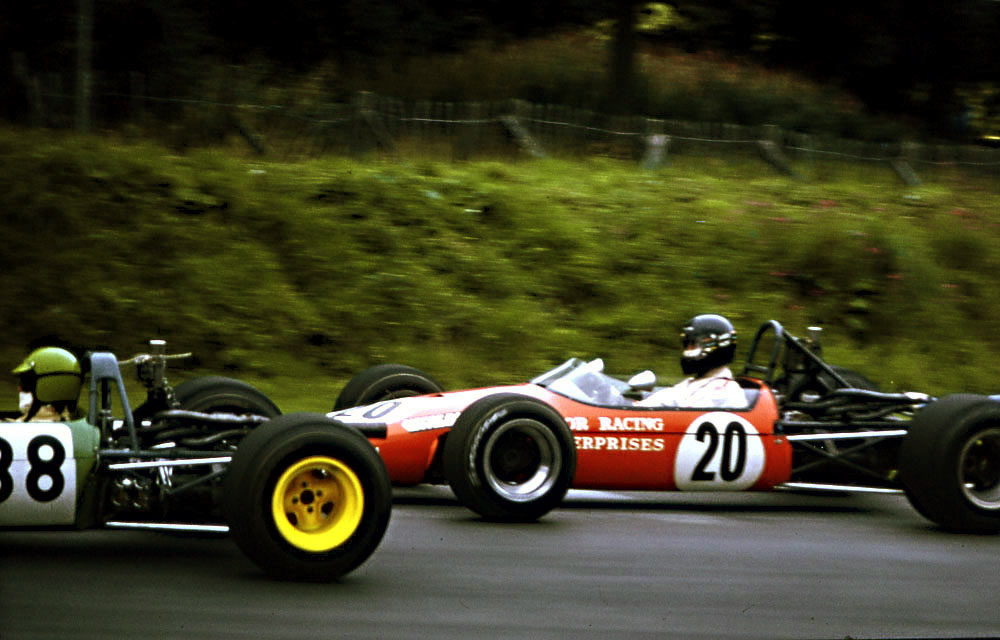
Brabham cars were known for straightforward, robust design that balanced performance with ease of maintenance—qualities prized by private teams. Throughout its history the company produced both single-seat race cars and team-specific prototypes. In the 1960s Brabham became the world’s leading maker of customer open wheel cars, with hundreds of chassis sold to independent entrants and junior formulas.
Innovations and technical features
- Early adoption of lightweight construction and aerodynamic refinement for faster lap times and handling.
- Introduction of the so-called "fan car" concept and experimentation with active and hydropneumatic suspension systems.
- Operational innovations such as mid-race refuelling and the early use of carbon braking components.
- Progression to turbocharged engines in the late 1970s and 1980s, culminating in drivers’ titles won with boosted power units.
History and development
From its 1960 founding, Brabham competed at the highest levels. The team secured four drivers' world championships and two constructors' crowns over three decades. Its success included Jack Brabham's unique 1966 title driving a car bearing his own name, a feat still notable in the sport’s history. During the 1960s Brabham cars also helped entrants win titles in Formula Two and Formula Three, and the marque appeared in events including the Indianapolis 500 when teams adapted the chassis for oval competition.
Notable achievements and people
Beyond Jack Brabham, other important figures included drivers such as the Brazilian champion Nelson Piquet, who won multiple drivers' championships with Brabham and helped establish the team as a technical leader. The organisation also became associated with the businessman Bernie Ecclestone, who owned the team through much of the 1970s and 1980s before moving into the commercial governance of Formula One. Brabham was among the first teams to secure a drivers’ title with a turbocharged engine, marking a shift in powertrain development across the sport.
Commercial role and decline
In the 1960s Brabham’s high-volume production of competitive customer cars established a profitable business model supplying smaller teams. The company combined factory efforts with a customer-focused chassis programme that influenced how constructors related to private entrants. Financial and ownership changes in the late 1980s and early 1990s, including a sale by Ecclestone and later control by a Japanese engineering group, saw the team struggle. The final period ended in insolvency during the 1992 season amid loan difficulties and investigations by authorities, closing a distinctive chapter in motorsport history.
Legacy and distinctions
Brabham’s legacy rests on its mix of technical experimentation, successful customer-car manufacturing, and championship pedigree. It remains notable for producing the only world champion who won in a car bearing his own name, for pioneering several technical concepts that influenced later designs, and for training engineers and drivers who went on to shape global motorsport. For readers seeking more detail on specific seasons, cars or technical developments, contemporary archives and specialist histories provide race-by-race and chassis-by-chassis accounts of the Brabham story.
Further reading and references are available online and in dedicated motorsport histories; see company entries and biographies for the founders and leading drivers. Contemporary sources and archived race reports also document the marque’s influence across categories and decades.
Related topics: Motor Racing Developments, championships (drivers and constructors), and the wider environment of open-wheel racing during Brabham’s operational years.
Related articles
Author
AlegsaOnline.com Brabham: British racing car constructor and Formula One team Leandro Alegsa
URL: https://en.alegsaonline.com/art/13566