
Pole position (motorsport)
Pole position is the foremost starting place on a racing grid, earned in qualifying. This entry describes its meaning, common qualifying formats, strategic importance, and how different series treat the pole.
Pole position is the foremost starting place on a motorsport grid, awarded to the competitor who records the fastest time in the official qualifying process. A driver or rider who starts from pole occupies the frontmost slot, usually on the inside or centre of the first row, and is commonly called the "pole sitter." Beginning from pole normally provides a clear track ahead and the best opportunity to lead into the first corner, but it does not guarantee victory.
Image gallery
1 Image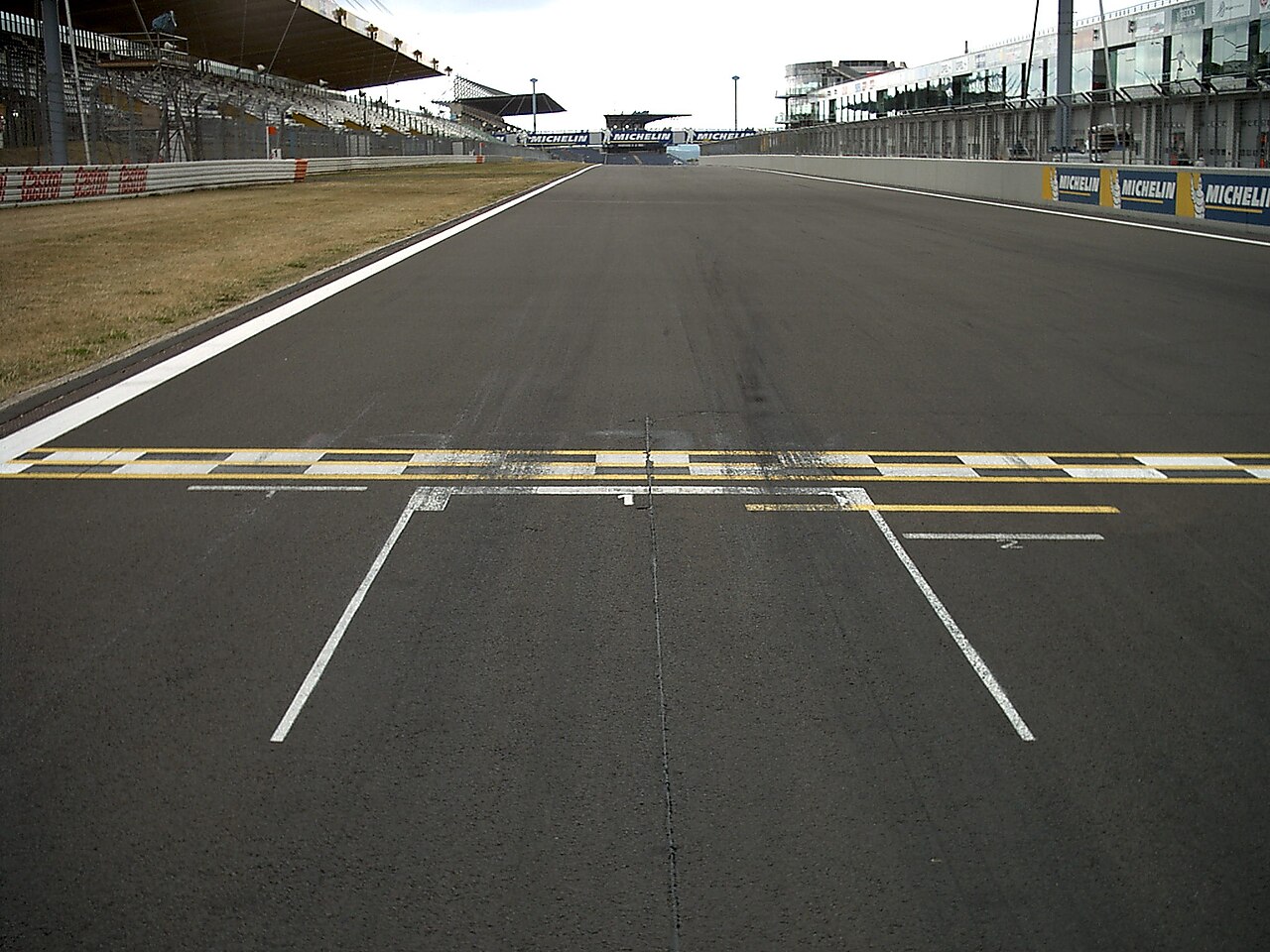
How qualifying works
Qualifying determines the order of starters and takes many forms depending on the discipline and series. The basic objective is to measure competitors over one or more timed laps, but formats vary widely:
- Single-lap: each competitor completes one flying lap; the fastest time wins pole.
- Timed session: drivers set multiple laps within a fixed period and the fastest lap counts.
- Knockout or elimination: sessions reduce the field in stages, with a final segment to decide the top positions.
- Top‑ten shootout / superpole: a small group has single attempts to decide the top grid positions.
- Alternative grids: some events use championship standings, practice times, or reverse-grid rules to set starting order.
Exact procedures, tyre rules and parc fermé conditions differ by championship; for full details consult the series-specific regulations via the official pages here.
Strategic importance
Starting from pole offers clear advantages: avoidance of early traffic, lower immediate risk of contact at the first corner, and the ability to choose the preferred racing line. A pole sitter can establish an early pace and manage tyre and brake temperatures without being impeded. Nevertheless, race strategy, pit stop timing, weather, reliability and overtaking opportunities all influence whether pole converts into a win.
Variations by category
Different motorsport categories treat pole in different ways. In single‑seater championships and street circuits with narrow layouts (for example tight, low‑overtaking tracks), pole is especially valuable. In touring cars or series with reverse grids, the advantage of pole can be reduced. In rallying, starting first on a gravel stage is often a disadvantage because the lead car sweeps loose surface material, while in endurance racing there are multiple classes and a pole is awarded within each class rather than a single overall slot.
Exceptions and practical notes
Factors that complicate pole decisions include changing weather between sessions, identical lap times (resolved by earlier sector times or other tie‑breaks), and sporting or technical penalties that can demote a pole sitter. If qualifying is cancelled, organisers typically set the grid by championship order, practice times or other rules. The phrase "pole position" endures as a concise way to indicate the first starting place across motor racing disciplines.
Related articles
Author
AlegsaOnline.com Pole position (motorsport) Leandro Alegsa
URL: https://en.alegsaonline.com/art/77710