
Fraser's dolphin (Lagenodelphis hosei): oceanic pelagic dolphin
Fraser's dolphin is a compact, oceanic dolphin (Lagenodelphis hosei) of tropical and subtropical deep waters, noted for distinctive flank banding, offshore groups, and a largely Pacific distribution.
Fraser's dolphin (Lagenodelphis hosei), sometimes called the Sarawak dolphin, is a small-to-medium-sized oceanic dolphin most often found in deep, warm waters. It is a pelagic species adapted to life far from shore and is recognizable by its robust body shape and distinctive banded coloration along the flanks.
Image gallery
6 Images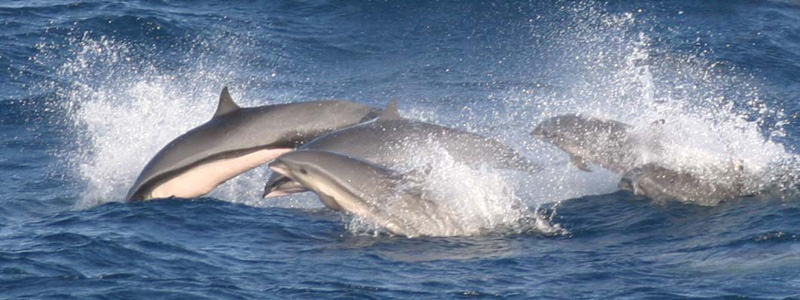


Characteristics
Fraser's dolphins have a compact, stocky build with a short beak and a rounded head. Their coloration typically includes a darker back, lighter sides and belly, and contrasting flank bands or stripes that help distinguish them from other offshore delphinids. A prominent, falcate dorsal fin sits well back on the body; the species is a strong swimmer adapted for open-ocean life.
Distribution and habitat
They inhabit tropical and subtropical waters of the oceans, occurring mainly in the Pacific but also reported in the Indian and Atlantic basins. As a member of the oceanic dolphin family, Delphinidae, Fraser's dolphins are associated with deep-water habitats such as offshore troughs, continental slopes and seamounts. Reports and strandings have been recorded across wide longitudes in the Pacific, with less frequent records from the Indian and Atlantic Oceans.
Behavior and diet
These dolphins often occur in large, social groups and may form mixed-species assemblages with other pelagic dolphins. Their diet appears to consist mainly of midwater fish and cephalopods; they forage in deep waters and are typically seen traveling or feeding in active, fast-moving groups.
Taxonomy, discovery and notable facts
Lagenodelphis hosei is the sole species in its genus. The common name Sarawak dolphin references the region where early specimens were examined. Because it is an offshore species, many aspects of its natural history remain less well documented than those of coastal dolphins.
Conservation and human interactions
Population sizes are not well quantified; threats that may affect Fraser's dolphins include bycatch in pelagic fisheries, marine pollution and changing ocean conditions. Their offshore habits make monitoring and protection challenging, and conservation assessments emphasize the need for better data on distribution, abundance and human impacts.
- Distinctive traits: compact body, short beak, flank banding
- Typical habitat: deep tropical and subtropical offshore waters
- Common concerns: bycatch, limited population data, habitat changes
Related articles
Author
AlegsaOnline.com Fraser's dolphin (Lagenodelphis hosei): oceanic pelagic dolphin Leandro Alegsa
URL: https://en.alegsaonline.com/art/36324