
French Bulldog: appearance, history, care, and key facts
Compact, affectionate companion dog known for its 'bat ears' and short muzzle. Originated in 19th-century France from Toy Bulldogs and local ratters. Popular pet with specific health and care needs.

Overview
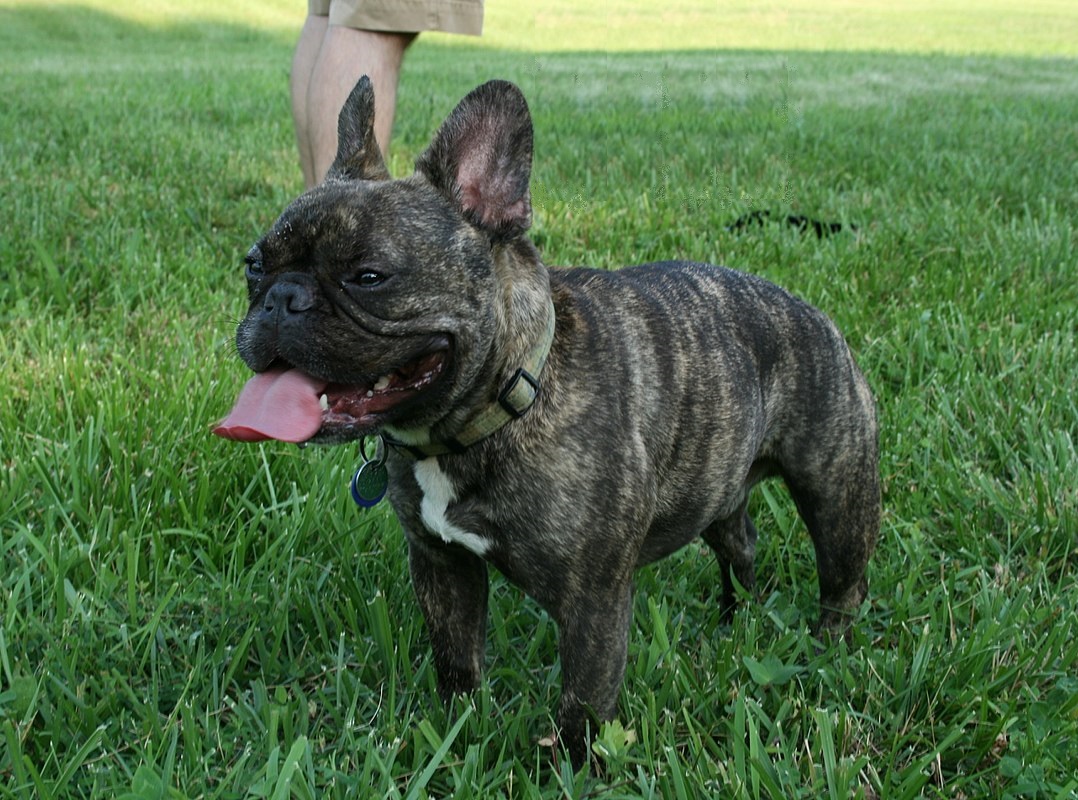
The French Bulldog is a small companion dog prized for its compact, muscular body, distinctive upright "bat ears," and short, wrinkled face. Bred primarily as a companion rather than a working dog, it is known for an affectionate, often clownish temperament and strong attachment to people. Its short coat requires modest grooming, and its modest activity needs make it well suited to apartment living.
Image gallery
10 Images



Physical characteristics
- Head and face: broad skull with a flat face (brachycephalic) and pronounced facial folds.
- Ears: large, erect "bat" ears set high on the skull, a hallmark of the breed.
- Body: compact, heavy-boned and muscular with a short tail; stance is sturdy and low to the ground.
- Coat and color: short, smooth coat in colors such as brindle, fawn and pied; coloring and markings vary by individual.
Origins and development
The breed developed in the 1800s when small Bulldogs brought from England were crossed with local ratter-type dogs in Paris. Many accounts connect its rise to English workers and lace makers who migrated to France, bringing toy-sized Bulldogs that were then refined by French enthusiasts. These mixed populations were selectively bred in Paris and the surrounding regions, where they became popular urban companions and exhibitors. Early formation of a breed type led to recognition by kennel clubs and the establishment of breed standards in the late 19th and early 20th centuries. For background sources on the English contribution see Toy Bulldogs from England, on the Parisian context see local ratters in Paris, and general historical notes at France.
Care, health and suitability
French Bulldogs thrive as family pets but have special care considerations. Their flat faces make them prone to breathing difficulties and heat sensitivity; owners must avoid strenuous exercise in hot weather and maintain careful weight control. Skin folds need regular cleaning to prevent irritation; ear and dental care are important. Because of the breed's head size and body conformation, reproductive and orthopedic issues can arise, so responsible breeding and veterinary oversight are important.
Popularity and distinctions
French Bulldogs have become one of the most popular companion breeds in many countries. They are primarily kept as pets and show dogs rather than for working roles. They differ from larger English Bulldogs by their smaller size, more alert carriage and erect ears, and are sometimes compared to similar small companion breeds such as the Boston Terrier, which has a longer muzzle and different ear and head shape. Their combination of a playful personality and low grooming needs helps explain their widespread appeal.
Related articles
Author
AlegsaOnline.com French Bulldog: appearance, history, care, and key facts Leandro Alegsa
URL: https://en.alegsaonline.com/art/36583
Sources
- cbf-asso.org : "Le bouledogue Français, Ses origines"
- thekennelclub.org.uk : "Top Twenty Breeds In Registration Order For The Years 2017 And 2018"
- akc.org : "AKC: Most Popular Dog Breeds of 2018"