
Fertilization (biological process)
Fertilization is the fusion of two gametes to form a zygote, initiating development. It occurs across eukaryotes and includes diverse mechanisms such as internal/external fertilization and double fertilization in plants.
Overview
Fertilization (British spelling: fertilisation) is the biological process in which a male gamete, commonly called sperm, fuses with a female gamete, the ovum or egg, to form a single cell. Scientists and biologists refer to this initial product as a zygote, which, through subsequent divisions and specialization, becomes an embryo.
Image gallery
9 Images




Occurrence and genetic outcome
Fertilization is widespread among living organisms with complex cells: it happens in many animals, flowering plants, various fungi, and single-celled protists — in short, across most eukaryotes. At its core the process restores the full complement of chromosomes that were halved during sexual cell formation, a step coordinated with the organism’s broader life cycle and the preceding process of meiosis.
Mechanisms and variations
Mechanistically, fertilization involves recognition, membrane fusion and combination of genetic material (syngamy). Strategies vary: internal fertilization occurs inside the parent body (typical of mammals and many birds), while external fertilization releases gametes into the environment (common in many fish and amphibians). In flowering plants a unique form called double fertilization creates both an embryo and nutrient tissue for the seed.
Developmental significance and examples
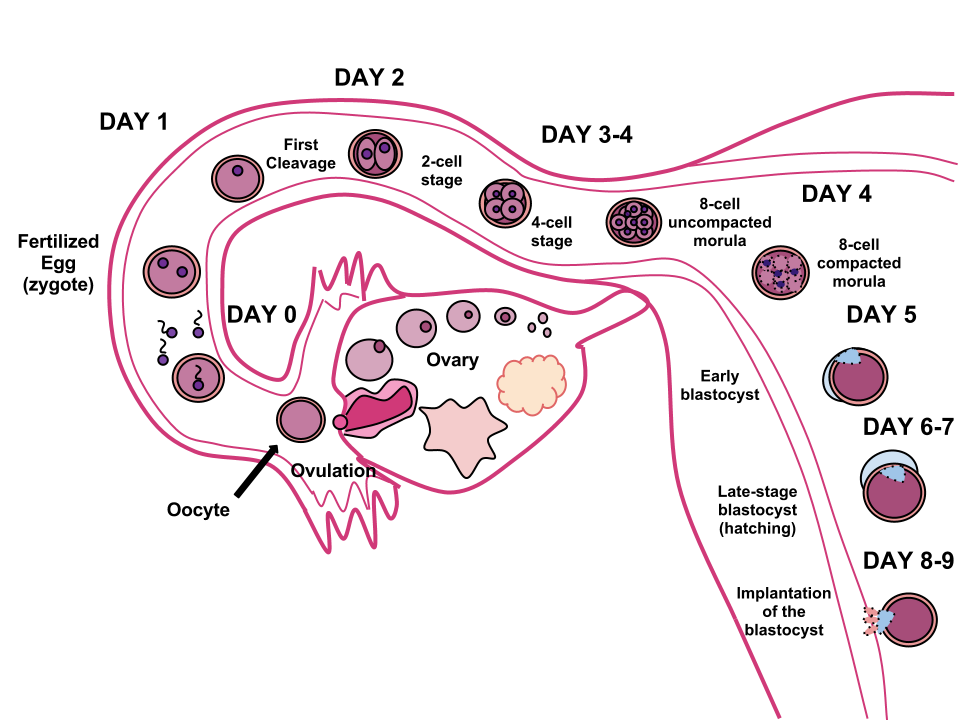
Following fusion, the zygote undergoes rapid cell divisions (cleavage), establishes body axes, and differentiates tissues — the foundation of development in multicellular life. Fertilization mixes parental genomes, contributing to genetic diversity; in some lineages alternative reproductive modes, such as parthenogenesis or polyploid formation, modify or bypass typical fertilization pathways.
Human relevance and distinctions
In humans and other animals the moment of fertilization is biologically linked to conception and the start of embryogenesis, and it is central to reproductive medicine and assisted reproductive technologies. It is important to distinguish fertilization from related processes: for plants, pollination transfers pollen but is not itself fertilization, and in many fungi plasmogamy (cytoplasmic fusion) can precede karyogamy (nuclear fusion).
Key points
- Fertilization fuses two haploid gametes into a diploid zygote.
- It occurs across eukaryotes including animals, plants, fungi, and protists.
- Restores chromosome number after meiosis as part of a species’ life cycle.
- Terms and concepts: zygote, embryo, and the roles of sperm and ovum/egg are central to understanding fertilization.
Related articles
Author
AlegsaOnline.com Fertilization (biological process) Leandro Alegsa
URL: https://en.alegsaonline.com/art/34103