
Fibula: the slender bone of the lower leg
The fibula is the thinner, lateral bone of the lower leg in humans and many tetrapods. It provides muscle attachments, lateral stability to the ankle and knee, and has clinical importance in fractures and grafting.
Overview
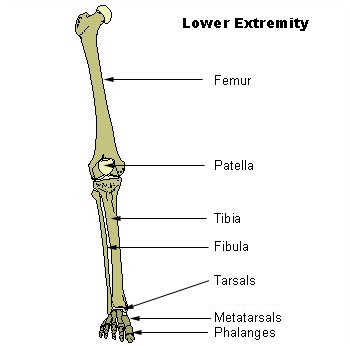
The fibula is one of the two long bones that form the lower leg in humans and many other four‑limbed vertebrates. It runs parallel to the larger, weight‑bearing tibia and lies on the lateral side of the leg. In comparative anatomy the fibula also appears in the hind limb of tetrapods and varies in size and shape across groups.
Image gallery
10 Images



Structure and articulations
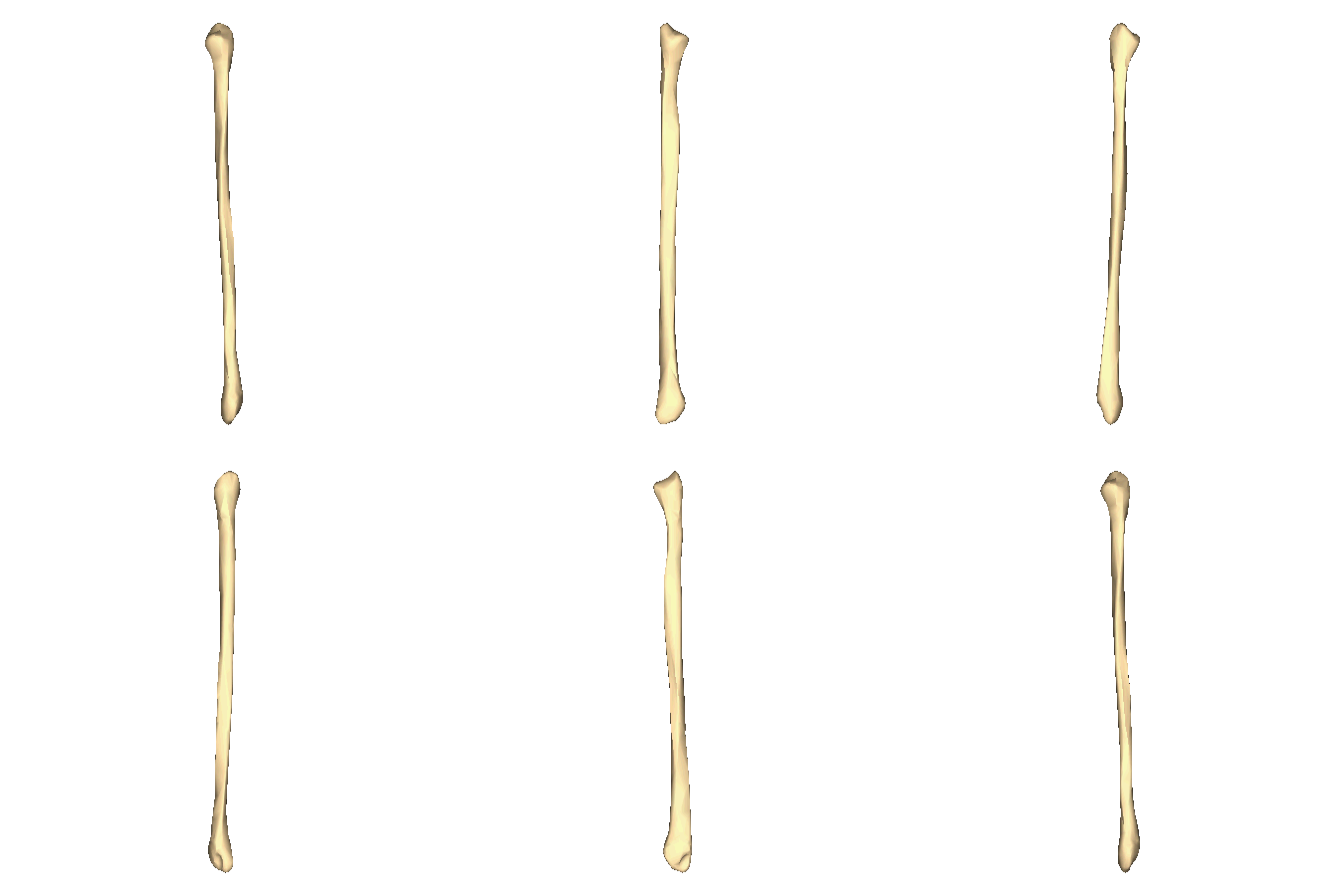
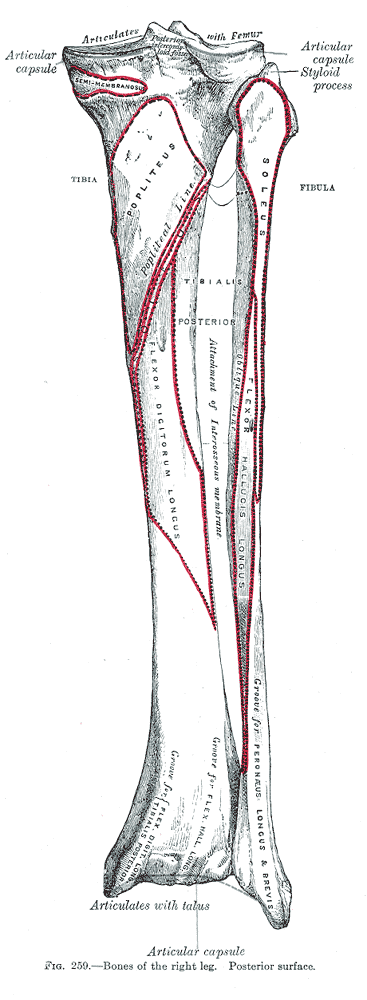
The fibula is typically described with a head at its proximal end, a long shaft, and a prominent distal projection called the lateral malleolus. Proximally it articulates with the tibia at the proximal tibiofibular joint; distally it helps form the ankle by contributing the lateral malleolus that grips the talus. The bone does not directly articulate with the femur or the knee joint, though it provides attachment sites for structures near the knee.
Function and muscle attachments
The fibula is not the main weight‑bearing bone of the leg—that role belongs to the tibia—but it plays important roles in stabilizing the leg and ankle and serving as an attachment site for muscles. Several calf and foot muscles originate from or attach to the fibula, including the fibularis (peroneus) muscles and parts of the soleus and tibialis muscles. The head of the fibula is a site where the tendon of the biceps femoris and ligaments attach, contributing to lateral stability.
Development and evolution
During human growth the fibula ossifies from centers in the shaft and ends and matures through childhood into adolescence. In evolutionary terms the fibula appears throughout tetrapod lineages but shows modification: in some birds and cursorial mammals it is reduced or fused, whereas in many reptiles and amphibians it retains a form similar to the tibia.
Clinical significance
Fractures of the fibula are common, often in combination with ankle injuries. Because the common fibular (peroneal) nerve wraps around the fibular neck, trauma there can affect nerve function and produce sensory changes or weakness of dorsiflexion. The fibula is also frequently used in reconstructive surgery as a donor for bone grafts because of its length and relative expendability.
Distinctions and notable facts
- The fibula is slender and lateral, while the tibia is broad and medial.
- It contributes the lateral malleolus that stabilizes the ankle joint.
- In comparative anatomy the bone’s form varies; see resources on limb bones in tetrapods and the human lower leg.
- Above the leg are the femur and knee complex; the fibula supports but does not directly bear the knee joint.
Related articles
Author
AlegsaOnline.com Fibula: the slender bone of the lower leg Leandro Alegsa
URL: https://en.alegsaonline.com/art/34179