
Eurocopter AS-332 Super Puma
Twin‑engined medium transport helicopter developed from the SA‑330 Puma; used for transport, offshore support, search and rescue, firefighting and military roles. Built by Eurocopter and licensed abroad.
Overview
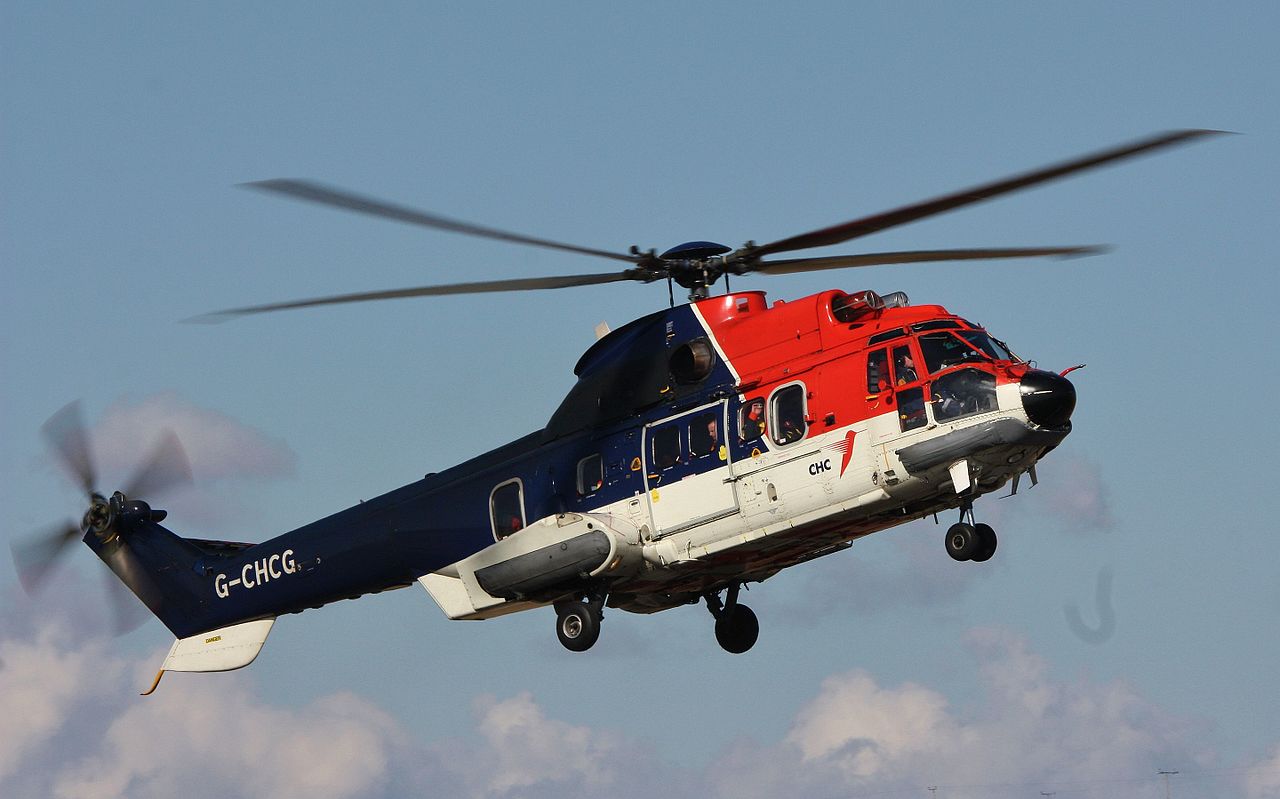
The Eurocopter AS-332 Super Puma is a twin-engined, medium-lift rotorcraft developed as a larger, more powerful derivative of the Aérospatiale SA-330 Puma. Originally produced by the Franco‑German manufacturer that became Eurocopter, it has served in both civilian and military roles. The type is a versatile helicopter family whose design aimed to increase cabin volume, payload and mission flexibility compared with earlier Pumas.
Image gallery
10 Images


Design and characteristics
The Super Puma features a widened fuselage and more powerful turboshaft engines to accommodate larger loads and longer-range missions. Its cabin can be configured for passengers, stretchers, cargo or specialist equipment, while avionics and mission systems have been adapted over time to meet civil safety and military requirements. The model evolved through incremental changes rather than a single radical redesign, retaining the basic layout of a conventional main rotor and tail rotor drive.
Primary roles and uses
Operators commonly employ the AS-332 for troop and logistics transport, offshore support for the oil and gas industry, and search and rescue duties. It is also configured for aerial firefighting and water bombing in some fleets. Military units use it for airborne mobility and special forces support, while civil services adapt it for search and rescue, police aviation and coast guard work. High-end VIP and VVIP transport is another established mission for outfitted examples.
Production, variants and operators
Production was concentrated at the main Eurocopter facility in Marignane, with additional assemblies and licensed manufacture elsewhere. A production licence was sold overseas and led to local assembly; Indonesian-built examples are designated NAS-332. Military adaptations and later developments carry separate type codes and names to reflect equipment and capability changes, and the platform has been exported to numerous national armed forces and civil operators.
History and development
The Super Puma emerged as a response to growing demand in the 1970s and 1980s for larger, more capable medium helicopters capable of supporting both civil industry and armed forces. Built by the Franco-German collaboration behind early Puma designs, the type benefitted from incremental enhancements in powerplants, materials and mission systems as operators requested specific capabilities for offshore, SAR and tactical transport roles.
Notable distinctions
- Derived from the Aérospatiale SA-330 Puma but enlarged and modernised.
- Produced by a Franco‑German company (originally Aérospatiale and MBB partners) – see French and German industry links.
- Configured for a wide range of missions including customs enforcement and offshore logistics.
- All main production ran through the Marignane factory, with licensed variants built abroad.
Related articles
Author
AlegsaOnline.com Eurocopter AS-332 Super Puma Leandro Alegsa
URL: https://en.alegsaonline.com/art/32574