
Eurocopter UH-72 Lakota
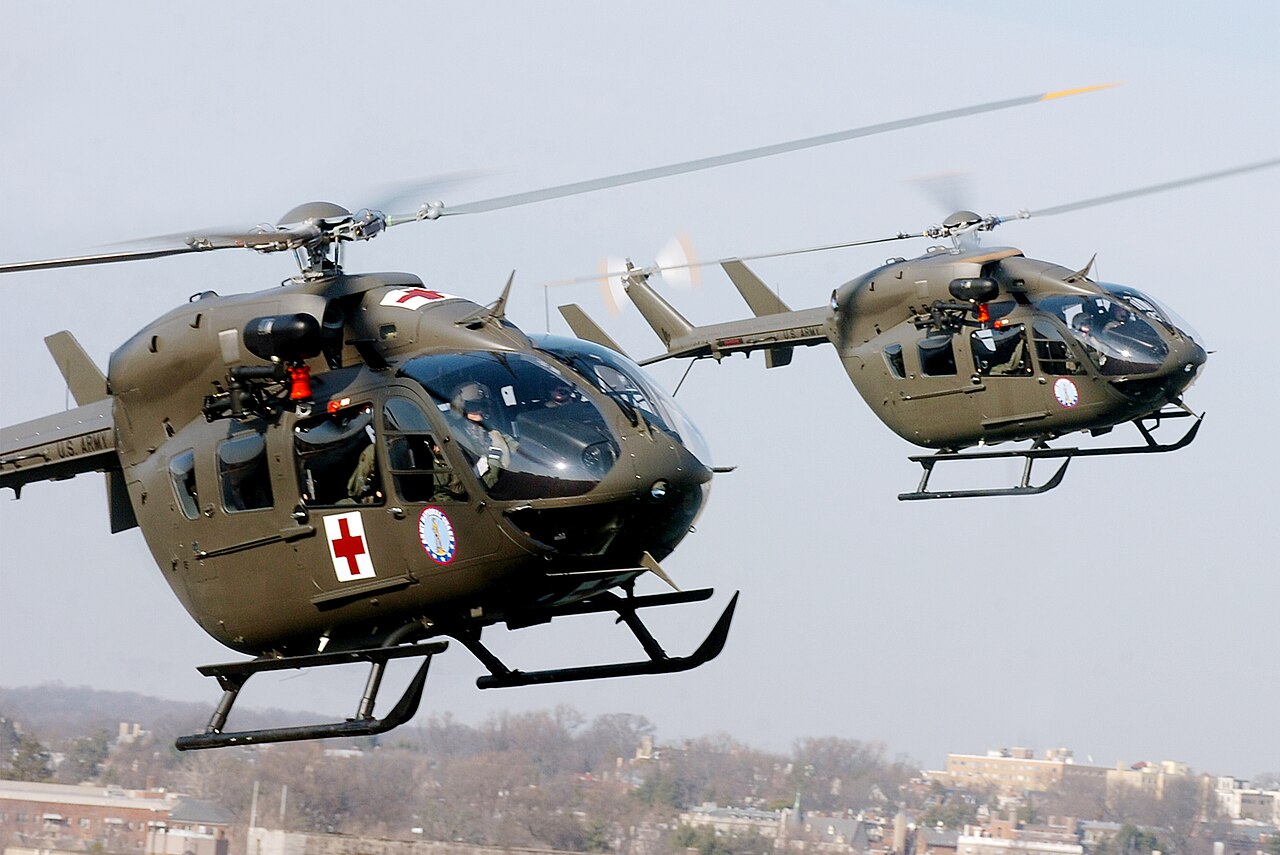
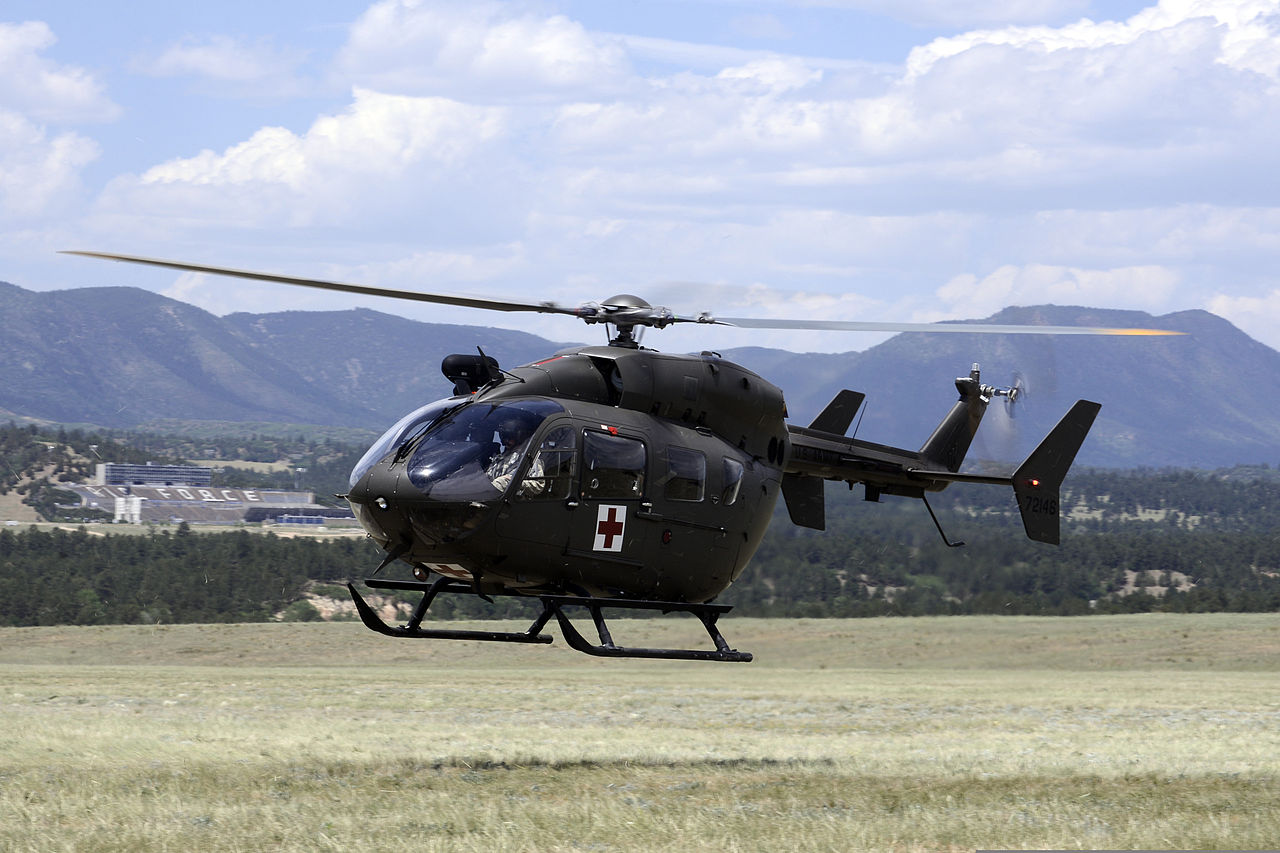
Light twin‑engine utility helicopter (UH‑72 Lakota) derived from the EC145, used by the U.S. Army for training, medical evacuation and support roles; built in the United States by American Eurocopter.
Overview
The Eurocopter UH-72 Lakota is a light utility helicopter developed by Eurocopter, a Franco-French–German company. Designated UH-72A by the U.S. Army, the type is a military adaptation of the civilian EC145 and serves principally in non-combat roles such as training, medical evacuation and support. Its configuration preserves the EC145's twin-engine layout with modern turboshaft propulsion and a conventional cabin suited to litters, passengers and equipment.
Image gallery
10 Images





Design and characteristics
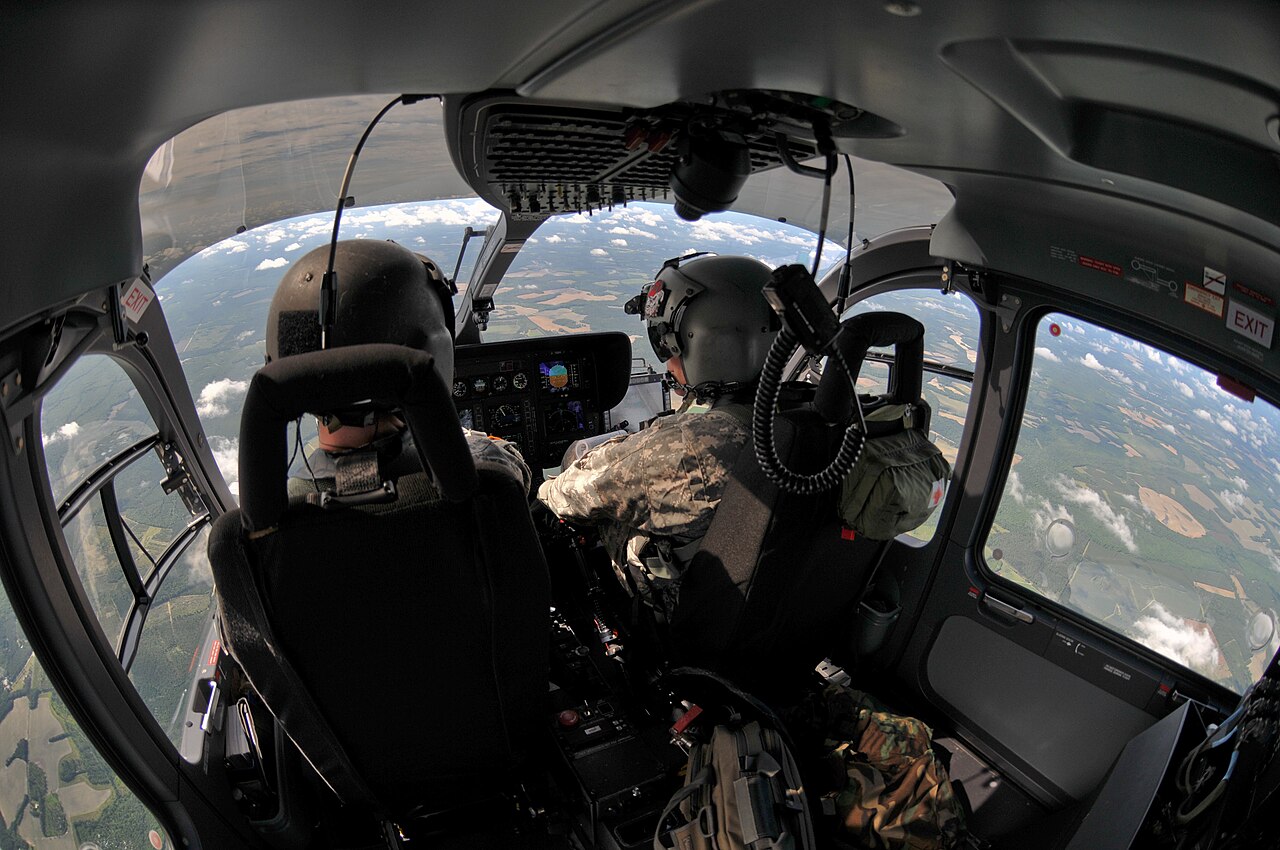
The Lakota is a light twin-engined helicopter tailored for utility tasks. Interior arrangements are modular to accommodate casualty litters, cargo, a pilot and co-pilot, or a small passenger load. Avionics suites used in military service typically include navigation and communications packages that support domestic operations. The aircraft's handling and maintenance were optimized for routine support missions rather than front-line attack duties, emphasizing reliability and low operating cost.
Development and production
The UH-72 program arose from a U.S. Army requirement for a Light Utility Helicopter to replace aging types in homeland and support roles. Eurocopter adapted the civilian EC145 airframe and systems to meet military standards and U.S. requirements. Final assembly and production took place in the United States under the company's American subsidiary to facilitate logistics, sustainment and domestic industrial participation.
Roles and operational use
In U.S. Army service the Lakota has taken on missions previously flown by legacy aircraft such as the Bell UH-1 Iroquois and some Bell OH-58A & C platforms in non-combat environments. Typical duties include medical evacuation and support for flights, search and rescue, range support, light logistics and administrative transport. It is also used for pilot training, where modern avionics and predictable handling make it suitable for transition training for new pilots.
Variants, operators and distinctions
- Variants are largely adaptations of the base model with mission equipment packages for medevac, utility and training.
- The Lakota is principally a domestic support asset and is not configured as an armed attack helicopter, distinguishing it from combat-oriented types.
- Its selection reflected a shift toward procuring off-the-shelf commercial designs adapted to military support roles to reduce development time and cost.
Notable facts
The UH-72 demonstrates how modern military services can employ commercially derived rotorcraft to meet a wide range of non-frontline missions. Its flexibility for communications and observation duties, together with standard maintenance practices, contributed to its adoption for homeland security, training, and medical support. Further technical and procurement details can be explored via manufacturer materials and defense program summaries.
For more information, see related entries and manufacturer pages: design overview, EC145 background, and authoritative summaries on military adaptation and procurement propulsion, historic types, and U.S. production arrangements medical roles, operational missions, replacement platforms, communications uses, observation roles, and industrial context in the United States.
Related articles
Author
AlegsaOnline.com Eurocopter UH-72 Lakota Leandro Alegsa
URL: https://en.alegsaonline.com/art/32579