
Aérospatiale SA-330 Puma: French medium-lift transport helicopter
The Aérospatiale SA-330 Puma is a French twin‑engined medium transport helicopter introduced in the 1960s, used by military and civilian operators for troop transport, logistics, medevac and utility roles.
Overview
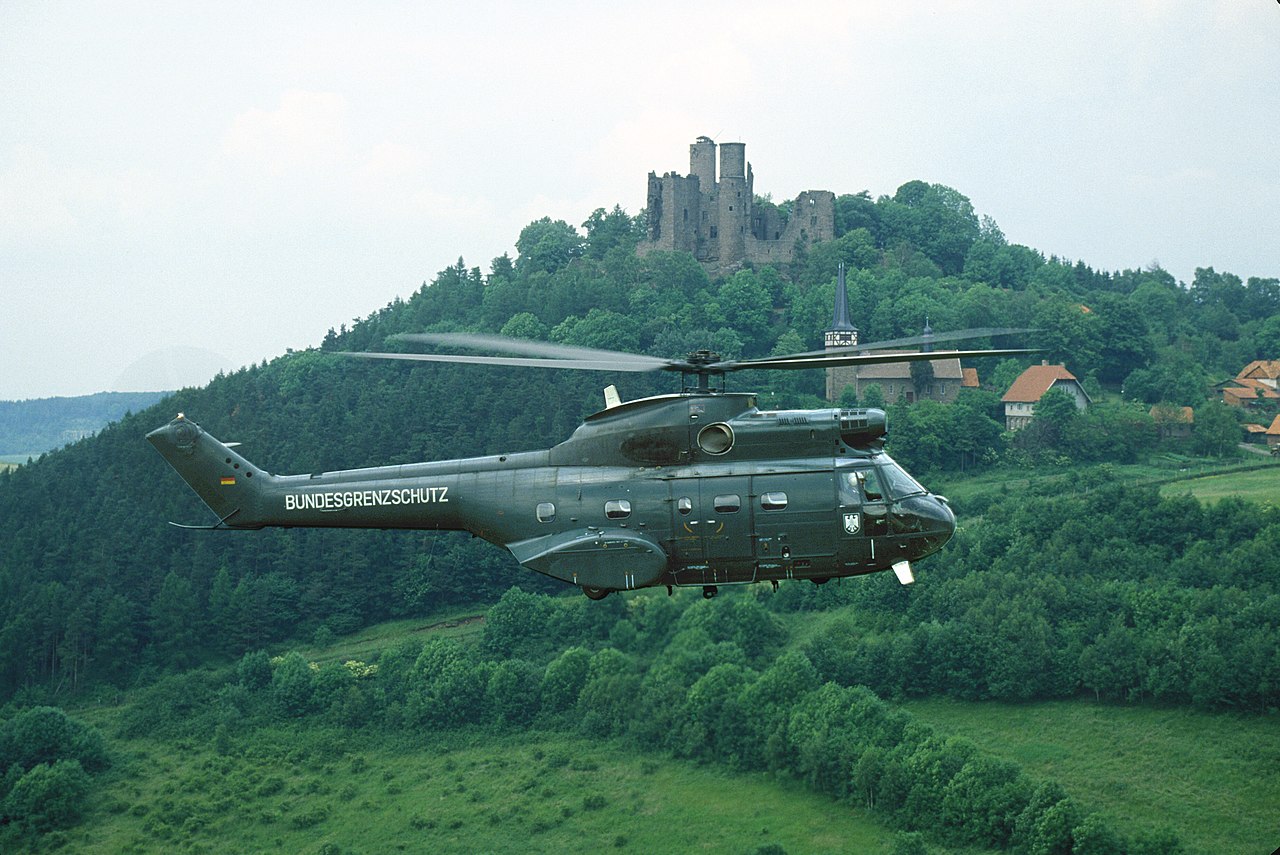
The Aérospatiale SA-330 Puma is a twin‑engined, medium‑lift transport helicopter developed in France in the 1960s. Conceived to replace older piston‑engined types and to give armed forces and civilian operators greater payload and range, the Puma established itself as a versatile rotorcraft able to carry troops, cargo and stretchers, and to perform search and rescue, offshore support and general utility missions.
Image gallery
10 Images




Design and characteristics
The Puma has a high fuselage with a rear loading area and a relatively spacious cabin that can be reconfigured rapidly for passengers, freight or medical evacuation. Its twin engines and four‑blade main rotor provide steady lift and redundancy valued in both military and civil operations. Typical mission equipment includes cargo hooks, rescue hoists, and fittings for litters and cargo pallets. The layout emphasises maintainability and adaptability for operations in varied climates.
Development and production
Initial design and construction were undertaken by Sud Aviation; the programme continued under Aérospatiale after company reorganisation. The prototype first flew in April 1965, and production examples entered service later in the decade. Under a bilateral agreement the type was also produced under licence in the United Kingdom by Westland Helicopters, enabling wider export and operational support networks. The basic Puma design later led to larger, more powerful descendants such as the Super Puma family.
Operational use and roles
In military service the SA‑330 has fulfilled troop transport, logistical lift, airborne assault support, casualty evacuation and search and rescue tasks. Civilian operators have used Pumas for offshore platform support, passenger transfer, and emergency services. Cabin arrangements vary, but the type typically carries a squad of troops or comparable cargo loads, and can be fitted with specialised equipment for specific missions.
Variants, legacy and operators
- Several military and civil variants were produced to meet differing national requirements, with equipment and avionics adapted over time.
- The Puma family influenced subsequent medium‑lift designs and helped establish standards for multi‑role helicopter operations in NATO and export customers.
- Notable operators have included the French Air Force (Armée de l'Air) and the United Kingdom's Royal Air Force (Royal Air Force), among many other national air arms and civilian fleets.
Further reading and resources
For more on the type and its context among rotorcraft, see general material on transport helicopters, the original company Sud Aviation and the successor manufacturer Aérospatiale. Information on licensed UK manufacture is available via sources about Westland Helicopters and the licensing agreement that enabled production. Broader Franco‑British industrial cooperation is discussed in works addressing France–UK aerospace relations. Compilations of operators and service histories may be found in reference lists and databases (operators list).
Questions and answers
Q: What is the Aérospatiale SA-330 Puma?
A: The Aérospatiale SA-330 Puma is a transport helicopter designed and built in France.
Q: Who designed and built the Aérospatiale SA-330 Puma?
A: The design was first built by Sud Aviation, and later by Aérospatiale.
Q: When did the Aérospatiale SA-330 Puma first fly?
A: It first flew in April 1965.
Q: Which air forces mainly use the Aérospatiale SA-330 Puma?
A: It is mainly used by Armée de l'Air, Royal Air Force, and some other air forces.
Q: Is the Aérospatiale SA-330 Puma only used by the military?
A: No, it is also used by civilians.
Q: Was the Aérospatiale SA-330 Puma also built outside of France?
A: Yes, it was also built by Westland Helicopter in the United Kingdom after an agreement between the two countries.
Q: What type of helicopter is the Aérospatiale SA-330 Puma?
A: The Aérospatiale SA-330 Puma is a transport helicopter.
Related articles
Author
AlegsaOnline.com Aérospatiale SA-330 Puma: French medium-lift transport helicopter Leandro Alegsa
URL: https://en.alegsaonline.com/art/1181
Sources
- flugzeuginfo.net : "Aerospatiale / Sud-Aviation SA 330 Puma - Specifications - Technical Data / Description"
- avionslegendaires.net : avionslegendaires.net/aerospatiale-sa-330-puma.php
- helis.com : "Aerospatiale SA330 Puma"
- aviationsmilitaires.net : aviationsmilitaires.net/v3/kb/aircraft/show/1088/sud-aviation-sa-330-puma
- tomcat85.free.fr : tomcat85.free.fr/SA.330_Puma.php
- aviastar.org : "Aerospatiale SA.330 "Puma" helicopter - development history, photos, technical data"
- aeroweb-fr.net : aeroweb-fr.net/appareils/aerospatiale-sa-330-puma-iar-330
- avionslegendaires.net : avionslegendaires.net/aerospatiale-as-332-ec-225-super-puma.php