
Euarchonta: arboreal mammals including primates, colugos and treeshrews
Euarchonta is a grandorder of placental mammals that groups primates, colugos, treeshrews and related fossil taxa; together with Glires it forms the Euarchontoglires clade within Eutheria.
Overview
The Euarchonta are a recognized grandorder of placental mammals that unites several orders and fossil lineages thought to share an ancestral history of tree-associated life. The name is used in higher-level classifications to indicate a close relationship among these groups within the class Mammalia. As a taxonomic rank, grandorder conveys that Euarchonta is a major assemblage rather than a single order.
Image gallery
6 Images



Constituent groups
Euarchonta traditionally includes four principal components: two small living orders, one group of extinct Paleogene mammals, and the order of primates. These are commonly listed as:
- Dermoptera (colugos) — small, gliding mammals found in Southeast Asia with an extensive patagium for moving between trees.
- Scandentia (treeshrews) — small, active mammals native to tropical Asia that occupy varied arboreal and terrestrial niches.
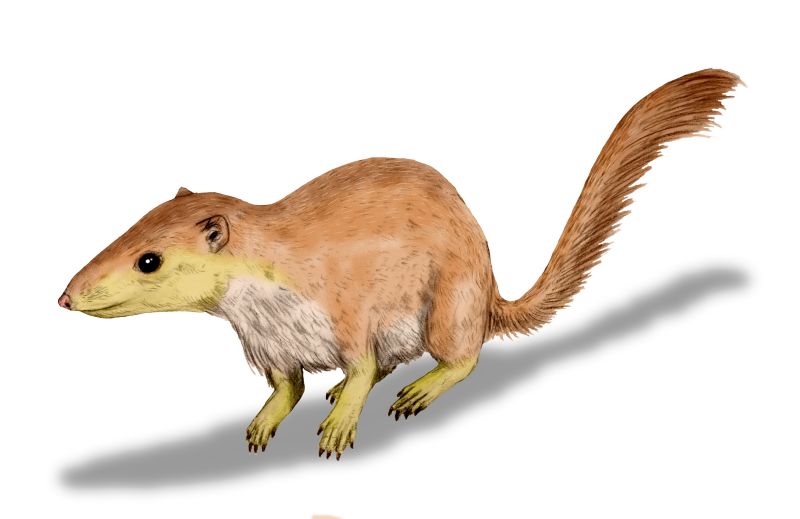
- Fossil Plesiadapiformes — diverse Paleocene and Eocene mammals often regarded as close relatives or stem relatives of true primates; their precise placement remains debated.
- Primates — the diverse living order that includes prosimians, monkeys, apes and humans, characterized by grasping extremities and forward-facing eyes in many lineages.
Anatomy and adaptations
Members of Euarchonta tend to show adaptations associated with arboreal or scansorial habits: flexible limbs and digits capable of grasping, a relatively large braincase in some groups, forward-facing eyes in many primates, and specialized dentition reflecting varied diets. Skeletal details of the wrist, ankle and ear region have been important in comparative studies used to infer relationships among living and fossil taxa.
Evolutionary history and phylogenetic context
Molecular and morphological evidence indicate that Euarchonta is closely related to the rodent‑lagomorph assemblage, Glires. Together they form the larger clade Euarchontoglires, one of the principal groups within placental mammals (commonly referred to as Eutheria). The earliest putative euarchontans are known from Paleocene and early Eocene deposits, and subsequent diversification produced the major lineages recognized today.
Fossils and the origin of primates
Plesiadapiform fossils provide key but sometimes ambiguous evidence about the transition from generalized mammaliforms to more specialized primates. Some plesiadapiforms show features consistent with arboreal life, while lacking clear primate synapomorphies; others are closer to early primates in anatomy. Because fossil remains are fragmentary and characters can be homoplastic, paleontologists combine skeletal, dental and molecular data to test hypotheses about early euarchontan relationships.
Biogeography and ecology
Living euarchontans are primarily distributed in tropical and subtropical regions of Asia and, in the case of primates, worldwide in tropical regions. They occupy a range of ecological roles from insectivory and frugivory to omnivory, and the gliding lifestyle of colugos is a notable ecological specialization that evolved within the group.
Scientific importance and unresolved questions
Euarchonta is central to studies of primate origins, mammalian diversification after the end‑Cretaceous extinction, and the evolution of arboreal adaptations. Ongoing research addresses the precise branching order among treeshrews, colugos and primates, the placement of various fossil taxa, and the timing of divergences inferred from molecular clocks and the fossil record. For comparative context, see treatments of Glires and the broader superclade Euarchontoglires.
Further reading
Introductory accounts and technical reviews summarize current views on euarchontan classification, anatomy and evolution, and are useful starting points for readers seeking more detailed information about specific groups such as colugos, treeshrews and primates.
Related articles
Author
AlegsaOnline.com Euarchonta: arboreal mammals including primates, colugos and treeshrews Leandro Alegsa
URL: https://en.alegsaonline.com/art/32452