
Euarchontoglires: the placental mammal clade uniting primates, rodents, and relatives
Euarchontoglires is a major placental mammal clade uniting primates, rodents, lagomorphs and relatives; explores molecular evidence, evolutionary timing, fossils and taxonomic implications.
Euarchontoglires, sometimes called Supraprimates, is a major clade of placental mammals (Eutheria) that groups together two large assemblages: the glires (rodents and lagomorphs) and the euarchonta (primates and their close relatives). This grouping is recognized primarily on the basis of molecular phylogenetic studies and is one of the main lineages within Placentalia.
Image gallery
10 Images


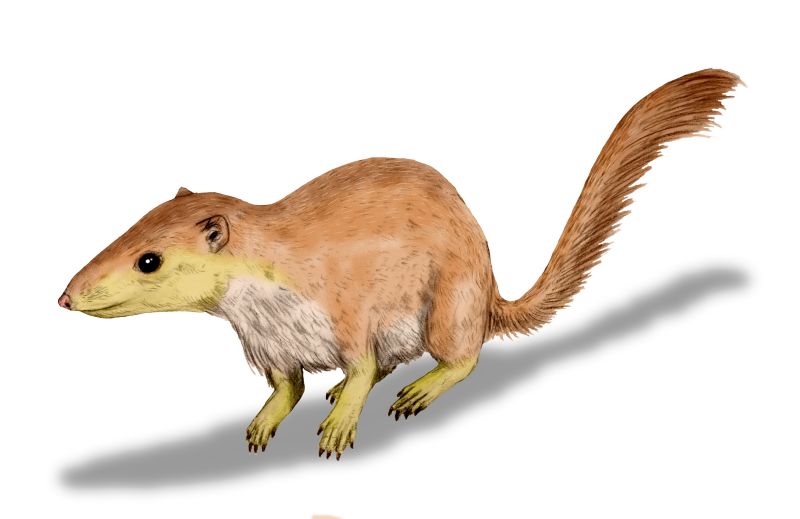
Composition
- Glires — traditionally made up of rodents and lagomorphs (rabbits, hares, and pikas).
- Euarchonta — the clade that includes primates, scandentians (treeshrews), and dermopterans (colugos).
Evolutionary history
Genetic analyses (multiple nuclear and mitochondrial loci, and genome-scale data) consistently recover Euarchontoglires as a monophyletic group. Molecular clock studies place the divergence of its major branches near the Cretaceous–Paleogene interval, although different analyses give a range of dates and uncertainties. The fossil record provides some early representatives of the component lineages, but linking those fossils directly to the molecular tree remains an active area of research.
Distinctive features
There is no single, universally accepted morphological trait that defines Euarchontoglires across all members. Instead, their unity rests largely on genetic evidence. Within the clade, individual groups show clear anatomical specializations — for example, rodents have ever-growing incisors adapted for gnawing, while many primates exhibit modifications for grasping and stereoscopic vision.
Taxonomy and significance
Euarchontoglires plays a central role in modern mammalian classification because it brings together several orders that were once treated as more distantly related. Recognizing this clade helps clarify the early branching pattern of placental mammals and guides comparative studies in evolution, behavior, and genomics across a wide range of species.
Related articles
Author
AlegsaOnline.com Euarchontoglires: the placental mammal clade uniting primates, rodents, and relatives Leandro Alegsa
URL: https://en.alegsaonline.com/art/32453