
Euoplocephalus — Late Cretaceous armored ankylosaur
Euoplocephalus, a well‑armored, low-slung ankylosaurid from the Late Cretaceous, is known from many specimens and a distinctive tail club and osteoderms found in western North America.
Overview
Euoplocephalus (meaning "well‑armored head") was a large, heavily armored herbivorous dinosaur of the ankylosaur family that lived during the Late Cretaceous. Adults reached roughly 6 metres (about 20 feet) in length and weighed on the order of a few tonnes. Euoplocephalus is often used as a classic example of an armored dinosaur because of its dense covering of bony plates and knobs (osteoderms) and its characteristic broad skull.
Image gallery
10 Images




Anatomy and armor
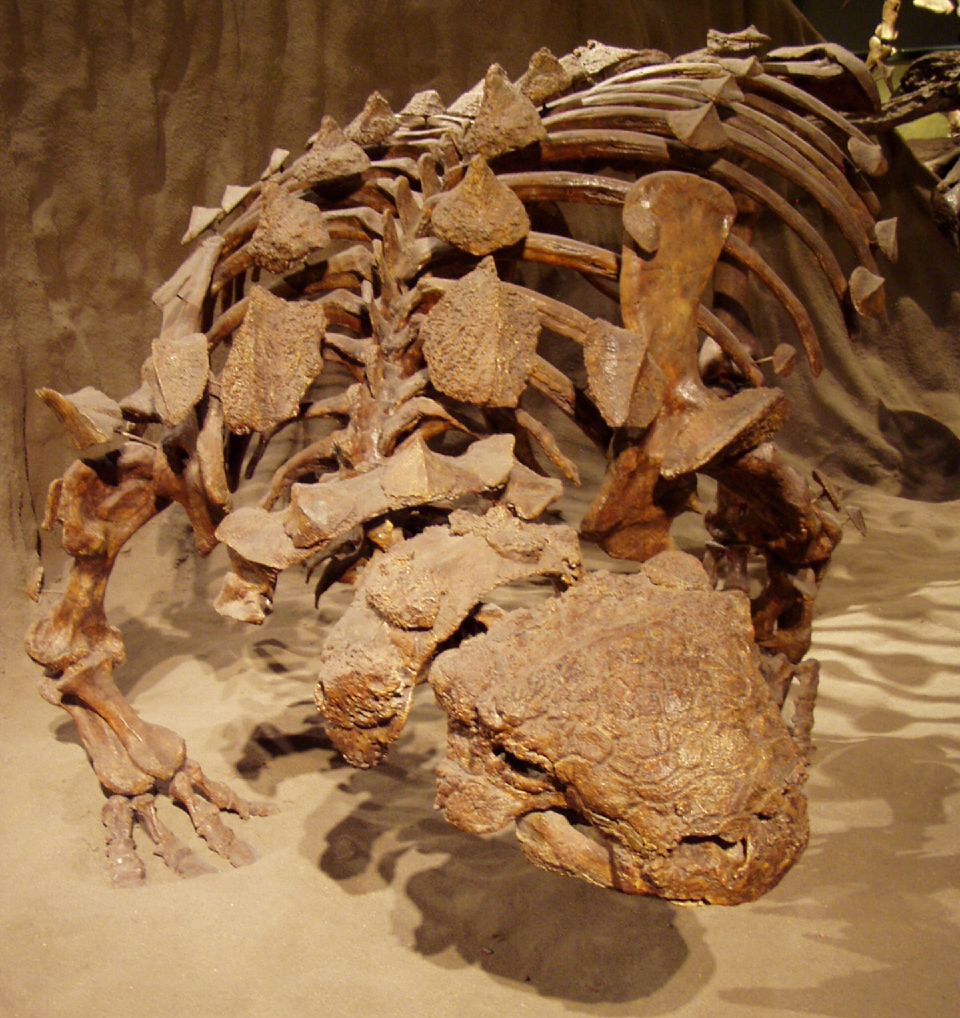
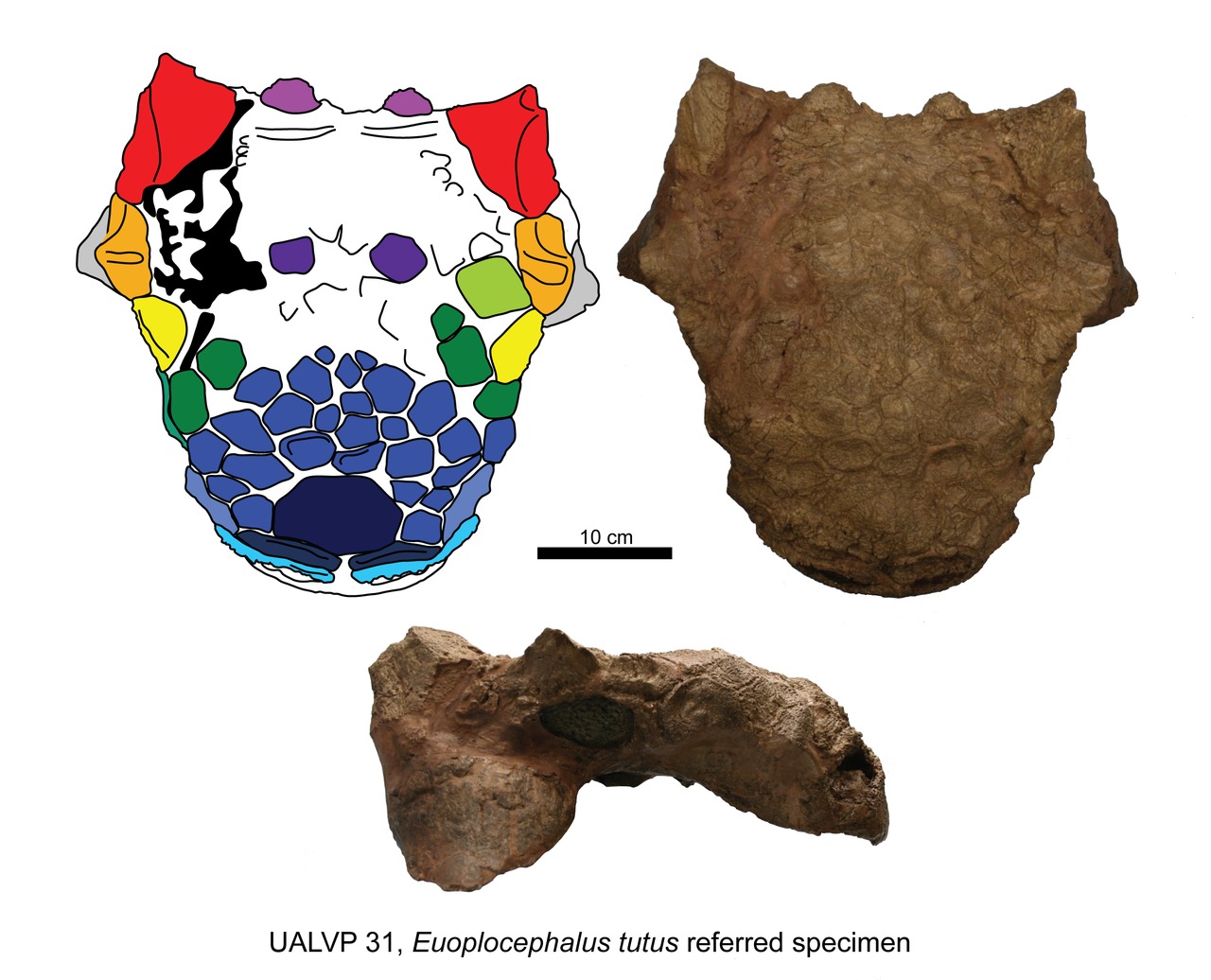
Euoplocephalus had a wide, low skull with a horny, toothless beak at the front and small, simple cheek teeth for cropping and grinding plants. The skull bore paired bony protrusions and knobs that could be described as horns or boss-like ornaments; these features are part of why it is frequently illustrated with a heavily reinforced head (horn-like structures). The braincase was relatively small compared with body size (small brain), typical of many ankylosaurs.
Its back and flanks were covered with an array of osteoderms—flat plates, ridged scutes and spike-like elements—embedded in the skin. One of the most distinctive features is the rigid, muscular tail ending in a large bony club formed by fused osteoderms, which is interpreted as a defensive weapon and perhaps a display structure.
Fossil record and distribution
Euoplocephalus is among the best-represented ankylosaurids in the fossil record. Paleontologists have identified fossils from more than forty individuals, including multiple skulls and several near-complete skeletons found with armor in place. These remains come primarily from Late Cretaceous deposits in western North America, especially the Dinosaur Park and equivalent formations of Alberta in Canada and parts of Montana in the United States. Individual osteoderms and isolated armor plates are among the most commonly recovered elements (fossil material).
Behavior, ecology and contemporaries
Euoplocephalus was a low‑browsing herbivore that likely fed on ferns, low-growing flowering plants and other vegetation it could clip with its beak and process with cheek teeth. Its heavy armor and tail club suggest a lifestyle in which active defense against predators was important: the tail club could deliver powerful blows to deter attackers or injure rivals. Euoplocephalus shared its environment with large theropod predators such as Tyrannosaurus and faster, smaller hunters like Deinonychus, as well as many other herbivores and small animals.
Taxonomy and historical notes
The genus was first described in the early 20th century and historically served as a repository for many ankylosaurid specimens from western North America. Over time, detailed study led researchers to split some material into other genera and species, so the taxonomy has been revised repeatedly. The name Euoplocephalus remains valid for a suite of well‑diagnosed specimens and is important for understanding ankylosaur diversity and evolution.
Distinguishing features and scientific importance
- Broad, heavily reinforced skull with a beak and simple cheek teeth.
- Extensive dermal armor of osteoderms covering the body.
- Large, fused tail club capable of delivering defensive blows.
- Abundant fossil representation, making it one of the best-known ankylosaurids.
Euoplocephalus is significant both for public imagination—often appearing in museum displays and popular reconstructions—and for scientific study, since its plentiful fossils help paleontologists investigate growth, variation, and the function of armor in ankylosaurs. For further general information and museum treatments, see additional resources linked here: armored dinosaur overview, fossil records, and regional pages for Alberta and Montana.
Questions and answers
Q: What is Euplocephalus?
A: Euplocephalus is a large armored dinosaur, known for its wide head, bony horns, and small brain.
Q: How long was Euplocephalus?
A: Euplocephalus measured about 20 feet (6 m) long.
Q: How much did Euplocephalus weigh?
A: Euplocephalus weighed approximately 2 tons.
Q: What kind of teeth did Euplocephalus have?
A: Euplocephalus had small, peg-like cheek teeth and a toothless beak.
Q: What other dinosaurs lived during the same time as Euplocephalus?
A: Euplocephalus lived alongside large meat-eating dinosaurs like Tyrannosaurus and Deinonychus.
Q: Where have fossils of Euplocephalus been discovered?
A: Fossils of Euplocephalus have been found in Alberta, Canada and Montana in the United States.
Q: What is significant about the number of Euplocephalus fossils discovered?
A: More than 40 individual Euplocephalus fossils have been discovered, making it the best known ankylosaurid. This includes 15 skulls, teeth, and almost-complete skeletons, some found with the armor still attached.
Related articles
Author
AlegsaOnline.com Euoplocephalus — Late Cretaceous armored ankylosaur Leandro Alegsa
URL: https://en.alegsaonline.com/art/32531