
Eurasian lynx (Lynx lynx)
Overview of the Eurasian lynx: appearance, behavior, distribution across Europe and Asia, diet, reproduction, and conservation measures in neutral, accessible detail.
Overview
The Eurasian lynx (Lynx lynx) is the largest member of the lynx genus within the family Felidae. Native to broad areas of Europe and Asia, it is a medium- to large-sized wild cat adapted to forested and mountainous landscapes. Recognisable features include tufted ears, a short black-tipped tail and long legs. The species is an important mid- to large-sized carnivore within many temperate and boreal ecosystems.
Image gallery
10 Images

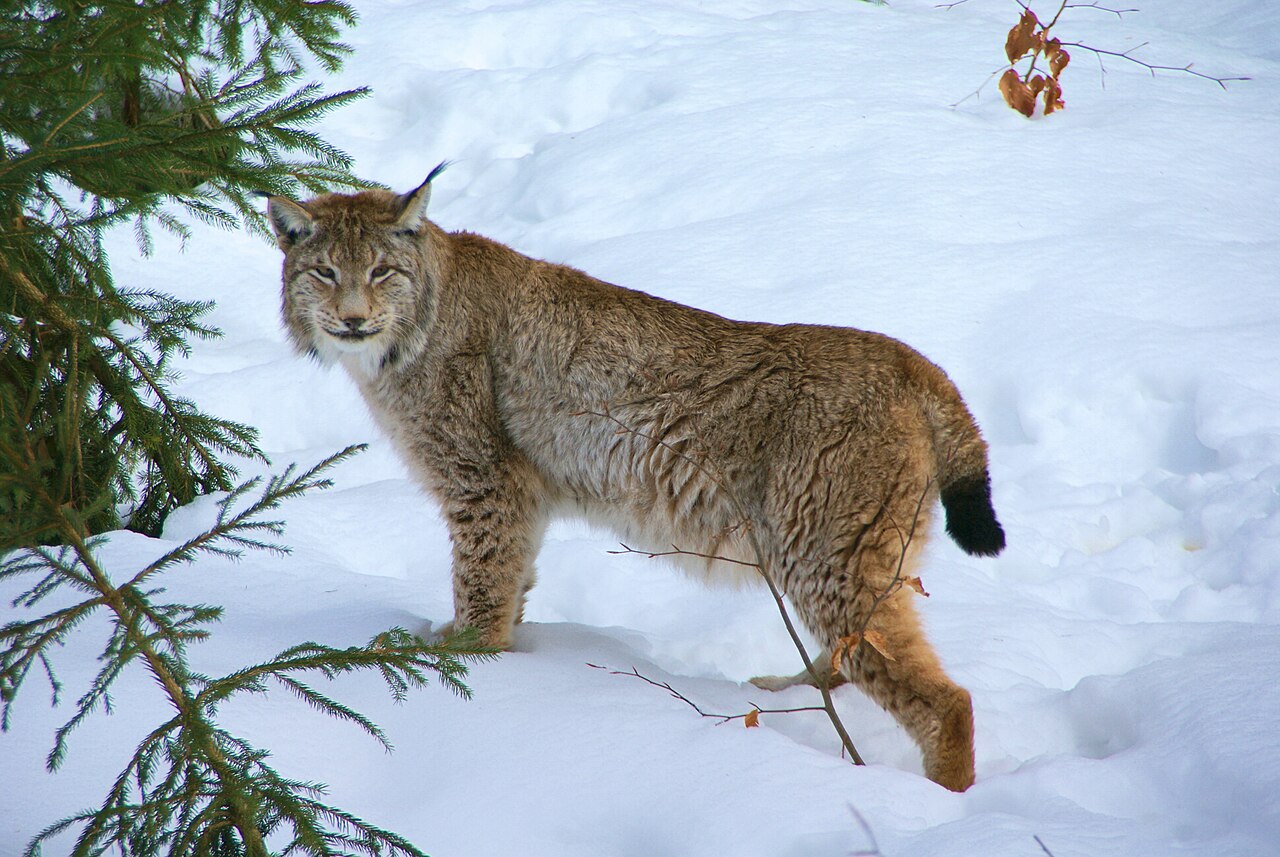


Physical characteristics
Coat colour ranges from pale buff to reddish or grey, usually patterned with spots that may fade in adults in some populations. Adults typically reach body lengths on the order of tens of centimetres more than smaller lynx species, with substantial regional and sexual variation in weight. Large, padded paws help distribute weight on snow, while ear tufts and a facial ruff are distinctive identifiers. Lifespan in the wild commonly spans several years; individuals may live longer in captivity.
- Size and build: robust body, long legs and a short tail; size varies by region.
- Coat: seasonal changes and cryptic patterning suited to woodland cover.
- Reproduction: mating occurs seasonally; litters usually contain one to four kittens after a gestation of about two months.
Distribution and habitat
The species occurs across northern, central and eastern parts of Europe and extends well into northern and central Asia. Populations are present in boreal and mixed forests of countries such as Finland, Sweden and Norway, and range eastwards through Russia and into the Caucasus and parts of Central Asia. Suitable habitat typically provides dense cover for stalking, den sites and access to sufficient prey.
Behavior and ecology
Eurasian lynx are primarily solitary and often active at dawn and dusk. They are ambush predators: where available they take medium-sized ungulates such as roe deer, and they also hunt smaller mammals and birds, including hares and grouse. Home-range size varies with prey density and habitat, and individuals mark and defend territories to varying degrees. Reproductive success and juvenile survival are influenced by prey availability and human pressures.
Conservation and human interactions
Globally the species is assessed as of lower concern than many large carnivores, but local populations are threatened by habitat fragmentation, reduced prey, poaching and vehicle collisions. Conservation efforts in Europe and Asia include legal protection, habitat management, anti-poaching measures and reintroductions or translocations in some regions to restore former ranges. Monitoring techniques such as camera trapping and genetic sampling help track population trends and inform management.
- Key threats: habitat loss and fragmentation, illegal killing, declines in prey.
- Typical conservation actions: protected areas, regulated hunting where applicable, connectivity measures and public outreach.
For taxonomic and general species resources consult the family overview: Felidae / lynx family overview.
Questions and answers
Q: What is the Eurasian lynx?
A: The Eurasian lynx is a medium-sized cat that is native to Europe and Asia, including Finland, Sweden, and Norway.
Q: What is the size of the Eurasian lynx?
A: The Eurasian lynx is the largest of the lynxes with a length of 80–130 cm.
Q: Where is the Eurasian lynx found?
A: The Eurasian lynx is found in Europe and Asia, including Finland, Sweden, and Norway.
Q: What is the Eurasian lynx's status as a predator?
A: The Eurasian lynx is one of the largest predators in Europe and Asia.
Q: Is the Eurasian lynx a small or large cat?
A: The Eurasian lynx is a medium-sized cat.
Q: What is the scientific name of the Eurasian lynx?
A: The scientific name of the Eurasian lynx is Lynx lynx.
Q: What are some physical characteristics of the Eurasian lynx?
A: The Eurasian lynx is a medium-sized cat with a length of 80–130 cm, and is the largest of the lynxes.
Related articles
Author
AlegsaOnline.com Eurasian lynx (Lynx lynx) Leandro Alegsa
URL: https://en.alegsaonline.com/art/32548
Sources
- animaldiversity.org : "Lynx lynx (Eurasian lynx)"
- wildlifebiology.com : "Variation in diet, prey selectivity and home-range size of Eurasian lynx Lynx lynx in Switzerland"
- doi.org : 10.2981/0909-6396(2007)13[393:VIDPSA]2.0.CO;2
- deepdyve.com : Diet of Eurasian lynx Lynx lynx in the northern Dinaric Mountains (Slovenia and Croatia)
- doi.org : 10.1007/s10344-006-0052-4