
Duct (anatomy): form, function, and clinical importance
A duct is a tubular structure that conveys secretions or fluids from glands or organs. This article explains structural features, types, functions, common examples and clinical issues linked to ducts.
In anatomy and physiology, a duct is a tubular channel that carries substances produced by a gland or organ to another site. Ducts are most commonly associated with exocrine glands (such as salivary or sweat glands) and with larger organ systems that require conduits to move fluid, like the biliary or reproductive tracts. Not all tubular channels called ducts are identical—size, lining and muscular support vary with function.
Image gallery
6 Images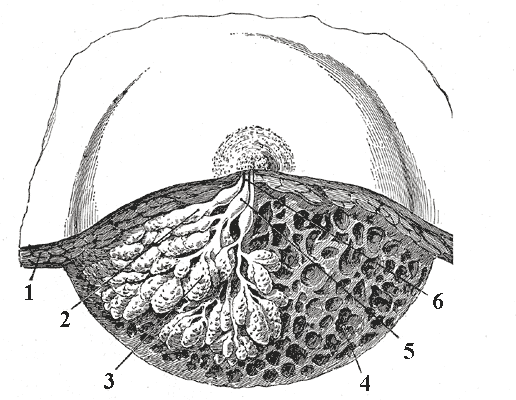




Structure and layers
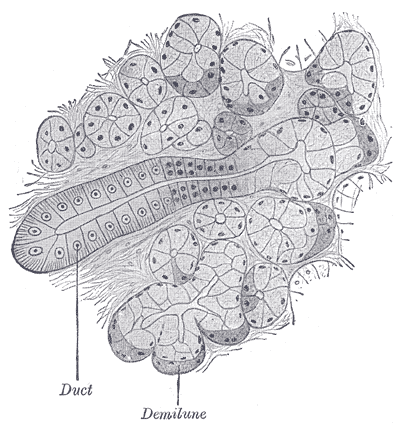
Most ducts are hollow tubes lined primarily by epithelial cells rather than endothelium. The epithelial lining secretes, absorbs or protects depending on the duct's role. Beneath the epithelium lies a basement membrane and connective tissue that anchors the duct in place. In many larger ducts, a layer of contractile cells helps propel contents—either specialized myoepithelial cells in glands or layers of smooth muscle in tubular organs.
- Epithelial lining: surface cells that may be cuboidal, columnar or squamous.
- Basement membrane and connective tissue: structural support and blood supply.
- Contractile layer: myoepithelium in some glands or smooth muscle in larger conduits.
- Surrounding tissue: fat, fascia or organ parenchyma that protects the duct.
For comparison, blood and lymphatic vessels are lined by endothelial cells and have distinct organization; the term "duct" is generally reserved for channels conveying glandular or organ secretions rather than circulating blood.
Types, examples and development
Examples of ducts include the pancreatic and bile ducts, salivary ducts, sweat ducts, mammary ducts and the reproductive channels. The male reproductive tract features the vas deferens, which conveys sperm toward the prostate and into the ejaculatory ducts. Embryologically, ducts arise from the epithelia of the tissue that produces them—some from endoderm, others from ectoderm—so their cell types reflect their origin.
Ducts perform transport, modify secretions (for example concentrating or adding electrolytes), provide a defensive barrier and can participate in local secretion or absorption. Clinically, ducts are important because they can become obstructed (stones in bile ducts), infected, inflamed or the site of tumors (for example ductal carcinoma in the breast). Genetic disorders such as cystic fibrosis affect epithelial ion transport and thereby impair ducts in the pancreas and lungs.
Understanding duct anatomy and physiology clarifies their role in health and disease and informs surgical and medical treatment of conditions that block, inflame or transform these essential channels. For more on anatomical definitions and related systems see resources in organ anatomy and gland physiology linked elsewhere.
Related articles
Author
AlegsaOnline.com Duct (anatomy): form, function, and clinical importance Leandro Alegsa
URL: https://en.alegsaonline.com/art/29128