
Vas deferens (ductus deferens)
The vas deferens is the paired muscular tube that carries sperm from each epididymis to the ejaculatory ducts and urethra. It is central to male reproduction and is commonly involved in vasectomy.
The vas deferens, also called the ductus deferens, is a paired tubular structure in male vertebrates that transports sperm from the epididymis toward the site of ejaculation. Each duct sits within the spermatic cord and follows a characteristic path from the testis into the pelvic cavity. In everyday clinical and anatomical descriptions it is described as a thick-walled tube whose coordinated contractions propel sperm during emission.
Image gallery
10 Images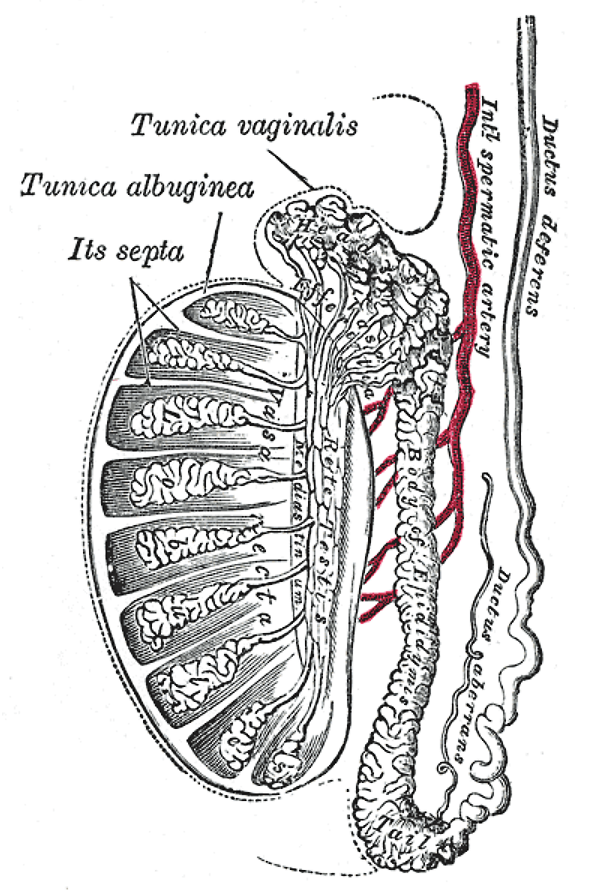




Anatomy and course
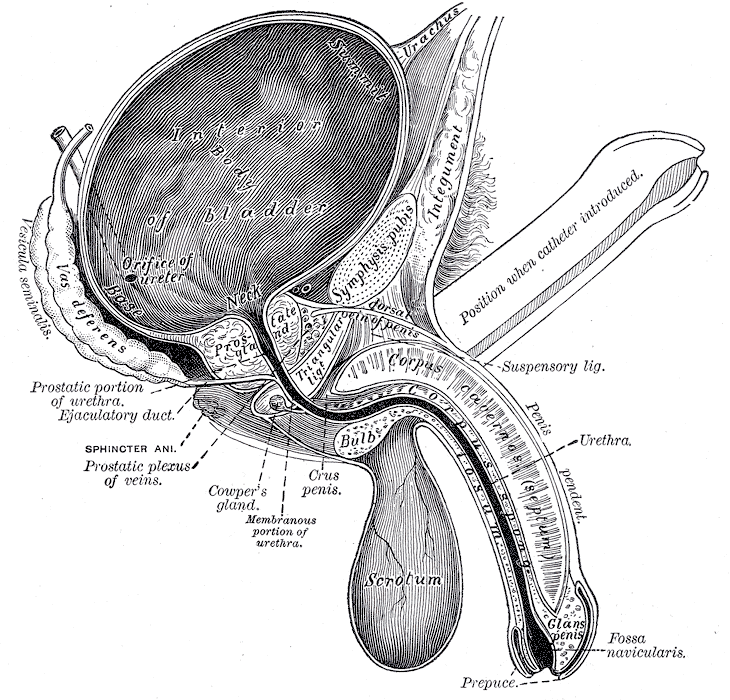
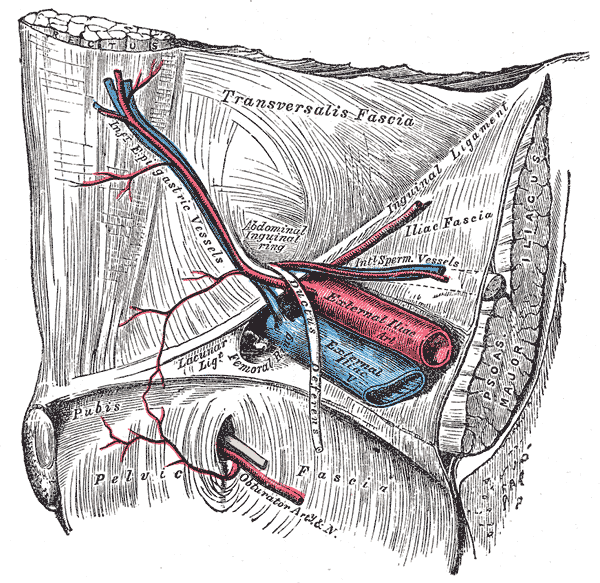
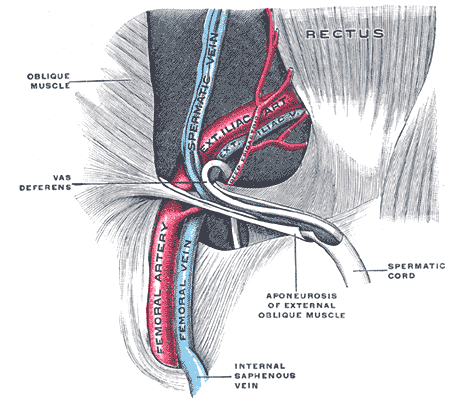
Each duct begins at the tail of the epididymis and ascends in the spermatic cord through the inguinal canal, then crosses into the pelvis where it approaches the bladder and joins the seminal vesicle to form the ejaculatory duct. The vas deferens typically runs close to the epididymis and ultimately delivers contents into the urethra through the prostate. Its wall contains multiple layers, including a mucosal lining, a substantial layer of smooth muscle, and an outer connective tissue sheath.
Function and physiology
The primary role of the vas deferens is to move and temporarily store sperm produced in the testis. During sexual arousal, sympathetic nervous input triggers rhythmic contractions of the muscular wall, a process that helps propel sperm into the posterior urethra at the time of ejaculation. Fluids from the seminal vesicles and prostate mix with sperm in the ejaculatory ducts and urethra, and semen is expelled through the penile urethra toward the external opening of the penis.
Development and comparative notes
Embryologically, the vas deferens develops from the mesonephric (Wolffian) duct, a structure that gives rise to several components of the male reproductive tract. Variations in its form and length occur across vertebrate species, but its role in conveying gametes from the testis is conserved among most male vertebrates.
Clinical significance
Because the vas deferens is the conduit for sperm, it is a common target for sterilization. A vasectomy interrupts both ducts to prevent sperm from entering ejaculate. Other clinical concerns include congenital absence (which can affect fertility), obstruction, infection, or injury during surgery. Examination of vasal integrity and patency is an important element in fertility evaluation and certain urologic procedures.
Notable facts and distinctions
- There are two vasa deferentia (one on each side); they are muscular and usually several centimeters long when uncoiled.
- The muscular contractions that move sperm are peristaltic and under autonomic control.
- Its position—ascending in the spermatic cord, passing through the inguinal canal, and looping near the bladder—makes it relevant in both reproductive and general surgical anatomy.
The vas deferens is therefore a compact but essential part of male reproductive anatomy: a paired, muscular transport system linking sperm maturation in the epididymis to the passages that convey semen out through the urethra and penis. For visual summaries and surgical descriptions see resources flagged by anatomy references and clinical guides duct overview and procedural materials on ejaculation and transport.
Questions and answers
Q: What is the vas deferens?
A: The vas deferens is a duct in a man's body that carries sperm away from the testes towards the penis.
Q: Is the vas deferens only present in humans?
A: No, the vas deferens is present in other male vertebrates as well.
Q: How many vas deferens are there in a male body?
A: There are two vas deferens in a male body.
Q: What surrounds the tubes of the vas deferens?
A: The tubes of the vas deferens are surrounded by smooth muscle.
Q: What is the function of the vas deferens?
A: The function of the vas deferens is to connect the left and right epididymis to the ejaculatory ducts in order to move sperm.
Q: How long is each tube of the vas deferens?
A: Each tube of the vas deferens is about 30 centimeters long.
Q: What happens during ejaculation in relation to the vas deferens?
A: During ejaculation, the smooth muscle in the wall of the vas deferens contracts, which pushes the sperm towards the penis, where they enter the urethra. Other male sex glands push out at the same time.
Related articles
Author
AlegsaOnline.com Vas deferens (ductus deferens) Leandro Alegsa
URL: https://en.alegsaonline.com/art/104291