
Dianthus — carnations, pinks and Sweet William
Dianthus is a genus of about 300 species of flowering plants in the family Caryophyllaceae, valued for their fragrant, often fringed flowers and widely cultivated as garden and cut-flower plants.
Dianthus is a genus of herbaceous plants and small shrubs noted for showy, often fragrant flowers. The group contains roughly three hundred species and a large number of garden hybrids and cultivars. Botanically it belongs to the family Caryophyllaceae and is documented across much of temperate Eurasia and neighboring regions, with principal ranges in Europe and Asia, some species extending into north Africa and one native occurrence reported in Arctic North America (D. repens). For taxonomic overviews and species lists see resources on the Dianthus genus and summaries of species diversity.
The name Dianthus is classical in origin, combining Greek dios ("divine" or "of Zeus") and anthos ("flower"), a compound cited by early botanists. Historical references to the genus appear in ancient botanical writings and later European herbals; the genus was mentioned by authors such as Theophrastus. The plants are broadly known by several common names: "carnation" for D. caryophyllus, "pink" for the fringed-petal types (e.g. D. plumarius), and "Sweet William" for D. barbatus. See general descriptions of flowering plants for context on reproductive structures.
Image gallery
10 Images





Characteristics
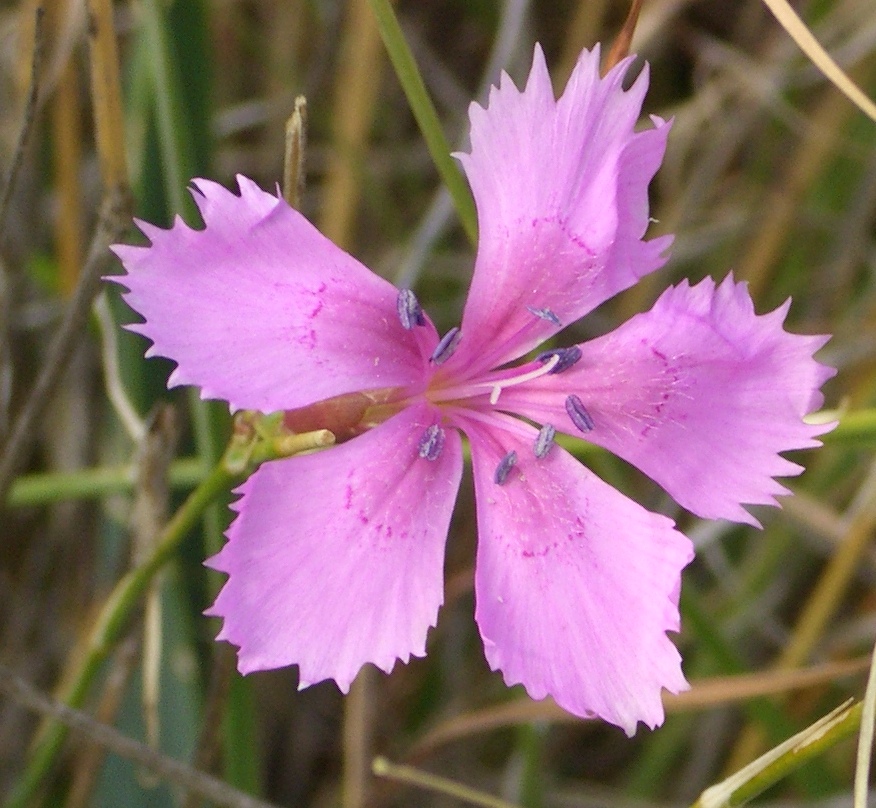
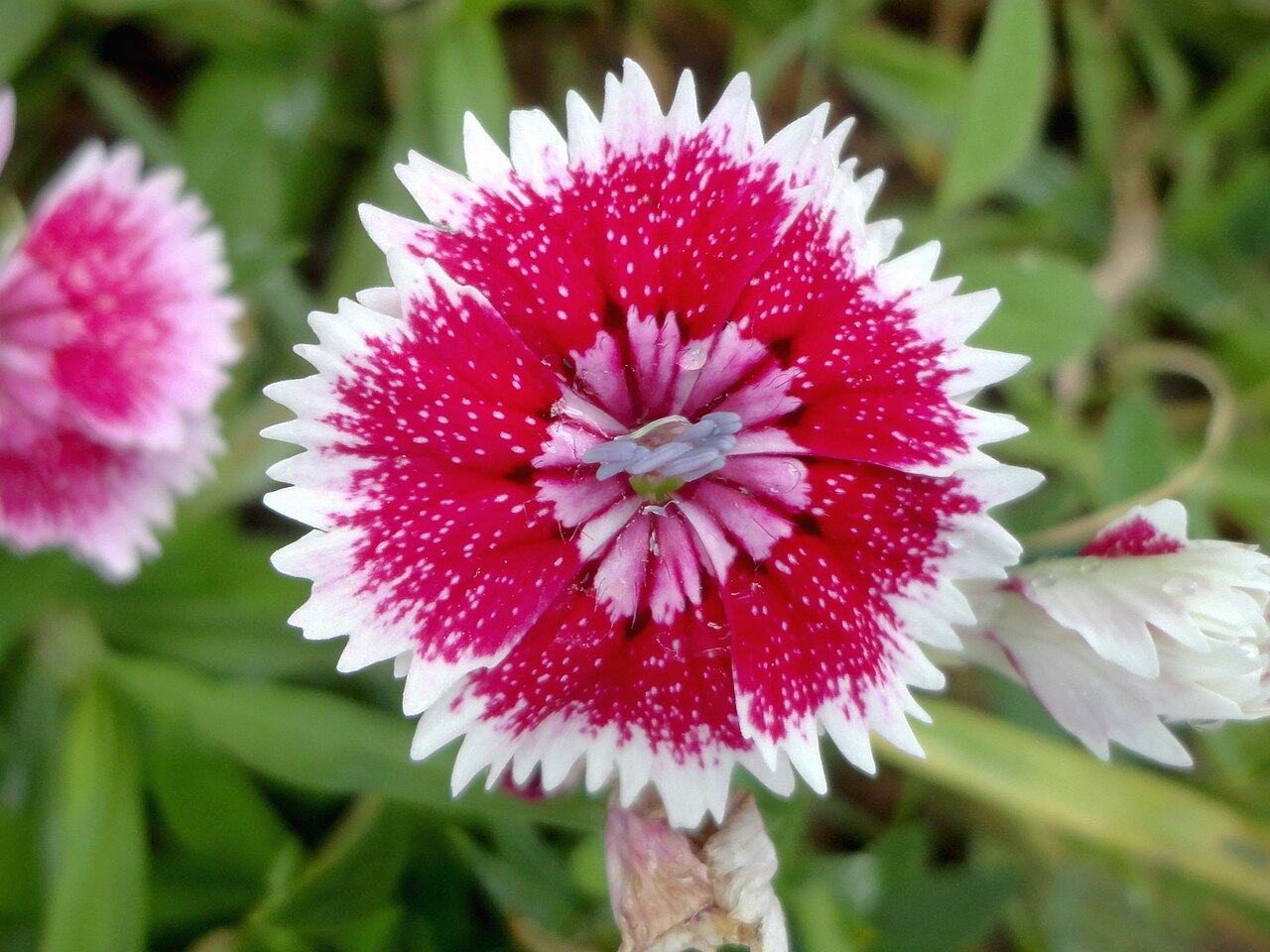
Dianthus species share a set of characteristic features. Stems are typically erect and may be single or branched. Leaves are opposite, simple, and commonly narrow and glaucous. The flowers are usually solitary or borne in small clusters; they have five petals, often notched or fringed at the margin (a trait that gives "pinks" their name), and a tubular calyx. Fragrance varies by species and cultivar; some are strongly scented and prized in perfumery and floristry.
- Habit: annuals, biennials, or short-lived perennials
- Leaves: opposite, simple, often linear
- Flowers: five-petaled, often with serrated or fringed edges
- Fruit: capsule that opens to release several seeds
Gardeners value Dianthus for long-lasting blooms, a wide color range (white, pink, red, yellow, bi-colors) and compact growth that suits borders and rock gardens. Several species and hybrids are important commercially: Dianthus cultivars supply the cut-flower market and are common in ornamental bedding. Cultural needs are generally straightforward: good light, well-drained soil, moderate watering, and occasional deadheading encourage prolonged flowering.
History, uses and notable facts
Cultivation of carnations and related forms dates back centuries in Europe and Asia, where selective breeding produced the wide range of colors and petal forms seen today. Uses include cut flowers, corsages, and garden ornamentals; certain types also appear in cultural symbolism and traditional medicine. In horticulture, distinctions are drawn between species-type plants and the many garden hybrids — for example, the garden carnation (D. caryophyllus), the old-fashioned pinks (D. plumarius and relatives), and the cluster-flowered Sweet William (D. barbatus). For further reading on species descriptions, distribution and horticultural advice consult specialist floras and plant databases (name origins, species lists).
Although generally easy to grow, Dianthus can be susceptible to fungal diseases in poorly drained soils and may attract pests such as aphids. Propagation is commonly by seed or by cuttings for particular cultivars. Because of their historical and commercial importance, Dianthus remains one of the best-known genera of temperate garden plants and continues to be a focus of breeding for novel colors, improved vase life and fragrance intensity. For practical guides and conservation status of particular species consult specialist sources and regional flora authorities (Asia, Europe, Africa and North America references).
Related articles
Author
AlegsaOnline.com Dianthus — carnations, pinks and Sweet William Leandro Alegsa
URL: https://en.alegsaonline.com/art/27136