
Dicotyledon (dicot): historical group and modern understanding
Dicotyledons (dicots) were a traditional grouping of flowering plants with two seed leaves. Molecular studies split them into several lineages; the eudicots form the largest monophyletic clade.
Overview
Dicotyledons, commonly called dicots, were long treated as one of the two major divisions of flowering plants (angiosperms) because their seeds typically contain two embryonic leaves known as cotyledons (seed and cotyledons). Historically the group encompassed a very large portion of plant diversity (often cited near 200,000 species) and contrasted with the monocotyledons (monocots), which have a single cotyledon.
Image gallery
10 Images
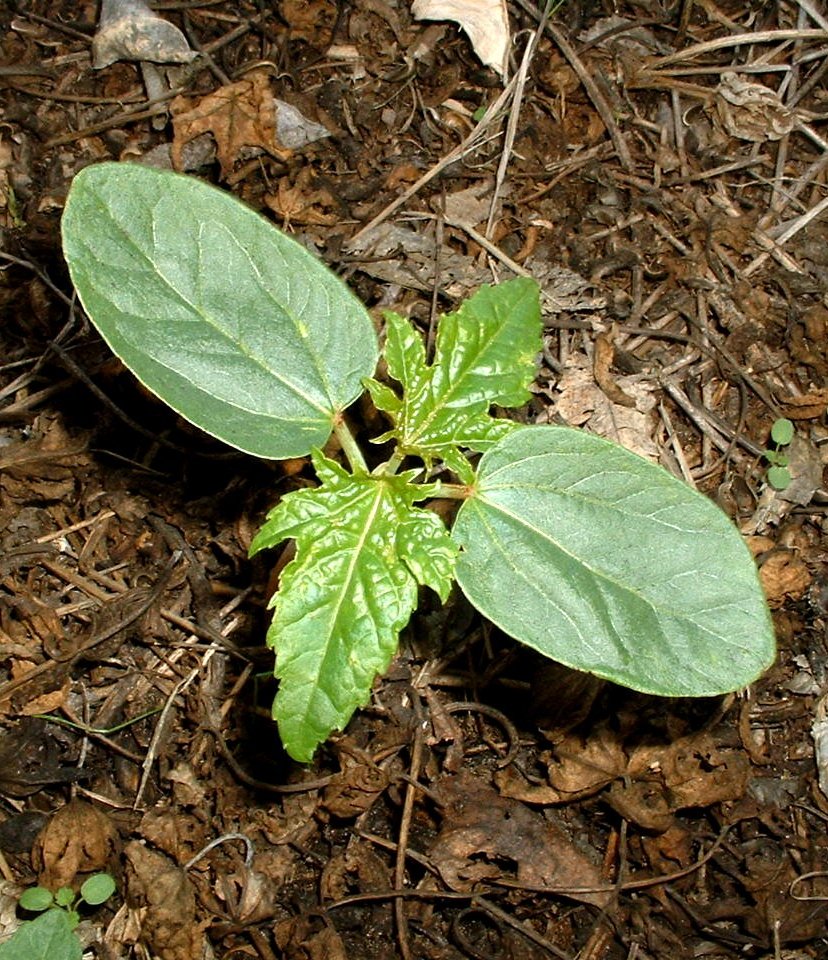




Key characteristics
Although not all members share every trait, many plants traditionally called dicots show some common features. Typical characteristics include:
- Leaves with a branched or netlike venation pattern rather than parallel veins.
- Flower parts often in multiples of four or five (sepals, petals, stamens).
- Vascular bundles arranged in a ring within the stem, allowing for secondary growth (wood formation) in many species.
- Taproot systems are more common than the fibrous root systems of most monocots.
History and changes in classification
Classical botany divided angiosperms cleanly into dicots and monocots. From the late 20th century onward, however, DNA-based approaches such as molecular phylogeny revealed that the traditional dicots are not a single evolutionary group. Several early-diverging lineages (often grouped as basal angiosperms) and clades like the magnoliids branched off before the main monocot–eudicot split. Because the old dicot assemblage leaves out some descendants that share a common ancestor, it is considered paraphyletic rather than monophyletic.
Eudicots and pollen structure
The largest and most clearly defined descendant of the traditional dicots is the eudicot clade (eudicots). Eudicots are recognized as a true evolutionary group by molecular data and by a characteristic change in pollen morphology: most eudicots have distinctive multi-grooved pollen grains, a derived condition relative to older lineages (pollen structure is diagnostic).
Importance, examples and uses
Plants traditionally called dicots include many familiar trees, shrubs and herbs that dominate temperate landscapes and agriculture. Major families that fall within the eudicots supply food, fiber and ornamentals: legumes, roses, brassicas, asters and many fruit crops. These plants are central to ecosystems as primary producers and to human economies through forestry, horticulture and crop production.
Modern usage and notable distinctions
In contemporary botanical practice the term "dicot" is often used informally to describe plants with two cotyledons, but it is not a formal rank in modern classifications such as those produced by groups that use molecular evidence. Instead, botanists refer to specific clades (for example, eudicots, magnoliids or other basal angiosperm groups) to reflect evolutionary relationships accurately. For accessible introductions and phylogenetic overviews see entries and resources linked throughout this article (angiosperms, molecular phylogeny, eudicots).
Questions and answers
Q: What are dicotyledons?
A: Dicotyledons, or dicots, are one of the two groups of flowering plants or angiosperms. They are characterized by having seeds with two embryonic leaves or cotyledons.
Q: How many species are there in the dicot group?
A: There are around 200,000 species in the dicot group.
Q: What is the other group of flowering plants besides dicots?
A: The other group of flowering plants are called monocotyledons or monocots. They have seeds with one cotyledon.
Q: Are dicotyledons a monophyletic group?
A: No, dicotyledons are not a monophyletic group. They are a number of lineages, such as the magnoliids. The traditional dicots are a paraphyletic group.
Q: What is the largest clade of dicotyledons called?
A: The largest clade of dicotyledons are known as the eudicots. They are definitely monophyletic.
Q: How are eudicots distinguished from other flowering plants?
A: Eudicots are distinguished from all other flowering plants by the structure of their pollen. Other dicotyledons and monocotyledons have an older type of pollen, whereas eudicots have derived pollen.
Q: What did molecular phylogeny show about the relationship between dicotyledons and monocotyledons?
A: Molecular phylogeny showed that basal angiosperms diverged earlier than the monocots did. This supports the idea that dicotyledons and monocotyledons are not closely related, despite both being groups of flowering plants.
Tags
Related articles
Author
AlegsaOnline.com Dicotyledon (dicot): historical group and modern understanding Leandro Alegsa
URL: https://en.alegsaonline.com/art/27227
Sources
- books.google.com : Plant conservation : an ecosystem approach
- ucmp.berkeley.edu : "Monocots versus Dicots"