
Cynognathus — a wolf-sized cynodont of the Triassic
Cynognathus was a carnivorous cynodont (mammal-like therapsid) that lived on open plains in the Early–Middle Triassic; its fossils are known from South Africa and Argentina.
Cynognathus was a large, carnivorous member of the cynodont group — advanced relatives of mammals — that lived during the Early to Middle Triassic, about 230–245 million years ago. It is often described as "wolf-sized" and is notable for features that illustrate the transition from reptile-like synapsids to true mammals. The genus is classified among therapsids and is important for understanding early mammal evolution.
Image gallery
6 Images

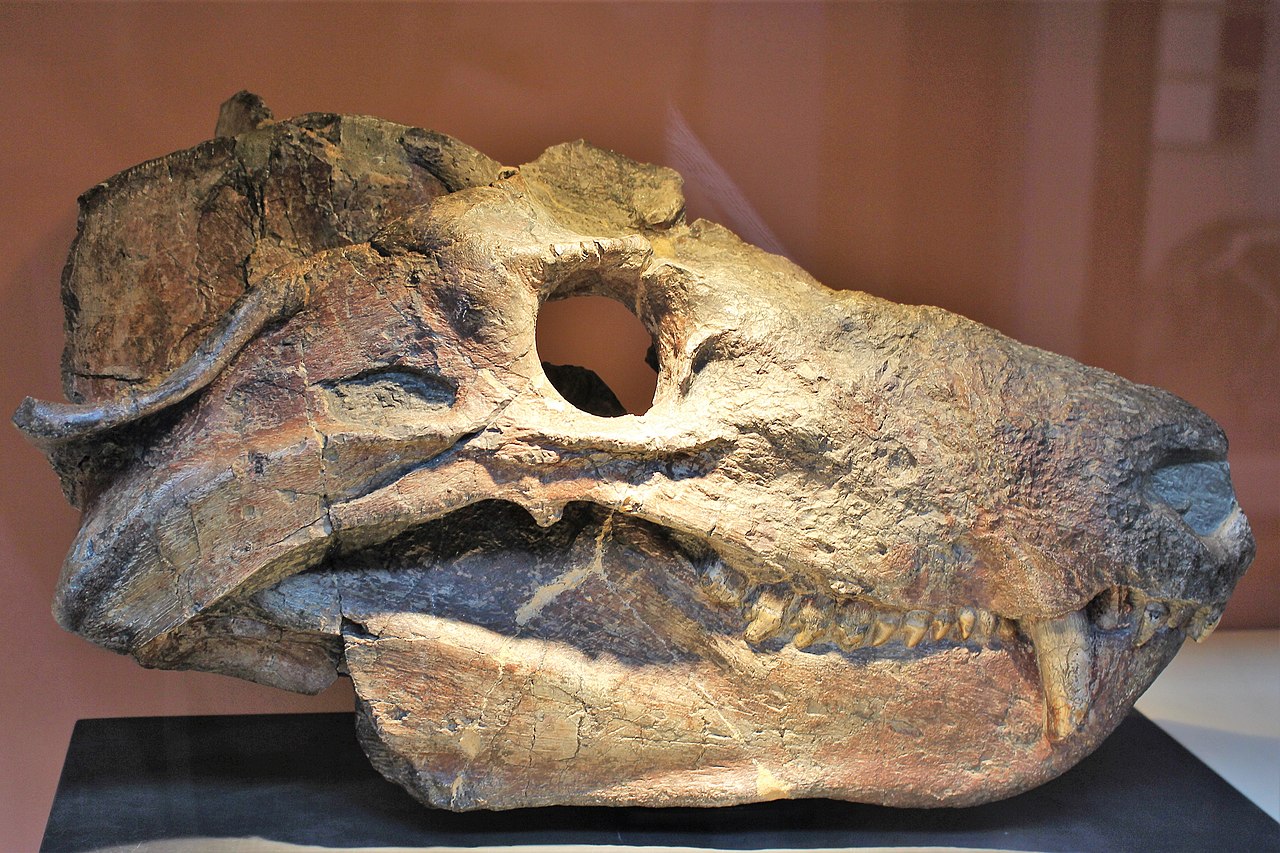


Key characteristics
Cynognathus combined primitive and derived traits. Important features include:
- Skull and teeth: a shortened snout and differentiated teeth (incisors, canines, postcanines) suitable for shearing flesh.
- Jaw and ear evolution: a more mammal-like jaw joint and indications that some jaw bones were becoming reduced, a step toward the mammalian middle ear.
- Posture and limbs: limbs positioned more under the body than in sprawling reptiles, suggesting efficient locomotion on open ground.
- Size and build: roughly the size of a modern wolf, with a robust body adapted to active predation.
Classification and paleobiology
Cynognathus is a well-known cynodont, a subgroup of the broader therapsid grade that gave rise to mammals. Although not a true mammal, it shows traits that paleontologists interpret as evidence of higher metabolic rates and possibly insulating coverings. Some researchers suggest it may have been endothermic (warm-blooded) and might have given birth to live young, but such behaviors remain inferred rather than directly preserved.
Fossil distribution and history
Fossils of Cynognathus were first described from South Africa and later found in distant southern continents, providing an important piece of evidence for the former supercontinent Gondwana. Notable occurrences include fossil sites in South Africa and Argentina. The wide distribution supports reconstructions in which these landmasses were connected during the Triassic.
Scientific significance
Cynognathus occupies a pivotal position in discussions about how mammalian characteristics evolved. Its mix of reptile-like and mammal-like anatomy illustrates gradual changes in feeding mechanics, sensory adaptations, and limb posture. The genus is commonly cited in textbooks and research on vertebrate evolution as an example of the mosaic pattern of evolutionary change.
Because many aspects of its biology—such as exact thermoregulation, reproductive mode, and life history—are not preserved directly, interpretations combine skeletal anatomy, comparisons with related taxa, and principles of functional anatomy. For further background on cynodonts and Triassic ecosystems see introductory resources: cynodont (overview), Triassic period, and regional summaries for South African and Argentine fossil records.
Related articles
Author
AlegsaOnline.com Cynognathus — a wolf-sized cynodont of the Triassic Leandro Alegsa
URL: https://en.alegsaonline.com/art/24910