
Dachshund (breed of dog)
Short-legged, long-bodied German dog originally bred to hunt badgers; now kept as a companion. Noted for three coat types, lively temperament, and susceptibility to back problems.
The dachshund is a small, short-legged dog with a long body whose German name means "badger dog." In German-speaking countries it is commonly called Dackel or Teckel. Its distinctive silhouette and bold personality make it one of the most easily recognized breeds. For a general overview see the breed page.
Image gallery
10 Images


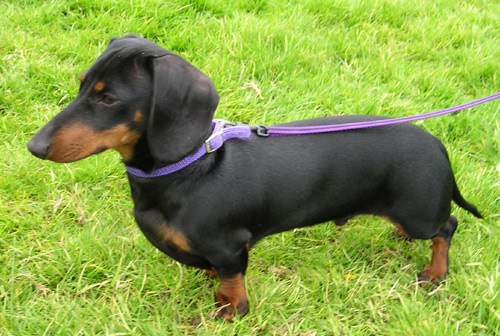

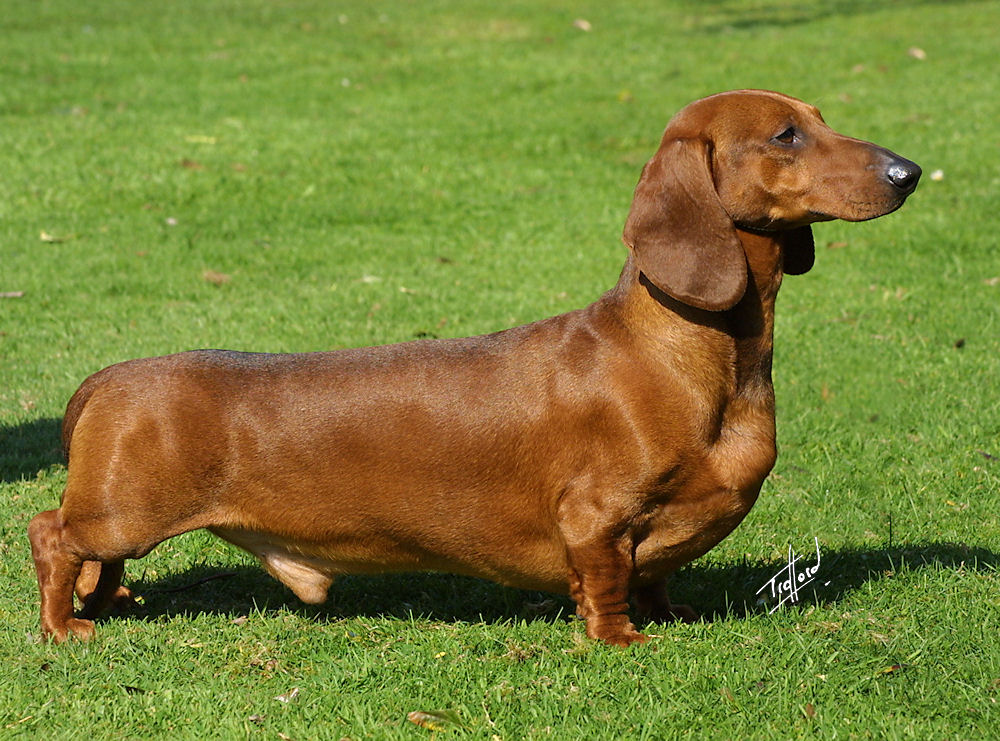


Characteristics
Dachshunds have an elongated chest, short legs and a keen nose adapted to working underground. They occur in two general sizes — standard and miniature — and three principal coat varieties: smooth, longhaired and wirehaired. Coat, color and markings vary widely and are part of what breed standards describe for shows. Dachshunds are a type of canine known for their bold expression and compact build.
Origin and historical role
Originating in Germany, the breed was developed to scent, pursue and flush out badgers and other burrowing animals. Their low profile and determined temperament allowed them to enter tunnels and retrieve quarry or hold it at bay so hunters could follow. Their history as working dogs shaped their courage, independence and hunting instincts; modern enthusiasts often explore that heritage in field trials and tracking events. See more on traditional hunting uses.
Temperament and daily life
Dachshunds are lively, curious and often vocal. They can be affectionate with family but may show stubbornness during training. Socialization and consistent, positive training help channel their strong nose and prey drive. Because they were bred to work alone underground, they can be independent thinkers and sometimes display a surprising amount of tenacity for their size.
Health, care and management
- Back and spine: Their long backs make them prone to intervertebral disc problems, so handling, stair use and jumping should be managed carefully.
- Weight control: Maintaining a healthy weight reduces stress on the spine and joints.
- Grooming: Smooth coats need minimal upkeep, longhaired and wirehaired varieties require more regular brushing and occasional trimming.
- Exercise: Regular short walks and mental stimulation satisfy their hunting instincts without overloading the back.
Modern roles and notable facts
Today dachshunds are kept as companions, show dogs and active participants in dog sports. They are sometimes called "wiener dog" or "sausage dog" in casual usage; some owners accept these nicknames, while others prefer the traditional names. Historically bred to pursue badgers, they remain a popular breed worldwide. Prospective owners should research temperament, care needs and health risks to decide whether this energetic, bold little hound fits their household.
Questions and answers
Q: What is a dachshund?
A: A dachshund is a breed of dog that is usually short, long from front to back, and has short legs.
Q: What does the word "dachshund" mean?
A: The word "dachshund" is a German word that means "badger dog."
Q: What were dachshunds developed for?
A: Dachshunds were developed to use their sense of smell to find, chase, and hunt badgers and other animals that live in holes.
Q: What is another term used for dachshunds?
A: Dachshunds are sometimes called wiener dogs, hot dogs, or sausage dogs due to their long, narrow body.
Q: What is the German word for dachshunds?
A: In German, dachshunds are called Dackel or Teckel.
Q: Do all dachshund owners appreciate terms like wiener dog and sausage dog?
A: No, some owners believe that using such terms for dachshunds is disrespectful and may take offense.
Q: How does a dachshund's body make them well-suited for hunting badgers?
A: A dachshund's long, narrow body allows them to fit into badger holes and chase after prey.
Related articles
Author
AlegsaOnline.com Dachshund (breed of dog) Leandro Alegsa
URL: https://en.alegsaonline.com/art/25030