
Cynodonts: mammal-like therapsids and ancestors of mammals
Cynodonts are a diverse group of therapsids that include the direct lineage to mammals. This article summarizes their anatomy, fossil history, global distribution, and evolutionary significance.
Cynodonts are a major clade of advanced therapsids best known for features that foreshadow modern mammals. The name means "dog-toothed" and reflects the group's distinctive dentition. Paleontologists treat cynodonts as a stem group that includes the origin of mammals and the immediate extinct relatives that together form the broader taxon often discussed in mammal evolution studies: Therapsida and the clade sometimes labeled Cynodontia.
Image gallery
10 Images


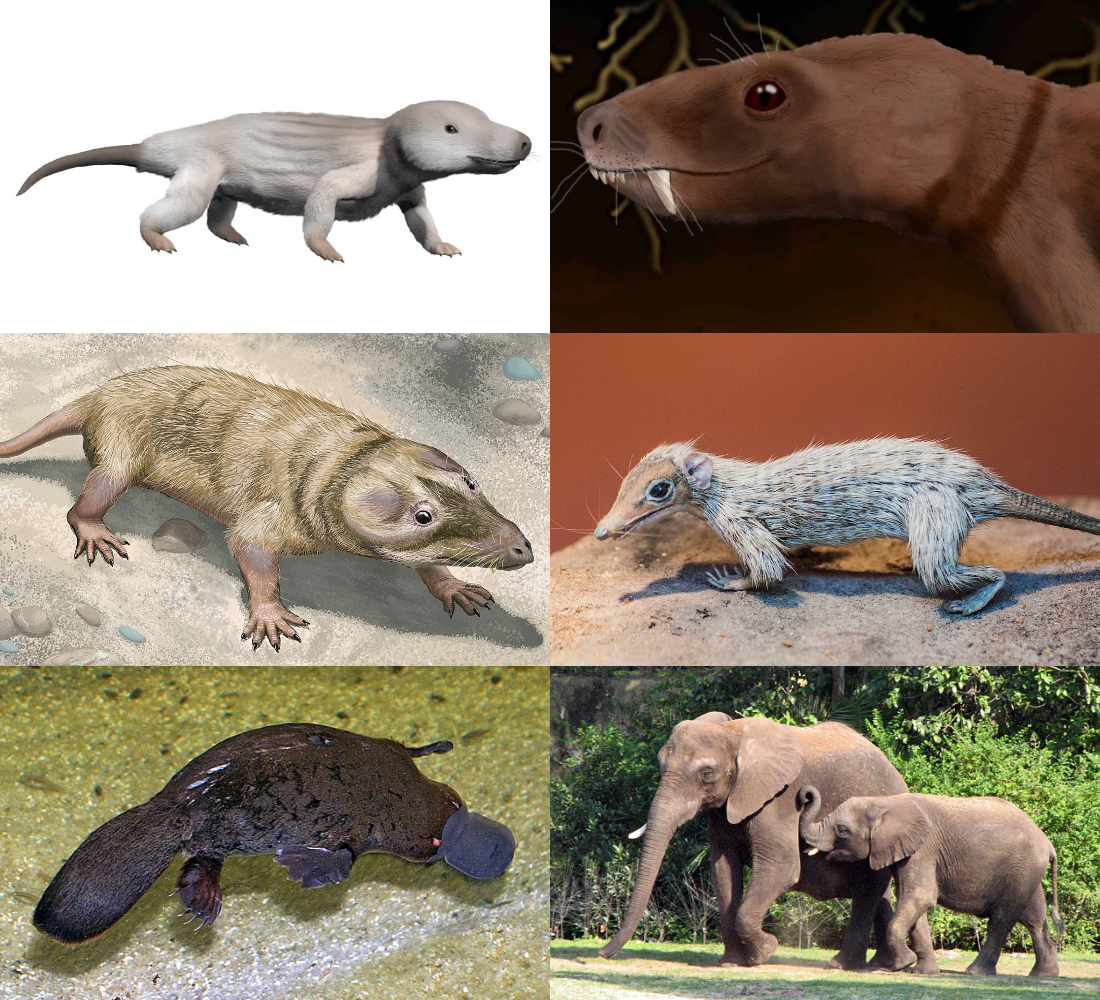



Anatomical features
Cynodonts display a mixture of reptile-like and mammal-like traits. Typical characteristics include heterodont teeth (different tooth shapes for different functions), a more vertical limb posture than earlier synapsids, a secondary bony palate that separates the nasal passage from the mouth, and an expanded braincase. Over time several cynodont lineages reduced the size of post-dentary jaw bones, a change that eventually produced the middle ear bones of true mammals.
Fossil record and history
The fossil record of cynodonts begins in the Late Permian (about 256 million years ago) and continues through the Triassic and Jurassic. Their remains have been recovered from multiple continents, indicating a wide distribution during the Mesozoic. Important groups include early, more basal forms and increasingly derived members that approach the anatomy of the first mammals and mammaliaforms. For discussions of the broader context see Upper Permian studies and general fossil summaries.
Distribution, extinction, and survival
Cynodont fossils are known from all continents, reflecting a global presence in Permian and Mesozoic ecosystems. Many extinct lineages were impacted by major environmental crises, including the end-Triassic disruptions; nevertheless, the lineage leading to mammals persisted beyond these extinctions. For more on this transition, consult materials on End-Triassic extinction and on the emergence of Mammaliaformes and modern mammals.
Significance and notable facts
- Cynodonts illustrate the progressive acquisition of mammalian characters over millions of years.
- The group reveals how changes in jaw structure and teeth were linked to feeding, hearing and metabolism.
- Cynodonts occupied diverse ecological roles, from small insectivores to larger omnivores and possible burrowers, shaping terrestrial ecosystems in the Triassic.
Researchers continue to refine cynodont classification and relationships using new fossils and modern methods. These animals are central to understanding how modern mammals evolved from earlier synapsid ancestors and why key mammalian traits appeared in small, often overlooked branches of the tree of life. For further reading, follow introductory resources and specialist literature indexed under the broader clade terms and continental surveys: global distribution, therapsid evolution, and curated compendia on cynodont taxonomy.
Questions and answers
Q: What are Cynodonts?
A: Cynodonts are a sub-order of the Therapsida, named after their dog-like teeth.
Q: What is a clade?
A: A clade is a group of organisms that all derive from a common ancestor.
Q: Are modern mammals and their extinct close relatives in the same taxon?
A: Yes, modern mammals and their extinct close relatives, the Mammaliaformes, are in the same taxon as the Cynodonts.
Q: When did the cynodonts first appear in the fossil record?
A: The cynodonts first appeared in the fossil record in the Upper Permian, 256 million years ago.
Q: Did the cynodonts live in all continents?
A: Yes, the cynodonts lived in all continents.
Q: What led to the extinction of the extinct members of the cynodonts?
A: The extinct members of the cynodonts were victims of the End-Triassic extinction event.
Q: Did the line that led to the mammals survive the End-Triassic extinction event?
A: Yes, the line that led to the mammals survived the End-Triassic extinction event.
Related articles
Author
AlegsaOnline.com Cynodonts: mammal-like therapsids and ancestors of mammals Leandro Alegsa
URL: https://en.alegsaonline.com/art/24909
Sources
- species.wikimedia.org : Cynodontia
- paleodb.org : PaleoBiology Database: Cynodontia, basic info