
Cybele — Anatolian mother goddess of nature, mountains, and wild animals
Cybele is an ancient Anatolian mother-earth deity associated with fertility, mountains, wild animals and a distinctive ecstatic cult later adopted by Greeks and Romans.
Overview
Cybele is a prehistoric Anatolian mother goddess who came to personify the earth and its life-giving powers. In ancient tradition she is associated with the fertile ground, untamed landscapes and the animal world. Scholars trace her origins to the cultures of Anatolia where she became a central figure of rural religiosity, linked to the earth, nature and human fertility.
Image gallery
10 Images


Iconography and attributes
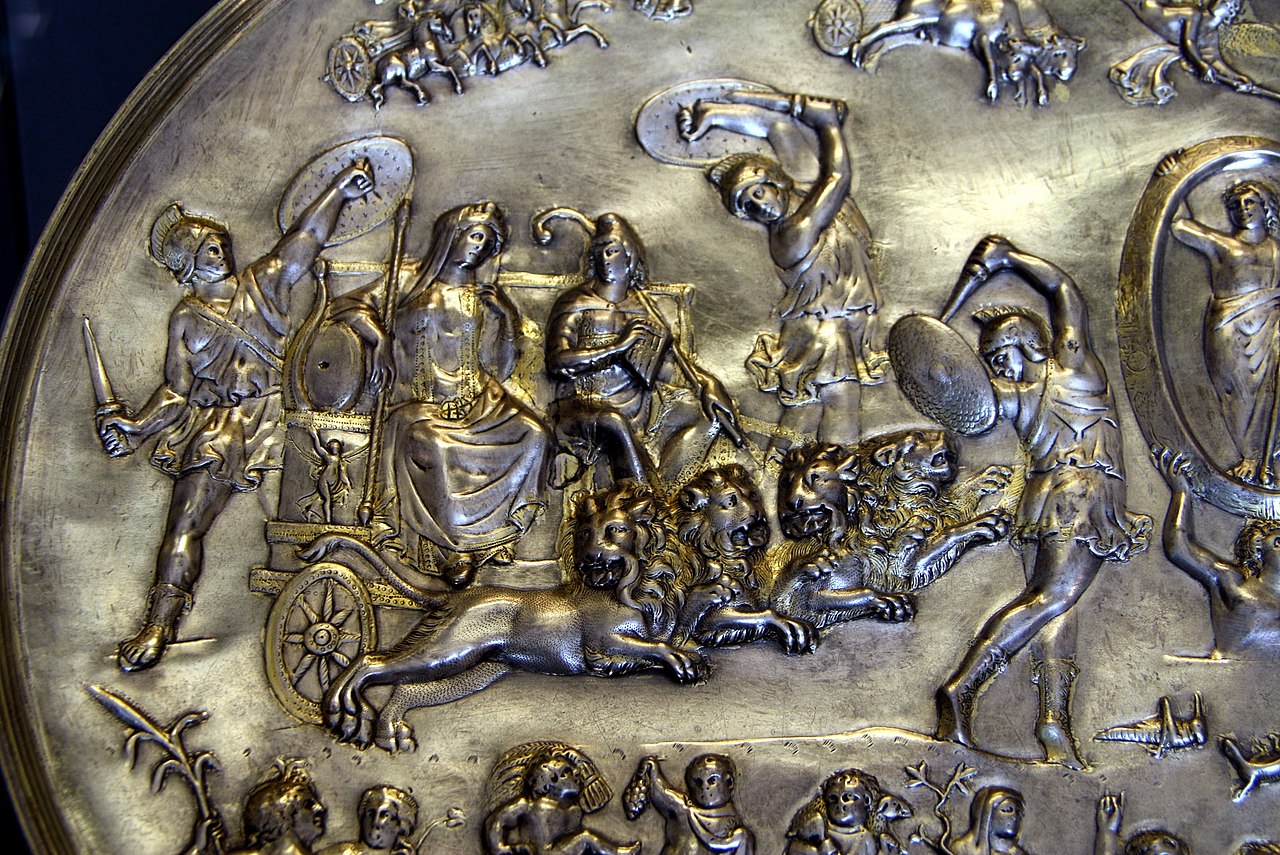
Representations of Cybele emphasize her role as a sovereign mother of the natural world. Common attributes include a monumental seated figure or throne, a crown shaped like city walls called a mural crown, and the company of powerful animals, most notably lions. These elements signal her authority over both landscape and polity. Visuals and inscriptions from different regions show variations but preserve a consistent set of symbols.
Myth and beginnings
In Phrygian tradition Cybele appears in origin stories that mingle creation themes and gender transformation. One version names a primordial being called Agdistis, and links her to the highlands of Phrygia. Later Greek retellings folded her into the wider pantheon, sometimes tracing relationships with major deities such as Zeus and Gaia. The mythic cycle also introduces a youthful consort, Attis, whose tragic story became central to Cybele's rites.
Cult, priests and practices
The worship of Cybele was notable for its ecstatic and often severe practices. Her attendants included the castrated priests known as the Galli, and the cult made use of loud music, processions and symbolic acts of devotion. Contemporary sources call attention to the presence of celibate or eunuchs among her functionaries. Over time her cult was embraced by the Greek world and formally incorporated into Roman religion, where magistrates and communities accepted Cybele as a guardian power in the Roman state cult.
Legacy and distinctions
Cybele's influence persisted across the Mediterranean: she served as a model for later mother-goddess figures and left an enduring visual language—lions, wall-crowns and thrones—that identifies her in art and coinage. Modern study treats Cybele both as a regional Anatolian deity and as a figure transformed by Greek and Roman reinterpretation. Her complex mixture of fertility, wildness and civic symbolism makes her a distinctive example of how ancient societies negotiated nature, gender and religious power.
- Key symbols: lions, mural crown, throne.
- Associated figures: Attis, Agdistis.
- Historical reach: Anatolia to Greece and Rome.
For further context, see entries and collections that address Anatolian religion, Phrygian myths, and Roman cult practices: earth rites, nature worship, fertility cults, royal iconography, urban symbolism, regional traditions, mythic variants, divine genealogy, creation motifs, priesthood studies.
Related articles
Author
AlegsaOnline.com Cybele — Anatolian mother goddess of nature, mountains, and wild animals Leandro Alegsa
URL: https://en.alegsaonline.com/art/24842