
Crown: ceremonial headdress, symbol, and cultural object
A crown is a ceremonial headdress worn by monarchs and other figures of authority. This article explains its form, history, symbolic meanings, uses today, and distinctions from related headgear.
A crown is a decorated headpiece traditionally associated with monarchy and sovereignty. It is most visible during formal events such as coronations, state openings, and other ceremonial occasions, where it marks the wearer’s authority and rank. Crowns vary greatly in form, scale and ornamentation: some are heavy gold and jewel-encrusted objects kept as state regalia, while others are simple wreaths, circlets or small tiaras used for symbolic or decorative purposes.
Image gallery
10 Images


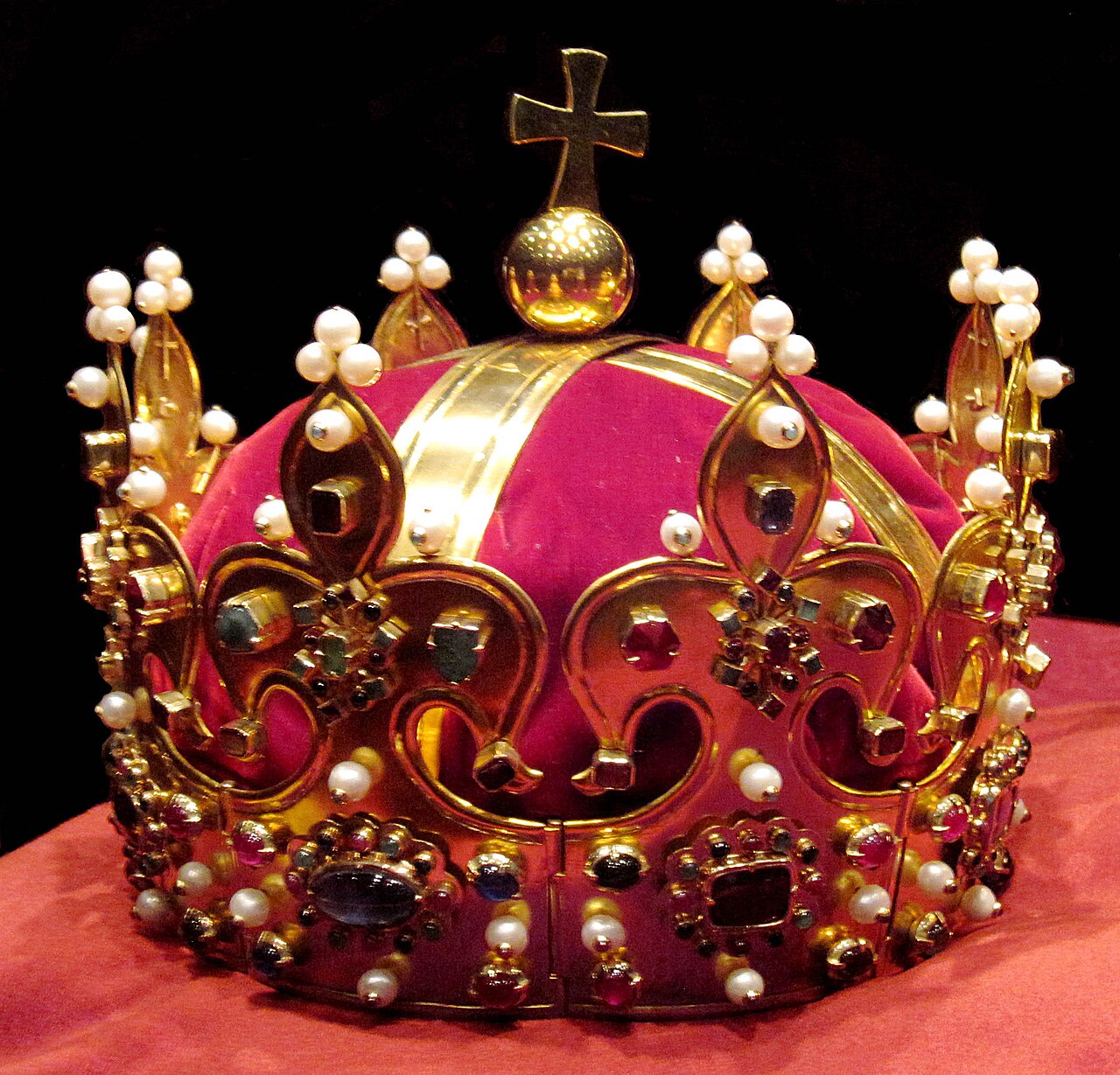


Characteristics and common components
- Circlet: the circular base that fits around the head.
- Arches and monde: rising elements that can meet at a globe (monde), often topped by a cross or other emblem.
- Cap: an inner velvet or cloth lining that cushions the metalwork.
- Gemstones and symbols: used to display wealth, lineage and religious or national emblems.
Different types have names reflecting their purpose: coronation crowns for investiture, state crowns for formal appearances, imperial crowns for emperors, coronets for nobles, and tiaras for women in certain contexts. A floral wreath or laurel may serve a similar symbolic function in different cultures.
History and development
The idea of marking leadership with a headpiece is ancient. Early examples include wreaths and diadems from antiquity, and later metal crowns shaped or adorned to reflect religious and political authority. In medieval and early modern Europe the crown became an essential piece of royal regalia used in rituals that combined legal, religious and cultural meanings. Over time, regional styles developed and certain crowns became iconic national symbols.
While crowns remain central to some monarchies, many modern states also use the image of a crown in heraldry, currency and logos to represent continuity, authority or heritage. In republican contexts the crown image may appear only historically or symbolically rather than as functional regalia.
Crowns also appear outside royal circles. Beauty pageant winners are often presented with ornamental crowns as prizes; organizers and commentators sometimes describe those awards using the same language as traditional regalia (pageant crowns). Figuratively, the word "crown" is used as a synonym for prize, reward or highest achievement (crown as reward).
There are notable distinctions between related forms: a tiara is generally a smaller, often feminine ornamental headpiece; a coronet denotes rank below sovereign; a diadem may be a simpler band. The institution of monarchy itself is sometimes referred to by the metonym "the Crown," a usage that emphasizes the office rather than any single physical object (monarchy and the Crown).
Questions and answers
Q: What is a crown?
A: A crown is a type of headdress worn by a monarch or as a symbol of the monarchy.
Q: When are crowns worn?
A: Crowns are usually worn during a coronation or other important occasions.
Q: Who else besides the monarchy wears crowns?
A: Beauty pageant winners also wear crowns.
Q: What is another meaning of the word "crown"?
A: "Crown" can also be a synonym for prize or reward.
Q: Where are crowns awarded or won?
A: Crowns are awarded or won at contests and beauty pageants.
Q: Who receives crowns at a dance?
A: Couples chosen as King and Queen at a dance also receive crowns.
Q: Can anyone wear a crown?
A: While anyone can wear a crown for fun, traditionally, they are reserved for monarchs or as a symbol of the monarchy.
Related articles
Author
AlegsaOnline.com Crown: ceremonial headdress, symbol, and cultural object Leandro Alegsa
URL: https://en.alegsaonline.com/art/97822