
Cuban Revolution (1953–1959): overview, course, and legacy
Armed insurrection led by Fidel Castro that overthrew Fulgencio Batista’s regime (1953–1959), ushering in a revolutionary government and long-term geopolitical change in Cuba and the Americas.
The Cuban Revolution was an armed insurrection that unfolded in the 1950s and culminated in the replacement of Fulgencio Batista’s regime by a revolutionary government. Often dated from the 1953 assault on the Moncada Barracks to Batista’s flight at the end of 1958, the uprising is widely remembered as a defining event in modern Latin American history. It took place in the context of social inequality and political repression in Cuba during the mid-1950s.
Image gallery
10 Images


Background and causes
Political instability, economic inequality, and limited democratic channels helped create fertile ground for rebellion. Opposition to the rule of General Fulgencio Batista coalesced around activists, students, and members of the urban and rural poor. A charismatic leader, Fidel Castro, emerged as the face of the movement; he framed the struggle as both a fight against dictatorship and a program of social reform. Critics of the old regime described it as an entrenched government that favored a narrow elite and foreign interests.
Major events and course of the insurrection
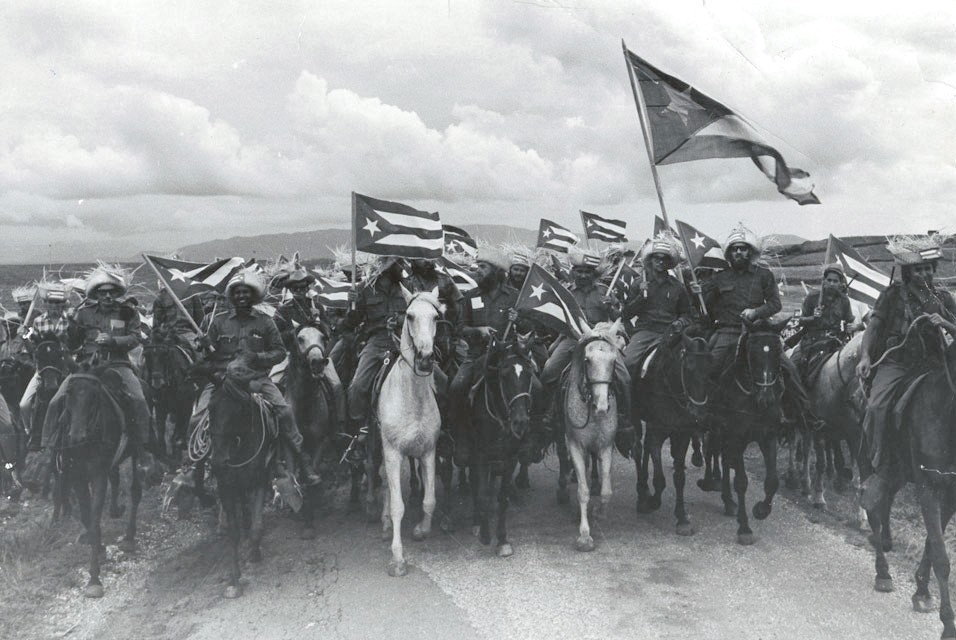
The rebellion is commonly segmented into recognizable episodes. Its symbolic beginning was the July 26, 1953 attack on the Moncada Barracks, an event often cited as the movement’s foundational moment and commemorated by the movement’s name. Later guerrilla campaigns in the Sierra Maestra mountains, combined with urban actions and political organizing, intensified pressure on the Batista state. Key milestones include:
- Moncada Barracks assault (July 26, 1953) — a failed but galvanizing action.
- Guerrilla warfare centered in the Sierra Maestra with clandestine support networks.
- Rapid rebel advances in late 1958 that seized strategic towns such as Santa Clara and Santiago de Cuba.
- Batista’s departure from Cuba — he left the country on January 1, 1959, enabling revolutionary forces to assume power.
People and organizations
The insurgency included a range of commanders and participants. Prominent leaders were Fidel Castro and his brother Raúl Castro, who coordinated guerrilla strategy and political leadership. Ernesto 'Che' Guevara emerged as a leading combatant and ideological figure, particularly noted for his role in the capture of Santa Clara. Other figures such as Huber Matos reflect the diversity of backgrounds among revolutionaries. Over time the revolutionary movement consolidated into governing institutions that reshaped Cuba’s political life.
Aftermath, political transformation, and confrontation
After taking power, the revolutionary government implemented sweeping reforms in land, education, and health policy. The political orientation of the new leadership evolved rapidly; within a few years it aligned with socialist principles and developed close ties with the Soviet bloc. By the mid-1960s the regime’s ruling apparatus was organized under what became the Communist Party of Cuba, a formalization of political power that followed earlier moves toward socialist policies.
Cuba’s transformation provoked sustained conflict with the United States. Tensions included economic embargoes, covert actions, and a failed amphibious invasion in 1961 that is usually referred to as the Bay of Pigs operation. That episode, in which armed anti‑Castro exiles attempted to land and overthrow the new government, hardened the island’s international isolation from the Western hemisphere and fed Cold War confrontation.
Significance and legacy
The Cuban Revolution had enduring regional and global consequences. It influenced leftist movements across Latin America, altered U.S.-Caribbean relations, and became a prominent case study in debates about revolutionary strategy, national sovereignty, and social policy. Historians and political scientists continue to debate aspects such as the revolution’s long-term economic outcomes, its human rights record, and the balance between social gains and political constraints. For further reading and primary-source material, consult archival collections and scholarly works on mid-20th-century Caribbean politics and Cold War history — for example, specialized bibliographies and documentary repositories represented by institutional links such as government archives and academic portals (biographies, studies of Batista, ideological analyses).
The Cuban Revolution remains a complex and contested subject: celebrated by many for its social programs and anti-imperialist stance, criticized by others for its limits on pluralism. Its events, personalities, and outcomes continue to be studied as part of a broader narrative about decolonization, Cold War geopolitics, and the dynamics of revolutionary change.
Suggested entry points for non-specialists include biographies of principal actors (Castro, Guevara, Raúl Castro), collections of documents from 1950s Cuba (Moncada records, Santa Clara accounts), and comparative studies of revolutionary movements (regional comparisons, personal memoirs, diplomatic records).
Related articles
Author
AlegsaOnline.com Cuban Revolution (1953–1959): overview, course, and legacy Leandro Alegsa
URL: https://en.alegsaonline.com/art/24516