
Fidel Castro
Cuban revolutionary and statesman who led Cuba from 1959 to 2008, implementing socialist reforms and shaping Cold War relations; a polarizing figure for social advances and criticisms of authoritarian rule.

Image gallery
2 Images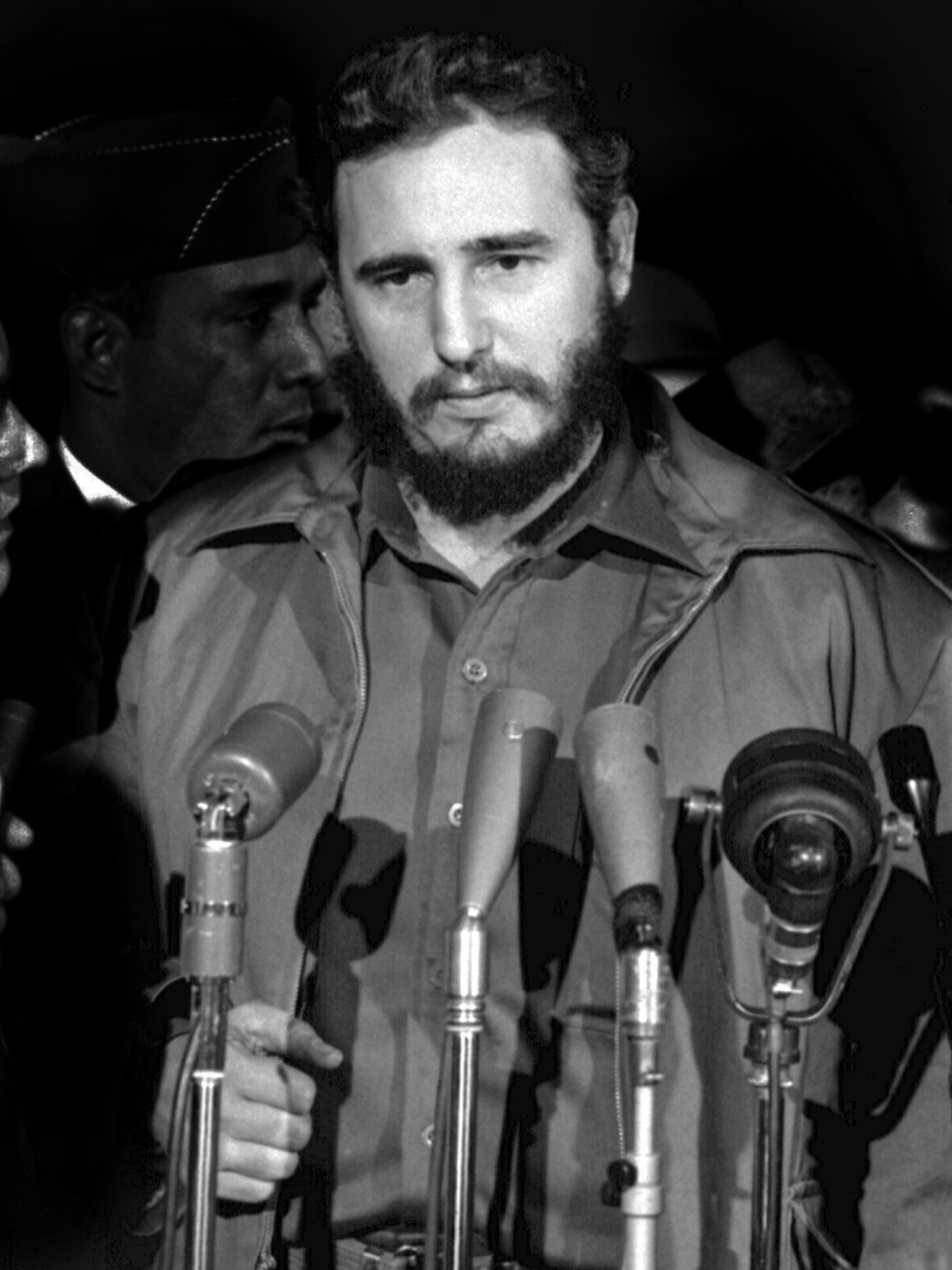

Early life and rise to power
Born in eastern Cuba, Castro studied law at the University of Havana and became active in political causes. He led the assault on the Moncada Barracks in 1953, an event that helped crystallize opposition to the government of Fulgencio Batista. After imprisonment and temporary exile, Castro returned and organized a guerrilla campaign in the Sierra Maestra with allies such as Che Guevara. That insurgency culminated in the overthrow of Batista’s regime in January 1959 and brought Castro to national leadership.
Government, reforms and institutional changes
Once in power, Castro’s government enacted wide-ranging reforms: large estates and foreign holdings were nationalized, land redistribution took place, and the state extended free universal programs in literacy, health care and education. The new Cuban government moved toward a one-party, socialist model and developed close ties with the Soviet bloc, a relationship that shaped Cuba’s political economy for decades.
Major initiatives and characteristics of his rule included:
- Comprehensive social programs aiming to raise literacy and expand medical services.
- Nationalization of key industries and centralized economic planning.
- Restriction of political pluralism and limits on independent media and public dissent, which drew international criticism on human rights grounds.
International role, crises and final years
Castro’s Cuba played an outsized role in Cold War geopolitics. The early 1960s saw the Bay of Pigs invasion and the Cuban Missile Crisis, events that hardened relations with the United States and led to a long-standing embargo. Havana also supported revolutionary movements abroad and deployed medical and educational aid to allied countries. The collapse of Soviet support in the early 1990s precipitated economic hardship that forced policy adjustments.
In later years Castro’s health declined. He temporarily transferred power to his brother Raúl Castro while recovering from surgery in the summer of 2006; in 2008 he announced he would not return to office. He remained an influential and controversial figure until his death in 2016, having led Cuba in various official capacities for nearly five decades.
Assessments of Castro’s legacy vary: supporters emphasize advances in education, health care and national sovereignty, while critics point to political repression, economic difficulties and restrictions on civil liberties. His rule is widely regarded as one of the defining elements of 20th-century Latin American and Cold War history.
Questions and answers
Q: Who was Fidel Castro?
A: Fidel Castro was a Cuban revolutionary and politician.
Q: How long was Fidel Castro in power?
A: Fidel Castro was in power for 49 years.
Q: What was Fidel Castro's role as Prime Minister of Cuba?
A: Fidel Castro was Prime Minister of Cuba from 1959 to 1976.
Q: Who did Fidel Castro temporarily give power to in 2006?
A: Fidel Castro temporarily gave power to his brother Raúl Castro while recovering from surgery in the summer of 2006.
Q: When did Fidel Castro announce that he would not return to power?
A: Fidel Castro announced on February 19, 2008, that he would not return to power.
Q: What was Fidel Castro's role as President of Cuba?
A: Fidel Castro was President of Cuba from 1976 to 2008.
Q: When was Fidel Castro born and when did he die?
A: Fidel Castro was born on August 13, 1926, and he died on November 25, 2016.
Related articles
Author
AlegsaOnline.com Fidel Castro Leandro Alegsa
URL: https://en.alegsaonline.com/art/118947
Sources
- bbc.com : "Cuba's Fidel Castro dies aged 90"
- britannica.com : "Fidel Castro: Political Leader of Cuba"
- news.bbc.co.uk : "Fidel Castro announces retirement, at BBC Online"
- granma.cubaweb.cu : "Mensaje del Comandante en Jefe (Spanish, original letter at Granma)"
- granma.cubaweb.cu : "Message from the Commander in Chief (English translation of the Letter, at Granma)"
- history.com : "Cuban Missile Crisis"
- bbc.com : BBC on Castro murders (in Spanish)
- theguardian.com : "Fidel Castro's dark legacy: abuses, draconian rule and 'ruthless suppression'"
- washingtonpost.com : "Fidel Castro, African Hero"
- telegraph.co.uk : "Meet Fidel Castro's Family: Torn Apart by Bitterness, Rows and Dysfunction"
- buzzfeed.com : "Fidel Castro, Longtime Cuban Leader, Dead At Age 90"