
Cryptoclidus — a medium-sized plesiosaur of the Middle Jurassic
Cryptoclidus was a small to medium-sized long-necked plesiosaur from Middle Jurassic marine deposits in Europe and Russia, named by H. G. Seeley in 1892; notable for interlocking slender teeth and paddle-like flippers.
Cryptoclidus was a genus of plesiosaur that inhabited shallow epicontinental seas during the Middle Jurassic. Adults reached roughly 3–4 metres in length and combined a relatively long neck with a broad, low skull and four large, flexible, paddle-like limbs. Reconstructions portray a gracile swimmer adapted to capture small, soft-bodied prey rather than to confront large, robust animals. For general background on long-necked marine reptiles see plesiosaurs and broader marine reptile overviews at marine reptile summaries.
Image gallery
10 Images

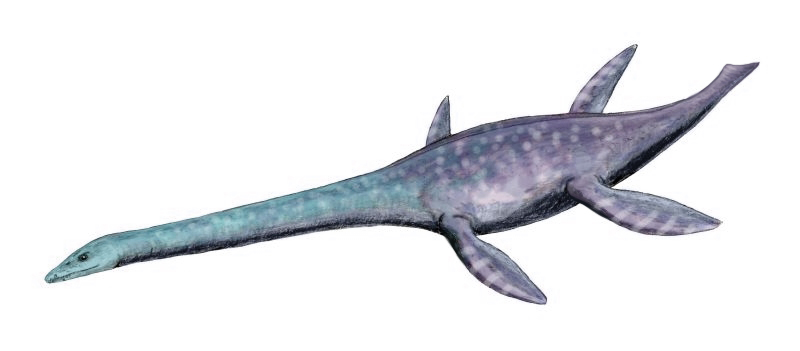


Appearance and anatomy
The skull of Cryptoclidus was wide for its size and bore numerous slender, curved teeth that interlocked along the jaw margins. These delicate teeth were well suited for holding slippery animals but not for crushing hard-shelled or large prey. The neck, although long, was less extremely flexible than sometimes depicted in popular art; muscle and vertebral structure indicate controlled lateral and vertical movements to aid rapid strikes. Forelimbs and hindlimbs were transformed into broad flippers; studies of limb bones and joint surfaces emphasize a flapping, underwater 'flying' stroke specialized for maneuverability. For comparative notes on paddle anatomy see flipper anatomy.
Feeding and ecology
Tooth form and jaw strength imply a diet dominated by small fish and cephalopods such as squid. Cryptoclidus likely fed by seizing prey from shoals or by plucking individual animals from the water column, rather than by scavenging or tearing large vertebrates. Its feeding niche is often compared with modern piscivorous marine animals that rely on speed and precision; for cephalopod associations see cephalopod comparisons.
Fossil record and distribution
Fossils attributable to Cryptoclidus have been recovered from Middle Jurassic strata primarily in western Europe and parts of Russia. Important localities include material from England, France and Russia. Occurrences outside Eurasia, including suggested material from South America, remain the subject of ongoing study and debate, and not all referrals are universally accepted. Most specimens are partial skeletons that preserve skulls, neck vertebrae and limb elements sufficient for anatomical comparison.
Discovery and taxonomy
The genus was established by the British paleontologist Harry G. Seeley in 1892. The type species is Cryptoclidus eurymerus, and subsequent work has revised the concept of the genus as new specimens and better comparative frameworks have become available. For the original type-species notes and taxonomic history see type species references.
Significance
Cryptoclidus is often cited in discussions of Mesozoic marine ecosystems as an example of a medium-sized, long-necked plesiosaur adapted to a specific feeding niche. It contrasts with larger, short-necked pliosaur-like predators by its lighter skull and interlocking, delicate dentition. Anatomical features such as skull proportions, vertebral form and flipper morphology help paleontologists distinguish Cryptoclidus from related genera and reconstruct its palaeoecology.
- Size: about 3–4 m (10–13 ft).
- Diet: small fish and cephalopods.
- Range: mainly Europe and parts of Russia; other records debated.
Related articles
Author
AlegsaOnline.com Cryptoclidus — a medium-sized plesiosaur of the Middle Jurassic Leandro Alegsa
URL: https://en.alegsaonline.com/art/24454