
Cuban solenodon (almiquí)
The Cuban solenodon (Solenodon cubanus), or almiquí, is a nocturnal, venomous insectivore endemic to Cuba. A relict mammal in a small ancient family, it is threatened by habitat loss and introduced predators.
The Cuban solenodon, commonly called the almiquí and scientifically Solenodon cubanus, is a small, nocturnal mammal found only in Cuba. It is a member of a very old lineage of insectivorous mammals that was historically placed among the Soricomorpha and is now generally treated with other insectivorous taxa in modern classifications. The species is notable for its primitive features, secretive habits and the unusual production of toxic saliva used when subduing prey.
Image gallery
5 Images
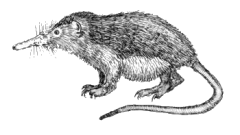
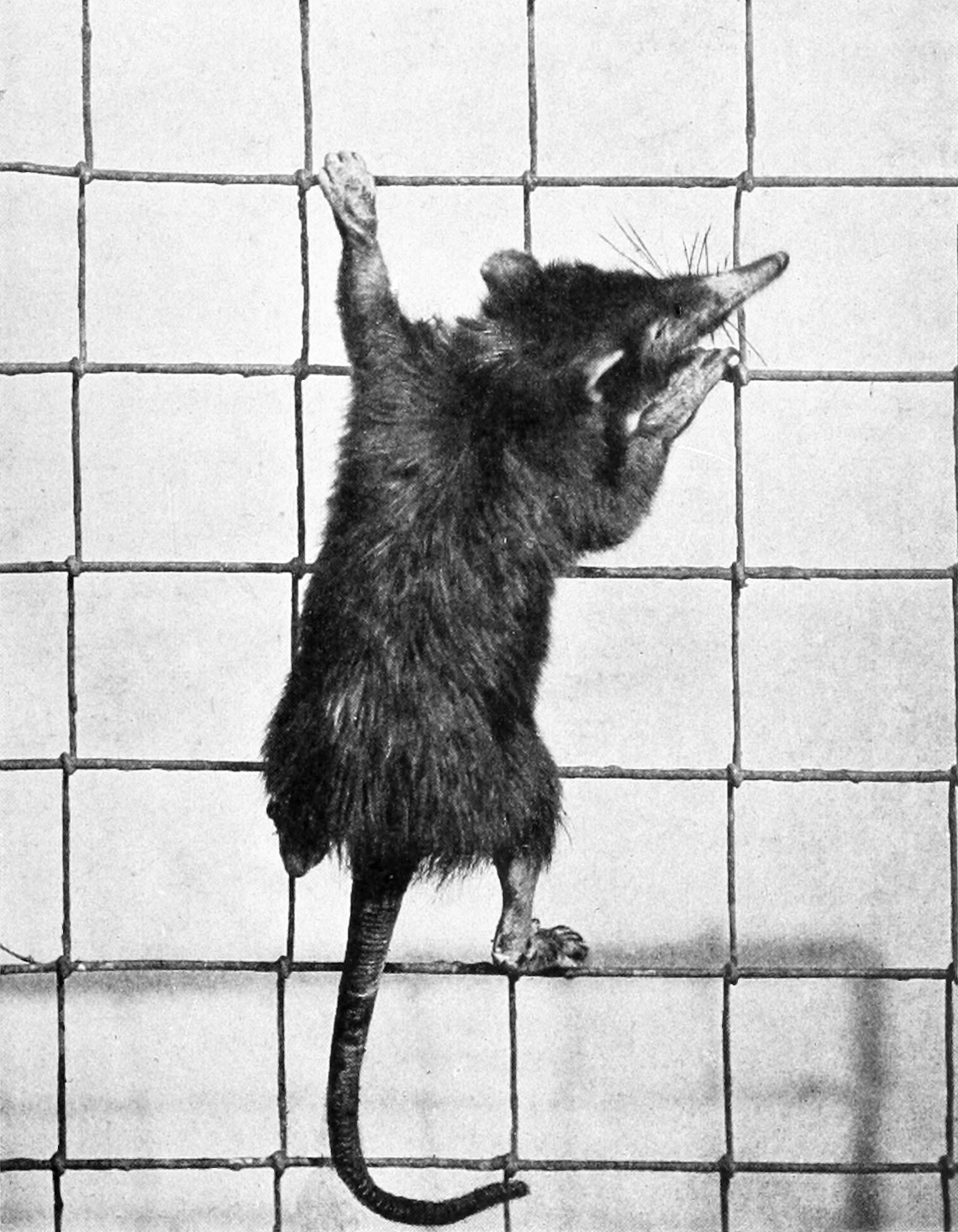


Physical characteristics
The almiquí has a shrew-like appearance with coarse fur, a long flexible snout, and a tail that can be used for balance. Distinctive dental and skull traits separate solenodons from other small mammals. They possess specialized lower incisors with grooves that help deliver venomous secretions from modified salivary glands, a rare trait among placental mammals.
Distribution and habitat
Solenodon cubanus is endemic to Cuba, where it occupies remaining tracts of forest and brushland. Because it is nocturnal and often secretive, it is more easily detected by careful surveys than by casual observation. Its survival depends on relatively intact ground cover and leaf litter for foraging and shelter.
Behavior and diet
Primarily active at night, the Cuban solenodon forages slowly through soil and litter, feeding on insects, worms and other small invertebrates, and occasionally on small vertebrates or plant material. It delivers a toxic bite using its venomous saliva, which is used to immobilize prey; this adaptation is one of the few examples of venom in mammals. Reproductive output is low compared with many small mammals, contributing to vulnerability to population declines.
Taxonomy and discovery
The species was first described in 1861 after specimens collected and examined by the German naturalist Wilhelm Peters. Solenodon cubanus is one of only two living species in the family Solenodontidae, the other being the Hispaniolan solenodon. As a relict group, solenodons are of particular interest to scientists studying mammal evolution and island biogeography.
Conservation and significance
The Cuban solenodon faces threats typical for island endemics: loss and fragmentation of habitat, and predation or competition from introduced species such as dogs, cats and rodents. Conservation efforts focus on habitat protection, predator control and field surveys to better understand distribution and population trends. Because of its ancient lineage and unique biology, the almiquí is important both for biodiversity and for research into early placental mammal traits.
- Key facts: endemic to Cuba, nocturnal, insectivorous, venomous saliva.
- Conservation focus: habitat protection, monitoring and invasive species management.
Related articles
Author
AlegsaOnline.com Cuban solenodon (almiquí) Leandro Alegsa
URL: https://en.alegsaonline.com/art/24517