
Culex: common house mosquitoes, biology and public-health importance
Culex is a genus of mosquitoes known as common house mosquitoes; several species transmit viruses and parasites to birds, humans and other animals and are targets of vector control.
The genus Culex comprises many species of mosquitoes commonly called house or northern house mosquitoes. Members of this genus are widespread in temperate and tropical regions and often thrive in or near human habitation. Several named species are well studied because they can carry and transmit a range of diseases between birds, other wildlife, and people. Typical English common names reflect their frequent association with urban and peri-urban settings.
Image gallery
4 Images


Physical traits and life cycle
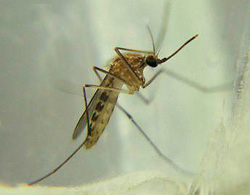
Culex adults are medium-sized mosquitoes with a slender body, long legs and a proboscis for blood feeding. Eggs are laid on the surface of stagnant or slowly moving water and hatch into aquatic larvae known as "wrigglers." After pupation, winged adults emerge. Many Culex species are most active at dusk and during the night, and females seek blood meals to develop eggs.
- Breeding habitat: artificial containers, blocked drains, stormwater pools and polluted water.
- Behavior: primarily nocturnal feeders; some species prefer birds, others bite mammals including humans.
- Development: egg raft → larva → pupa → adult; temperature and water quality influence speed of development.
Medical and ecological importance
Culex mosquitoes are important vectors for several pathogens. Notable associations include transmission of West Nile virus, various other arboviruses, and agents of lymphatic filariasis in different regions. Many Culex species feed on birds and serve as enzootic hosts, but bridge feeding on mammals can introduce viruses to humans and domestic animals. Although early work on mosquito transmission of malaria is often discussed in histories of medical entomology, the primary malaria vectors belong to the genus Anopheles; malaria studies are linked historically to researchers such as Major Ronald Ross and related accounts in medical literature (Ross biography). The role of Culex is instead best documented for non-malarial pathogens.
From an ecological perspective, Culex species can influence bird populations and interact with other insect predators and parasites. Their abundance can respond quickly to changes in urban drainage, climate and habitat availability.
Control, prevention and surveillance
Public-health responses focus on reducing breeding sites, larval control and targeted adulticide applications. Common measures include source reduction (emptying containers and improving drainage), larvicides in standing water, community education and monitoring mosquito populations for pathogen presence. Protective personal measures such as repellents and screens reduce biting risk. Surveillance programs often combine trap-based monitoring with laboratory testing to detect viral activity and guide interventions.
- Identify and eliminate standing water.
- Use larval control where removal is impractical.
- Support surveillance and rapid testing to detect outbreaks.
For taxonomic, ecological and health guidance consult entomology references and local public-health advisories. General overviews and species lists may be found in online entomological databases and regional vector control resources (military and public health archives provide historical context).
Further reading and species-specific information are available through specialist collections and online resources: human health, wildlife interactions, and diagnostic guides (genus overview, mosquito basics, species lists, vector-borne diseases, avian hosts).
Related articles
Author
AlegsaOnline.com Culex: common house mosquitoes, biology and public-health importance Leandro Alegsa
URL: https://en.alegsaonline.com/art/24587
Sources
- tinymosquito.com : "Dangers of the Culex Mosquito"
- wwwnc.cdc.gov : "Host Feeding Patterns of Culex Mosquitoes and West Nile Virus Transmission, Northeastern United States"
- vectorbase.org : "Culex quinquefasciatus"
- medicalmuseum.mil : "U.S. Army Maj. Walter Reed"
- nobelprize.org : "The Nobel Prize in Physiology or Medicine 1902"
- commons.wikimedia.org : Culex