
Copper Age (Chalcolithic): the transition between Stone and Bronze
The Copper Age or Chalcolithic was a transitional era when communities began working native and smelted copper, developing new tools, social roles, and trade networks before widespread bronze metallurgy.
Overview
The Copper Age, commonly called the Chalcolithic (from Ancient Greek χαλκός khalkos "copper" + λίθος lithos "stone"), denotes a transitional phase between the Neolithic and the Bronze Age. It is characterized by the first regular use of metallic copper alongside continued use of stone technology. Chronology and cultural expression vary widely by region; in some places copper objects appear centuries earlier or later than in others, and some societies moved directly from stone tools to bronze without a long Chalcolithic interval.
Image gallery
5 Images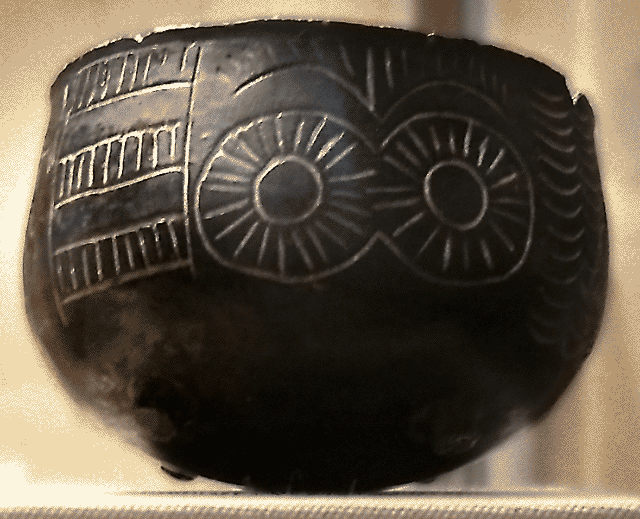




Metallurgy and techniques
Early metalworkers exploited native copper and, later, smelted copper ores. Techniques included cold hammering, annealing to soften work-hardened metal, and early casting in stone or clay moulds. The practical advantage of adding tin to copper to form bronze (an alloy) became known, but widespread bronze production required accessible tin sources and trade networks that were not yet established in many regions, so pure copper remained common for everyday objects.
Origins and regional development
The emergence of copper working took place independently in several areas. In Southeastern Europe the Vinča culture and neighboring groups show some of the earliest, best-documented metalworking skills. In the Near East, Anatolia and the Levant developed copper industries that later supported Bronze Age economies. Elsewhere, such as parts of Central Europe and South Asia, copper use expanded at different times and rates, reflecting local resources and social choices.
Typical artifacts and functions
Copper objects from Chalcolithic contexts range from practical tools to prestige items. Common categories include:
- Knives and cutting tools
- Swords and long blades (later forms)
- Spearheads and projectile tips
- Axes and adzes used in woodworking
- Personal ornaments such as brooches and pins
- Decorated items including belt boxes, vessels, and ritual objects
Besides functional tools, copper objects often served as markers of status and were placed in burials or hoards.
Social and economic impacts
The spread of copper working encouraged craft specialization, new exchange networks for ores and finished goods, and technical knowledge transfer between communities. Control of metal resources and skilled smiths could enhance social differentiation. In many regions the search for tin and trade routes linking tin and copper producers set the stage for the more complex economies of the Bronze Age.
Distinctions and notable facts
Not every culture experienced a discrete Copper Age; in some areas the transition to bronze was rapid or copper remained marginal. Archaeologists sometimes use alternate terminology such as "Eneolithic." In other parts of the world—for example, the prehistoric native-copper traditions of North America's Great Lakes—the development and use of copper followed different technological paths from Old World metallurgy. The Copper Age is therefore best understood as a set of regional trajectories in which metal use gradually reshaped daily life, craft organization, and long-distance connections.
For further reading consult general surveys of prehistoric metallurgy and regional archaeological syntheses that treat Chalcolithic remains, production sites, and metallurgical analyses in more detail. Reliable summaries and site catalogues are available through many academic and museum resources (See Neolithic context, Bronze Age transition).
Related articles
Author
AlegsaOnline.com Copper Age (Chalcolithic): the transition between Stone and Bronze Leandro Alegsa
URL: https://en.alegsaonline.com/art/22952
Sources
- dx.doi.org : 10.1016/j.jas.2010.06.012