
Axe: history, parts, types and modern uses
An axe is a wedge-shaped hand tool or implement used primarily for cutting, shaping, splitting and sometimes as a weapon. This article covers design, history, common types, uses and care.
An axe is a handheld tool with a sharpened head mounted on a handle, used mainly for cutting, shaping and splitting wood. As a simple machine it functions by concentrating force along a thin edge to separate material. The axe has been central to human technology for millennia and appears in many cultures as a practical instrument and a symbolic object; for general information see tool overview.
Image gallery
10 Images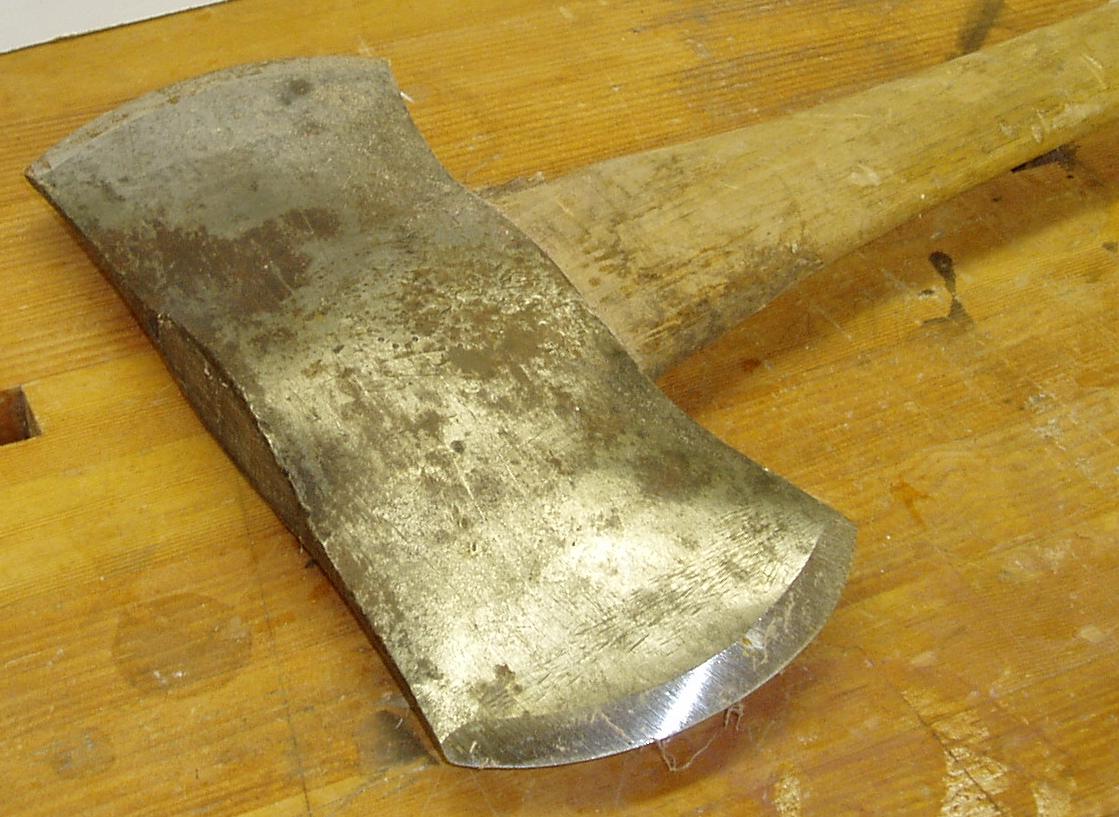


Basic parts and materials
Typical elements of an axe include the head (the metal piece), the bit or blade (the sharpened edge), the poll or butt (opposite the blade), the eye (the hole that secures the handle), and the handle or haft. Heads are most often forged from steel or iron; historically they were stone or bronze. Handles are commonly wood, fiberglass or reinforced composites. Axes intended for cutting are shaped differently from those made for splitting wood; for more on woodwork uses see wood cutting.
Origins and historical roles
The earliest recognizable axe-like implements were stone hand axes used in the Lower Paleolithic; many prehistoric examples had no separate handle and are often called hand axes or choppers — see hand axe and broader discussions of the Stone Age. Over time hafting (attaching a handle) improved leverage and control. In several eras axes were adapted for combat and ceremonial use; military use is well documented where axes served as weapons for infantry and mounted troops — see weapon and accounts of soldiers who used them.
Common types and examples
- Hand axe / hatchet — small, single-handed for chopping and light woodworking.
- Felling axe — designed to cut across wood grain to fell trees.
- Splitting maul — heavier, wedge-shaped head to split logs along the grain.
- Carpenter’s or joiner’s axe — for shaping timber and fine work.
- Battle axe and ceremonial forms — shaped for combat or symbolic display.
Modern uses and cultural importance
Today axes are widely used by foresters, carpenters and homeowners for felling, limbing and splitting timber; professional woodcutters still rely on axes for tasks where a chainsaw is impractical — see woodcutters. Firefighters and rescue teams use specialized axes for forcible entry and rescue, often fitted with additional features like pick ends or pry bars — see firemen. Axes also remain important in traditional crafts, competitive sports (timber sports) and cultural ceremonies.
Care, safety and notable facts
Good maintenance extends an axe’s life: keep the edge sharp, protect metal from rust, inspect and secure the handle, and use appropriate personal protective equipment. Proper stance and chopping technique reduce accidents. Although simple in concept, the axe exemplifies effective mechanical design: a wedge that multiplies applied force to perform heavy work with relatively little effort.
Questions and answers
Q: What is an axe?
A: An axe is an ancient tool that is used to shape, split, and cut wood.
Q: What was the hand axe used for in the Stone Age?
A: The hand axe was probably the first tool in the Stone Age and was used for cutting and shaping wood.
Q: Did the hand axe have a handle?
A: No, the hand axe did not have a handle.
Q: What were axes used for in the past?
A: In the past, axes were used as weapons by soldiers.
Q: What are axes usually associated with today?
A: Today, axes are usually associated with woodcutters and firemen.
Q: What category do axes fall under?
A: Axes are simple machines that fall under the category of wedges.
Q: What materials are axes usually made of?
A: Axes are usually made of some sort of metal, mainly steel or iron, and can have a metal or wooden handle.
Related articles
Author
AlegsaOnline.com Axe: history, parts, types and modern uses Leandro Alegsa
URL: https://en.alegsaonline.com/art/7824