
Alaska plaice (Pleuronectes quadrituberculatus): biology, distribution and fisheries
Alaska plaice is a northeastern Pacific flatfish found on continental shelves to about 600 m. This article describes its appearance, habitat, diet, life history, fisheries interactions, and management considerations.
Overview
The Alaska plaice (Pleuronectes quadrituberculatus) is a benthic flatfish of the northern Pacific. It inhabits cold saltwater environments and is one of several demersal species encountered on continental shelves. Like other flatfishes, it spends most of its life lying on one side with both eyes on the upward-facing side, using cryptic coloration to blend with the seabed. Its range extends from the eastern Gulf of Alaska across the Bering Sea and Aleutian region to the Chukchi Sea in the north and westward toward the Sea of Japan.
Image gallery
2 Images
Identification and habitat
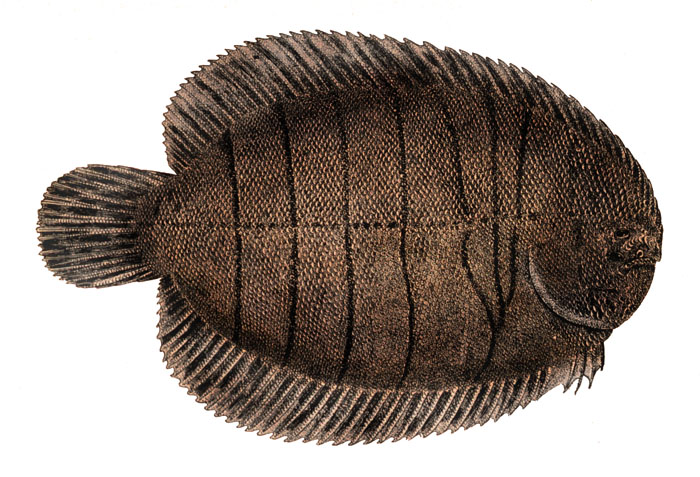
Alaska plaice have the flattened body typical of the family and are adapted to life on sandy and muddy substrates of the continental shelf and upper slope. They are usually found at depths down to about 600 metres. The eyed side is mottled to match the substrate while the blind side is pale. External features used to identify the species include body shape, scale patterns and the arrangement of tubercles or small bumps on the back, characteristics that distinguish it from similar flatfishes.
Diet and ecological role
As a benthic predator, Alaska plaice feeds primarily on small invertebrates found in or on the sediment. Its diet consists largely of marine worms, chiefly polychaetes, together with crustaceans such as amphipods and other burrowing invertebrates. By consuming these prey, plaice link infaunal and epifaunal communities to higher trophic levels and serve as both predator and prey within mixed demersal assemblages.
Growth, longevity and life history
Alaska plaice grow relatively slowly compared with some pelagic fishes. Individuals can live for several decades and may reach lengths near 60 cm (about 24 inches), although most fish taken in fisheries are substantially smaller and younger—commonly seven or eight years old and around 30 cm. Like other flatfishes, they undergo a larval metamorphosis during which one eye migrates to the upper side and the juvenile settles to the bottom. Specific details of spawning time and nursery locations vary across the species range and may be influenced by local oceanographic conditions.
Fisheries interactions and management
Alaska plaice are not typically the primary target of commercial fisheries, but they are frequently taken as incidental catch by trawlers pursuing cod, pollock and other groundfish. Because they co-occur on the same shelf habitats, bycatch rates can be high. Management in regions such as the Bering Sea and Aleutian Islands often includes annual total allowable catches, observer programs and bycatch monitoring to limit impacts on plaice and other non-target species. In some years quotas for plaice have been reached early due to the volume of incidental capture, which can influence fishing seasons and quota availability for target species.
Human uses and value
When retained, Alaska plaice are marketed as a mild, white-fleshed fish for fresh, frozen or processed products, though they are generally of lower market value than larger flatfish. Some fish are directed to fishmeal or other secondary uses. Handling and processing follow standard practices for whitefish to maintain quality. Consumer demand is modest compared with more prized flatfish, which contributes to its status as a lower-value commercial species.
Conservation, research and monitoring
Conservation concerns for Alaska plaice focus largely on the effects of bycatch and habitat disturbance from bottom-contact fishing gear. Regular stock assessments, catch limits, and ecosystem-based management approaches are used in many regions to track population trends and reduce unintended impacts. Scientific programs employ trawl surveys, observer data and biological sampling to assess abundance, age structure and distribution. Research continues on life-history traits, habitat associations and the species' role in shelf ecosystems.
Similar species and identification tips
Alaska plaice may be confused with other flatfishes that share its range. Careful attention to body proportions, coloration, scale pattern and the presence or arrangement of small dorsal tubercles helps separate plaice from flounders and sole species. Regional field guides and identification keys produced by fisheries agencies provide diagnostic characters for reliable identification.
Further information and resources
For general background on flatfish biology, fishing practices and regional management measures consult fisheries agency publications and academic reviews. Useful starting points include resources on marine ecosystems, stock assessment methods and bycatch mitigation. See links for context: fish biology, north Pacific studies, flatfish biology, depth ranges, and regional materials linked to geographical overviews. Additional references cover fishing impacts and management tools (saltwater, ecosystem reports), gear effects (continental shelf work), prey ecology (polychaetes, echiurans) and market information (consumer measures). Specialist reports and monitoring summaries are available through regional fisheries organizations and research institutions for those seeking more detailed data.
Related articles
Author
AlegsaOnline.com Alaska plaice (Pleuronectes quadrituberculatus): biology, distribution and fisheries Leandro Alegsa
URL: https://en.alegsaonline.com/art/2010
Sources
- findarticles.com : 1998 Marine Fisheries Review article
- fakr.noaa.gov : Bulletin announcing reaching the total allowable catch of Alaska plaice for 2005