
Polychaete (bristle worm): marine annelid class
Polychaetes are diverse marine annelids (bristle worms) with segmented bodies bearing parapodia and chitinous bristles. Over 10,000 species live from intertidal zones to deep sea and play vital ecological roles.
Polychaetes, commonly called bristle worms, form a major class of annelid worms chiefly found in the marine environment. Members of this group vary widely in size, shape and lifestyle: some are free-moving predators, others build tubes or burrows, and a few live in symbiosis with other animals. Their diversity has made them a common subject of ecological and evolutionary studies.
Image gallery
10 Images



Key characteristics
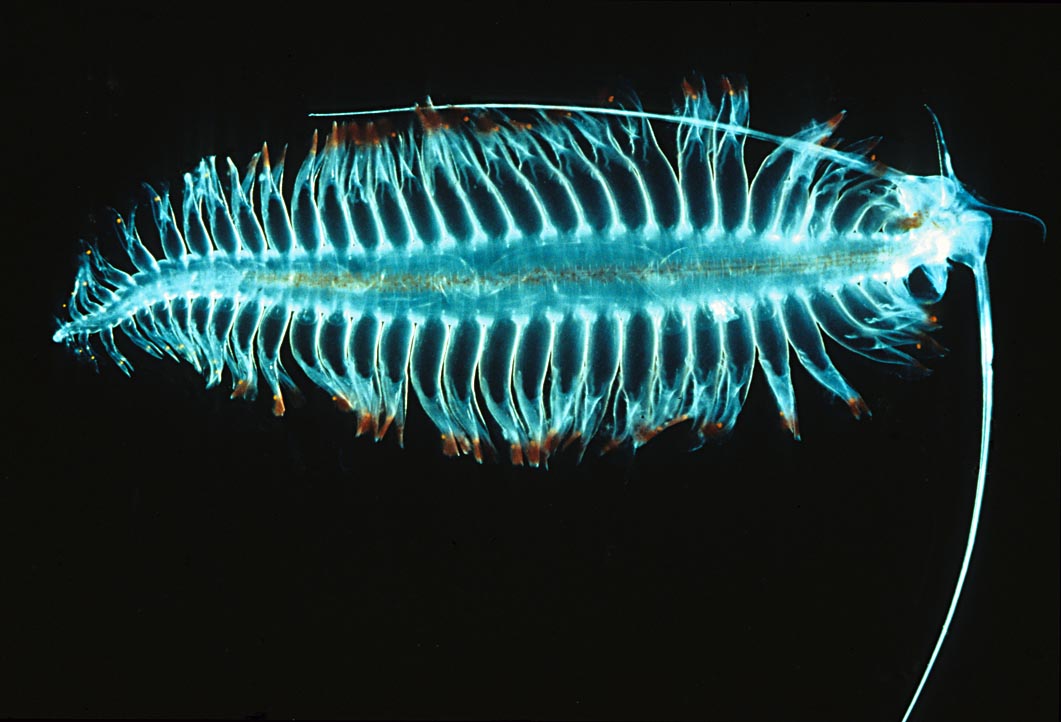
A defining feature of polychaetes is the segmentation of the body, with each segment typically bearing paired lateral appendages called parapodia. These parapodia carry numerous bristles or chaetae, which are visible as bundles of stiff hairs used for locomotion, anchoring and sometimes respiration. The bristles are composed of chitin and are often referred to simply as bristles or chaetae. Polychaetes also exhibit varied head structures with specialized sensory organs and jaws in many active hunters. By contrast, related groups such as the Oligochaeta have fewer chaetae per segment and lack the well-developed parapodia of polychaetes.
Distribution, diversity and examples
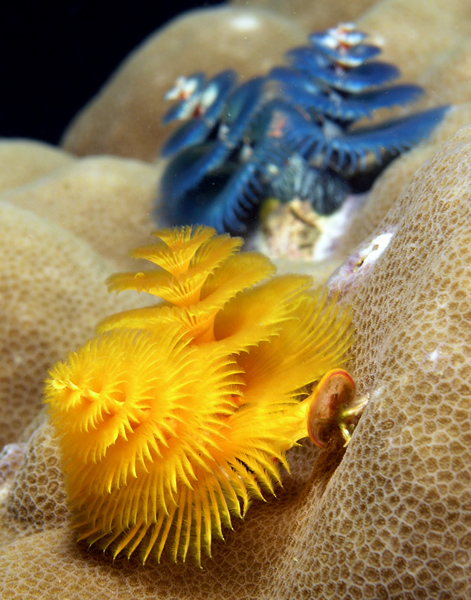
More than 10,000 species of polychaetes are currently described, and they occupy nearly every marine habitat from tide pools and sandy beaches to hydrothermal vents and abyssal plains. Well-known species include the burrowing lugworm and active errant forms such as the clam worm Nereis, often called a sandworm. Some species construct calcareous or organic tubes, others crawl on the substrate or swim freely, and a number are planktonic during part of their life cycle.
Fossil record and origins
Polychaetes have an ancient lineage with fossil evidence extending into the early Cambrian period. Early representatives appear in Cambrian fossil beds, including finds from Sirius Passet in Greenland, and their origins are commonly placed in the Cambrian explosion around 518 million years ago. These fossils help document the early diversification of segmented animals and provide context for the evolution of modern annelid body plans.
Ecology and human relevance
Polychaetes are ecologically important. They churn and aerate sediments, decompose organic matter, and form key links in marine food webs as prey for fish, crustaceans and birds. Some species are used as bait in fisheries and as model organisms in laboratories for developmental and environmental research. Many polychaetes produce a trochophore larva shared with other lophotrochozoans, and reproductive strategies range from broadcast spawning to spectacular mass swarms and the transformation known as epitoky in certain taxa.
Taxonomy, research and conservation
Taxonomically, polychaetes have been organized in traditional subgroups such as Errantia (mobile forms) and Sedentaria (tube-dwellers), but molecular studies continue to refine their classification. Scientists study their physiology, chemical defenses, and potential indicators of pollution. While many species are abundant, some specialized or habitat-restricted polychaetes are vulnerable to habitat loss, pollution and climate change, making conservation and continued taxonomic research important for understanding marine biodiversity.
- Class overview: Polychaeta
- Phylum context: Annelida
- Typical habitat: Marine environment
- Species count reference: ~10,000 described species
- Geological origin: Cambrian
- Notable fossil site: Sirius Passet
- Fossil locality: Greenland
- Anatomical terms: chaetae (bristles), chitin
- Common examples: lugworm and Nereis
Questions and answers
Q: What are polychaetes?
A: Polychaetes are a class of annelid worms found in marine environments.
Q: How many known species of polychaetes are there?
A: There are more than 10,000 known species of polychaetes.
Q: How old are polychaetes?
A: Polychaetes are ancient animals that date back to 518 million years ago.
Q: Where were polychaetes first found in fossils?
A: Polychaetes were first found in the early Cambrian fossil beds of Sirius Passet in Greenland.
Q: What are the fleshy protrusions on each body segment of polychaetes called?
A: The fleshy protrusions on each body segment of polychaetes are called 'parapodia'.
Q: What are the bristles on the parapodia of polychaetes made of?
A: The bristles on the parapodia of polychaetes are made of chitin.
Q: What are some common species of polychaetes?
A: Some common species of polychaetes are the lugworm and the clam worm Nereis (also known as the 'sandworm').
Related articles
Author
AlegsaOnline.com Polychaete (bristle worm): marine annelid class Leandro Alegsa
URL: https://en.alegsaonline.com/art/77838
Sources
- species.wikimedia.org : Polychaeta
- app.pan.pl : app.pan.pl/article/item/app53-137.html
- news.bbc.co.uk : "'Zombie worms' found off Sweden"
- ns.gov.gu : Accessed Oct. 8, 2009