
Albatross: oceanic seabirds of the family Diomedeidae
Albatrosses are large, long-lived seabirds of the family Diomedeidae, adapted for life over open oceans with exceptional flight, island breeding colonies, and conservation challenges from bycatch and introduced predators.
Overview
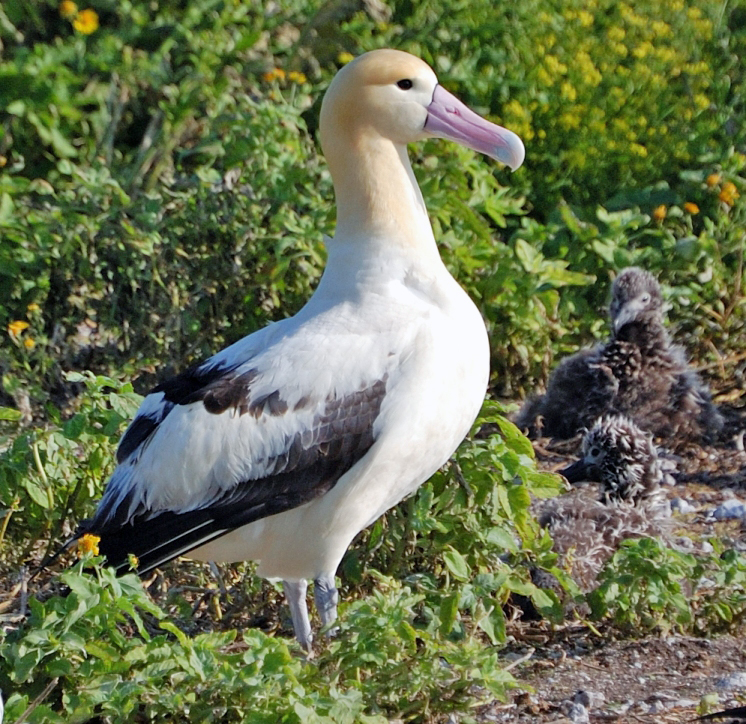
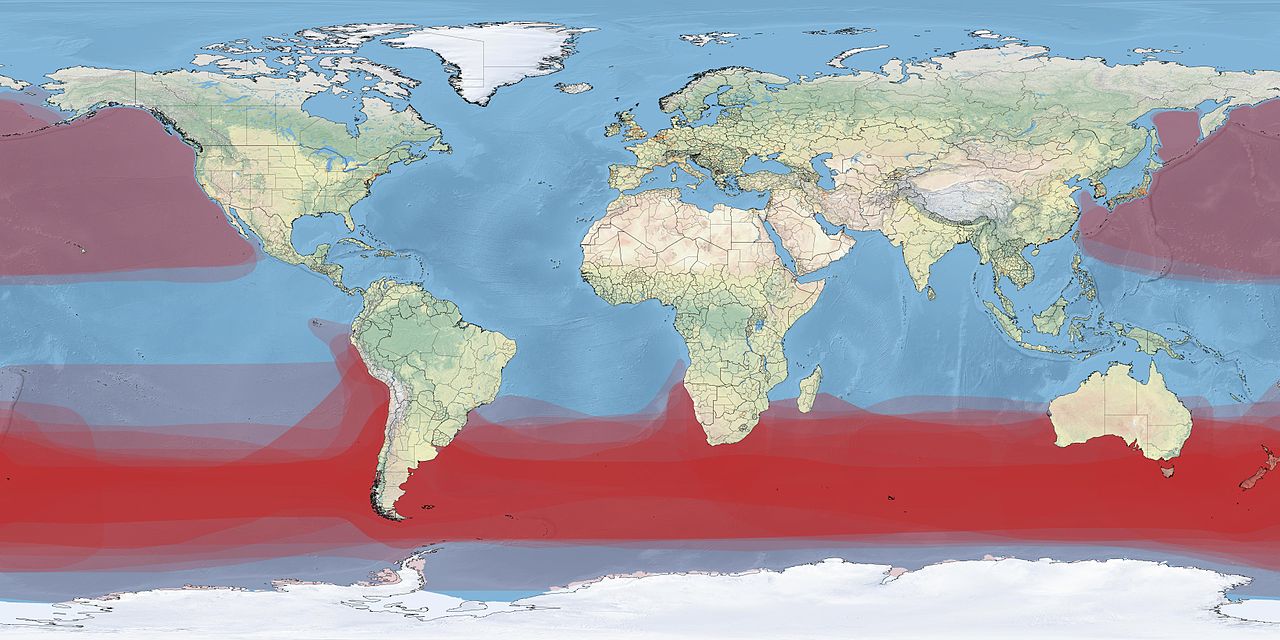
Albatrosses are large pelagic seabirds belonging to the family Diomedeidae. They spend most of their lives at sea, returning to land mainly to breed on isolated islands. Modern species are concentrated in the Southern Ocean and the North Pacific, with no resident populations in the North Atlantic today; however, fossil remains show they were once present there.
Image gallery
10 Images




Physical characteristics and flight
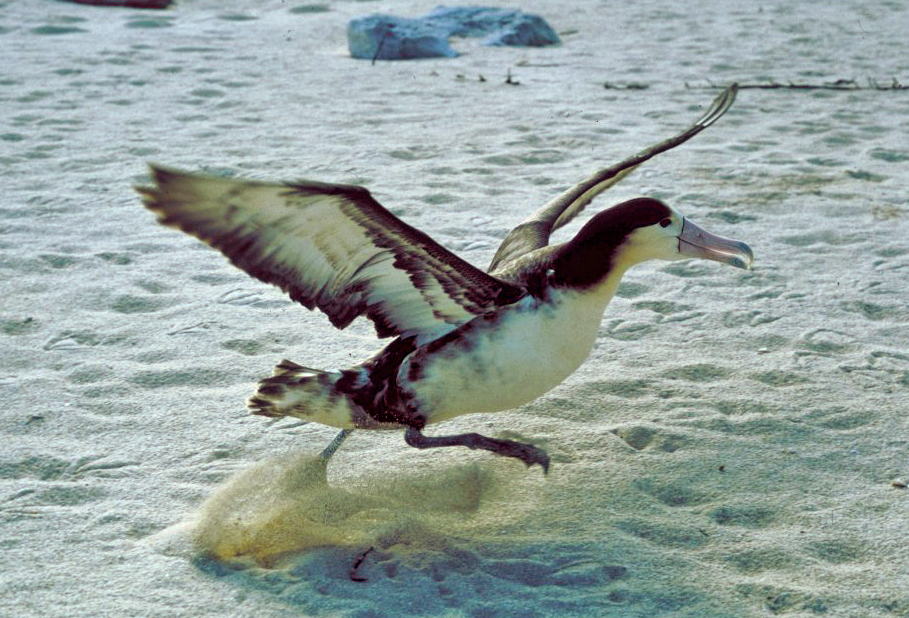
Albatrosses are notable for long, narrow wings that enable efficient, energy-saving travel across vast ocean areas. Their wingspans are among the largest of any living bird — in the biggest species they can reach roughly three to four metres — allowing them to glide for hours with little flapping. As members of the tube‑nosed seabirds (order Procellariiformes), they have distinctive nasal passages that assist their sense of smell, which helps them locate prey over open water.
Distribution, groups and taxonomy
Taxonomists commonly divide the family into several groups: great albatrosses, North Pacific albatrosses, mollymawks and sooty albatrosses. About twenty-one species are widely recognized by conservation bodies such as the IUCN. Most species forage far from land and are strongly associated with particular oceanic regions, including the Southern Ocean and the North Pacific Ocean, while they are absent as breeders from the modern North Atlantic.
Diet, breeding and life history
Albatrosses feed on surface and near-surface prey such as squid, small fish and crustaceans like krill. They usually nest in colonies on islands, creating simple ground nests or scrapes and returning to the same mate over many years; most species lay a single egg each breeding attempt. Young birds often take several years to reach breeding maturity, and adults can live for decades, which makes populations slow to recover from losses.
Threats and conservation
Albatrosses face multiple threats. Introduced mammals such as rats and cats prey on eggs and chicks at breeding sites, and other introduced predators and trampling by livestock can degrade colonies. Marine pollution — including plastic ingestion and oil contamination — kills individuals, and commercial fishing can reduce food availability. The most direct human-caused mortality is from longline and trawl fisheries, where birds are caught on baited hooks and drown. Many species have been assessed with threatened conservation statuses by organizations such as the IUCN; conservation agreements and national protections address these risks.
Conservation measures and human interaction
- On breeding islands, eradication or control of invasive predators and protection of nesting habitat reduce egg and chick losses.
- At sea, fishery mitigation techniques—night setting, bird‑scaring lines, weighted lines and strategic offal management—help reduce bycatch.
- International cooperation, research and monitoring support recovery; many groups rely on tracking studies and population surveys to guide action.
Public awareness and targeted policy instruments aim to reduce threats so these wide-ranging birds can continue their oceanic life. For further reading on taxonomy and conservation measures see resources on family-level biology and international agreements relating to seabird protection: nesting and colony management, conservation status, and guidelines for protecting both juvenile and adult birds at sea. Additional materials about regional distribution and research are available via regional portals: fish and prey studies, diet analyses, krill ecology, and policy summaries linked to ocean regions Southern Ocean and North Pacific. For historical records see collections and notes associated with fossil occurrences and long-term monitoring databases (species accounts, biogeography, and metadata portals pollution).
Questions and answers
Q: What family do albatrosses belong to?
A: Albatrosses belong to the biological family Diomedeidae.
Q: Where do albatrosses live?
A: Albatrosses live in the region of the Southern Ocean and the North Pacific Ocean.
Q: How many species of albatross are there?
A: There are four main species of albatross, which are divided into twenty-one species identified by the World Conservation Union (ICUN).
Q: What do albatross eat?
A: Albatross eat squid, fish and krill.
Q: Where do they make their nests?
A: Albatross come ashore to make their nests, mostly on islands, and usually near the nests of other birds.
Q: Why are some species endangered?
A: Nineteen of the twenty-one species of albatross are endangered due to animals such as rats and cats attacking their eggs, chicks, and sometimes adult birds; pollution of the oceans; and over-fishing. The main reason why albatross are endangered is longline fishing which causes many albatross to get caught on hooks that have been baited to catch fish. This causes the birds to drown.
Tags
Related articles
Author
AlegsaOnline.com Albatross: oceanic seabirds of the family Diomedeidae Leandro Alegsa
URL: https://en.alegsaonline.com/art/2068
Sources
- taxonomy.nl : "Systema Naturae 2000 / Classification - Family Diomedeidae -"
- journals.cambridge.org : Dead or alive, night or day: how do albatrosses catch squid?
- jstor.org : "Kleptoparasitism by Kermadec Petrels, Jaegers, and Skuas in the Eastern Tropical Pacific: Evidence of Mimicry by Two Species of Pterodroma"
- marineornithology.org : marineornithology.org/PDF/24/24_10.pdf
- marineornithology.org : marineornithology.org/PDF/29_1/29_1_6.pdf
- nzes.org.nz : nzes.org.nz/
- etymonline.com : "Online Etymology Dictionary"
- iucnredlist.org : Red List: Albatross Species
- links.jstor.org : "Airplane-Albatross Collisions on Midway Atoll"
- doi.org : 10.2307/1365556
- audubon2.org : Audubon Watchlist. Laysan Albatross (Phoebastria immutabilis)
- news.bbc.co.uk : Albatross chicks attacked by mice
- mindfully.org : Plastic ingestion by Laysan Albatross chicks on Sand Island, MidwayAtoll, in 1994 and 1995. Heidi J. Auman et al. In Albatross Biology andConservation, pp239-44, 1997.
- fao.org : fao.org/home/404?url_file=/DOCREP/005/W9817E/W9817E00.HTM
- rsnz.org : Home « Royal Society of New Zealand