
CD-R (Compact Disc Recordable)
CD-R is a record-once optical disc format used for music, data and mixed media. This article explains its construction, dye types, capacity, uses, compatibility and factors affecting longevity.
A CD-R, short for Compact Disc Recordable, is a removable optical disc that can be written once by a consumer or professional recorder and read many times afterwards. Unlike a blank pressed compact disc, a CD-R accepts user-supplied content: audio tracks, computer files, or combined formats such as enhanced CDs that contain both music and data. Because the recording alters a dye layer rather than punching physical pits, CD-Rs are described as recordable (write-once) media and differ from rewritable media such as the CD-RW, which use a phase-change alloy and can be erased and rewritten.
Image gallery
6 Images


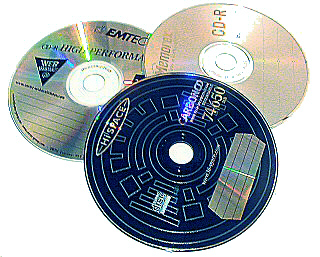
Structure and how recording works
A CD-R is built from several stacked layers. From the bottom upward these typically include the stamped polycarbonate substrate that holds tracking grooves, a photosensitive dye layer where marks are created during recording, a thin reflective metal layer (commonly silver or aluminum) and a protective lacquer coating. During burning, a focused infrared laser heats selected spots in the dye to change their optical properties. The altered regions reflect the reading laser differently from unaltered areas, creating a pattern that CD drives interpret as the digital pits and lands of a regular pressed disc.
Capacities, formats and compatibility
Early CD-R media from the 1990s had shorter capacities (for example, discs rated for about 63 minutes of audio), but consumer discs standardized around 74 minutes and later 80 minutes, equivalent to roughly 700 MB of data. Manufacturers also produced non-standard 90- and 99-minute discs; these can be useful but often cause compatibility problems with some players and recorders. CD-Rs support a variety of file systems and formats—audio CDs (Red Book), ISO 9660 and UDF for data, and mixed-mode or multisession discs that combine files and an audio session.
Dye types, reflective layers and longevity
Recordable discs rely on organic dyes that respond to the recording laser. The three most common dye families are phthalocyanine, cyanine and AZO. They differ in chemical composition, appearance and tolerance to recording conditions: phthalocyanine is generally praised for long-term stability but often requires precise laser calibration; cyanine was used widely in early media and may have required stabilizers to resist degradation; AZO formulations are known for stable behavior and good burn compatibility. The metal reflection layer is typically silver or aluminum, while premium archival discs may use gold as a top layer for improved corrosion resistance. Manufacturer quality, dye formulation, the reflectivity metal and sealing are all factors that influence a disc's lifespan; environmental conditions such as heat, humidity and light exposure are also important.
Practical uses and limitations
CD-Rs have been used for music publishing, software distribution, data backup, creating bootable operating system media and exchanging files. They remain useful when a physical, immutable copy is desired. However, their popularity has declined with the rise of high-capacity flash storage, cloud services and streaming. When creating CD-Rs, users should consider burn speed and recorder quality—overspeed burning can increase error rates and reduce compatibility. For archival or professional audio work, using well-regarded media, slower burn speeds and controlled storage conditions improves the chance of long-term readability.
Notable distinctions and practical advice
- CD-R vs CD-RW: CD-R is write-once; CD-RW supports erasing and rewriting but may have lower playback compatibility on older players.
- Reflective metals: silver or aluminum are common, while gold layers are used on some archival discs for enhanced stability and corrosion resistance; see examples using silver and gold in disc construction.
- Media selection: choose dye type and reputable brands for important data. Phthalocyanine, cyanine and AZO dyes each have trade-offs between burn tolerance and longevity.
- Compatibility: non-standard longer-duration discs can fail to work in some players, so test before distributing important material.
Despite being largely supplanted for many everyday tasks, CD-R remains a relevant medium for certain audio applications, archival copies and environments where a stable, physical master is required. For further technical background on optical disc standards and recording techniques consult detailed resources and manufacturers' specifications, or follow introductory material about the compact disc format and optical recording technology.
Related articles
Author
AlegsaOnline.com CD-R (Compact Disc Recordable) Leandro Alegsa
URL: https://en.alegsaonline.com/art/17782