
Carabiner: design, types, uses and safety
A carabiner is a metal loop with a spring-loaded gate used to connect components in climbing, sailing, rescue and industrial rigging. Covers construction, types, common uses and safety recommendations.
A carabiner is a metal loop with a spring-loaded side that opens and closes to accept ropes, straps or other hardware. Commonly used where a quick, strong connection is needed, a carabiner consists of a main body and a movable gate that together form a secure attachment point. The general concept — a metal loop with an opening — is simple, but many details govern performance and appropriate use.
Image gallery
7 Images



Main parts and basic characteristics
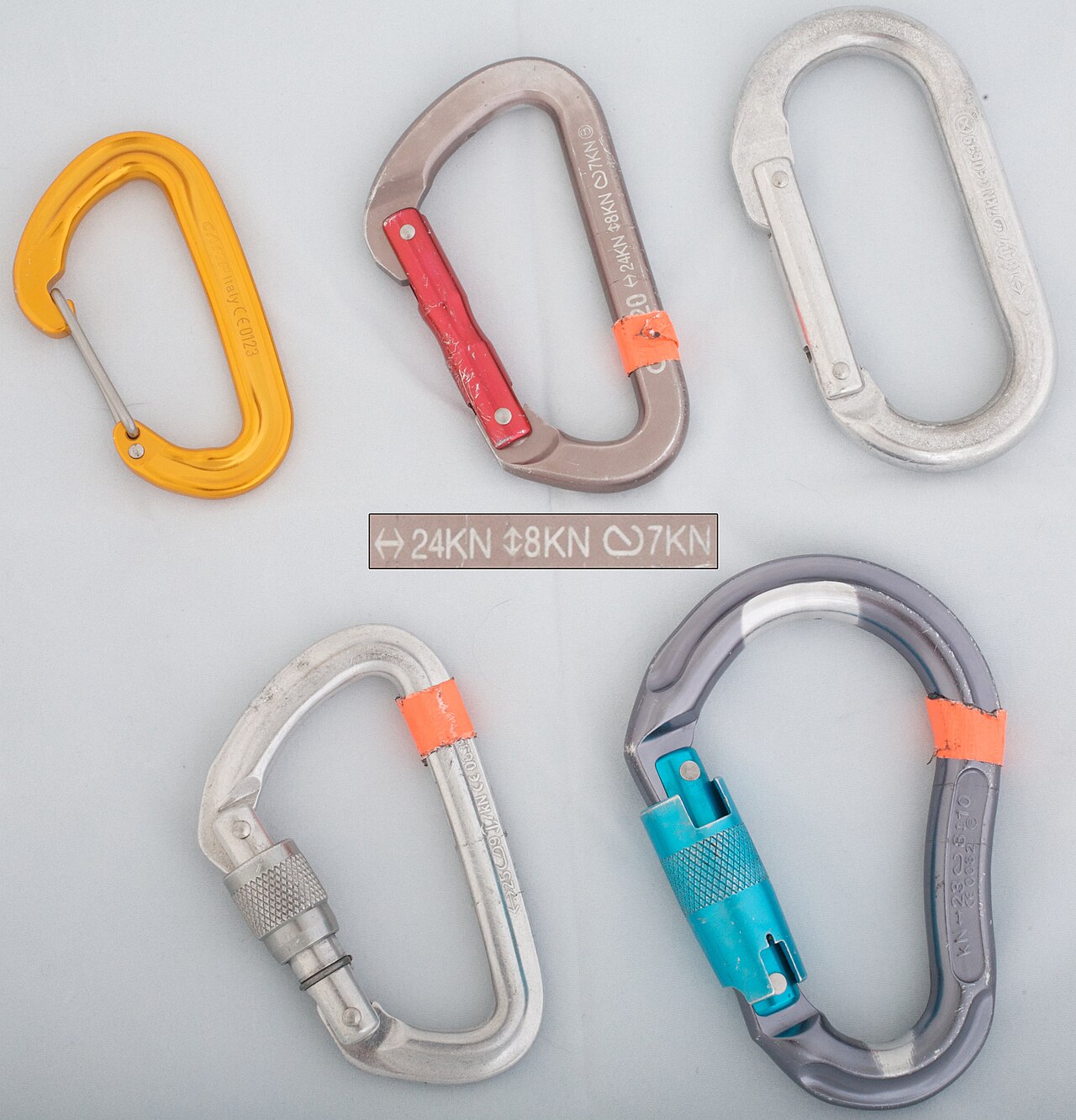
Two basic parts distinguish a carabiner: the side that opens, known as the gate, and the opposite, fixed side often called the spine. Gates can be solid or wire, straight or bent, and may include manual or automatic locking mechanisms. The body shape affects how ropes and webbing sit in the carabiner; common shapes include D, asymmetrical D, oval and pear (HMS). Materials are usually aluminum alloy for light weight or steel for higher wear resistance. Manufacturers mark strength ratings on the spine, usually measured in kilonewtons (kN); many climbing carabiners are commonly rated in the 20–30 kN range along their major axis.
Types and common variants
- Non-locking: simple, quick to clip and lightweight; used where accidental opening is unlikely.
- Locking: feature a screw, twist, or auto-locking sleeve to prevent the gate opening under load; used for belays, anchors and rescue work.
- Wire-gate: lighter and less prone to gate flutter in freezing or dynamic situations.
- Steel vs aluminum: steel carabiners are heavier but more durable for repeated contact with metal hardware or when used in heavy-duty industrial settings.
Uses and examples
Carabiners appear across many activities: sport and trad climbing, sailing and marine rigging, construction and industrial rope access, and tasks like window cleaning where secure temporary attachments are required. In climbing, carabiners are used for quickdraws, belay devices and as connectors on anchors. When belaying, climbers commonly employ a locking carabiner with a belay device such as an assisted-braking device like a Grigri or a tubular ATC-style device to reduce the risk of accidental gate opening.
Safety, inspection and best practices
Safe use depends on correct orientation and avoiding configurations that reduce strength, such as side-loading or cross-loading the gate. The major-axis strength (along the spine) is much higher than the minor-axis or with the gate open. Regular inspection for wear, sharp edges, deformation, corrosion or a gate that does not fully engage is essential; a carabiner experiencing a hard impact, visible damage, or persistent gate problems should be retired. For critical systems and industrial applications, locking carabiners and redundancy are recommended.
Origin and notable facts
The English word "carabiner" derives from the German Karabinerhaken, literally a "Karabinerhaken" or "hook for a carbine"—a military context where quick-attachment hooks were used. Today the basic element remains the same, but modern carving of shapes, materials, and locking mechanisms has produced a variety of specialized designs. For further general information on hardware and safe rigging, consult reputable climbing or industrial safety resources and equipment manufacturers.
For quick reference: the gate, spine and body geometry determine how a carabiner performs; choose locking models for life-safety applications; inspect regularly; and prefer steel where repeated abrasion or high loads are expected. Additional technical details and product specifications are available from manufacturers and standards organizations that govern design and testing practices.
Related topics and practical guides can be found through equipment suppliers and training providers; search authoritative sources before using a carabiner in critical applications.
More on the German term · Overview of the metal loop · Gate types
Related articles
Author
AlegsaOnline.com Carabiner: design, types, uses and safety Leandro Alegsa
URL: https://en.alegsaonline.com/art/16842