
Spine (vertebral column): structure, function, evolution and health
The spine, or vertebral column, is the central bony axis of vertebrate bodies. This article describes its parts, roles, evolutionary origin, and common conditions affecting it.
Overview
The spine, commonly called the backbone or vertebral column, is a stacked series of bones called vertebrae that runs along the back of the torso. Within this column a tunnel known as the spinal canal protects the spinal cord, the thick bundle of nerves that transmits signals between the brain and the rest of the body.
Image gallery
10 Images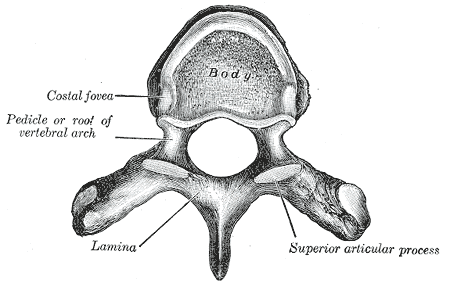


Structure and regions
The human spine is commonly described in regional sections. From top to bottom these are:
- Cervical – neck region, allowing head movement.
- Thoracic – upper and mid-back, attached to the ribcage.
- Lumbar – lower back, bears much of the body’s weight.
- Sacral and coccygeal – lower segments, often fused into the pelvis and tailbone.
Each vertebra has a central body that supports weight and a vertebral arch that forms the canal. Facet joints guide movement between adjacent bones.
Function and supporting tissues
The spine provides three principal roles: mechanical support for posture and locomotion, protection of the spinal cord, and flexibility to permit bending and twisting. Between many vertebrae are flexible pads called intervertebral discs, which act as shock absorbers and allow slight motion. Muscles and ligaments attached to the vertebrae stabilize the column and control motion; many mammals share this general arrangement.
Origins and biological context
Animals that possess a spine belong to the group of vertebrates, which includes fishes, amphibians, reptiles, birds and mammals. Organisms without a backbone are called invertebrates. The vertebral column evolved as a distinct structural and protective feature early in vertebrate history and has been adapted for swimming, running, flight and other modes of life across different lineages.
Clinical importance and common conditions
The spine is central to many health concerns. Mechanical problems such as muscle strain, degenerative changes of discs, herniation of disc material and curvature disorders like scoliosis can cause pain or neurological symptoms. Diagnostic tools include physical examination, X-ray and advanced imaging; treatments range from exercise and physical therapy to medical interventions and surgery when necessary.
Distinctions and notable facts
Vertebrae vary in shape and number among species to suit different lifestyles. In humans the lower segments are often fused, forming a stable base for the pelvis, whereas many other vertebrates retain a greater number of separate vertebrae to allow additional flexibility. The interplay of bones, discs, nerves and soft tissues makes the spine both a strong support and a delicate structure that is crucial to mobility and sensation.
For further illustrations and technical references see vertebral column, vertebrae and related resources such as torso anatomy and spinal cord overviews. Comparative biology resources discuss vertebrates and contrasts with invertebrates, while clinical summaries address common issues in mammals and the role of intervertebral discs.
Questions and answers
Q: What is the spine?
A: The spine is a column of vertebrae in the back part of the torso (upper body).
Q: What are some other names for the spine?
A: Other names for the spine are the backbone or vertebral column.
Q: What is inside the spinal canal?
A: Inside the spinal canal is the spinal cord.
Q: What are animals called that have a spine?
A: Animals that have a spine are called vertebrates.
Q: What are animals called that do not have a spine?
A: Animals that do not have a spine are called invertebrates.
Q: Are humans vertebrates or invertebrates?
A: Humans are vertebrates.
Q: Do many vertebrates have intervertebral discs separating the vertebrae?
A: Yes, many vertebrates, including mammals, have intervertebral discs separating the vertebrae.
Related articles
Author
AlegsaOnline.com Spine (vertebral column): structure, function, evolution and health Leandro Alegsa
URL: https://en.alegsaonline.com/art/92687
Sources
- bartleby.com : Gray's Anatomy
- bartleby.com : The Vertebral Column
- bartleby.com : Bartleby project