
Cathode: definition, roles, types and applications
A cathode is an electrode defined by where reduction or electron emission occurs. This article explains its meaning in electrochemistry, electronics and vacuum devices, types of cathodes, and common uses.
The term cathode refers to one electrode of an electrical system and is defined by the role it plays in the movement of charge. In simple terms, it is an electrode associated with electrons and with the region where reduction or electron emission takes place. The basic concept ties into related ideas such as the electrode, the electron, and the conductor that connects parts of an electrical circuit. How the cathode behaves depends on whether the device is an electrochemical cell, a vacuum tube, a semiconductor diode or another kind of component.
Image gallery
3 Images

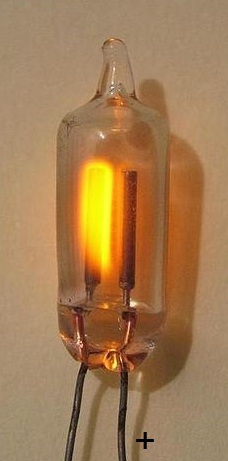
Key characteristics and types
There are several ways to describe cathodes depending on context. In an electrochemical cell, the cathode is the site of reduction—the electrode that gains electrons from the external circuit. In many galvanic (discharging) batteries the cathode is positively charged relative to the anode. In electrolytic cells, driven by an external source, the cathode may instead be negative because the external supply forces electrons into that electrode.
In electronic vacuum devices the label shifts: a cathode is commonly the electrode that emits electrons into vacuum or gas. Such cathodes are often designed to be electron sources and are held at lower (more negative) potential than the opposing anode to accelerate emitted electrons. Two broad physical types are:
- Hot (thermionic) cathodes — heated filaments or coated surfaces that release electrons when warm.
- Cold cathodes — rely on field emission, secondary emission, or gas discharges and do not require a heated filament.
History and terminology
The names anode and cathode date from the early 19th century and were popularized by pioneers of electrochemistry and electricity. The distinction was tied to the direction of current and to chemical reactions at electrodes. Over time the meanings broadened to accommodate devices that operate with vacuum, gas, or semiconductor physics. Because of historical differences in how people describe current—conventional current versus electron flow—usage can be confusing; modern references define a cathode by the type of reaction (reduction) or by its role as an electron emitter or sink in the specific device.
Applications and examples
Cathodes appear in many everyday and industrial technologies. In a typical battery the cathode is the electrode to which electrons flow when the cell is delivering power; in an electroplating cell the cathode is the workpiece where metal ions are reduced to form a coating. In vacuum electronics the cathode supplies electrons for devices such as an cathode ray tube, X-ray tubes, electron microscopes and older radio tubes. Semiconductor diodes and LEDs also have a terminal named cathode; the diode symbol typically marks the cathode with a bar. The physics and signs (positive or negative) vary by application, so one should check the device convention rather than assume polarity.
Distinctions and notable facts
- The cathode is the site of reduction in electrochemistry—this is a chemical definition that is independent of the sign convention used for current.
- In vacuum or gas-discharge devices the cathode is usually the electron emitter, often negative relative to the anode.
- Cathodic protection is a corrosion-control technique that makes a metal structure the cathode of an electrochemical cell to prevent oxidation.
- Markings and symbols vary: in many circuit diagrams the cathode of a diode is shown by a stripe or minus sign; in batteries and cells the naming depends on whether the cell is delivering power or being driven by an external source.
Understanding what a cathode is therefore requires knowing the system in which it appears: its chemical reactions, the direction of conventional current, or whether the device is a source of electrons. For further technical introductions to electrodes and current conventions see general references on electric current and basic texts on electrochemistry and vacuum electronics.
Related articles
Author
AlegsaOnline.com Cathode: definition, roles, types and applications Leandro Alegsa
URL: https://en.alegsaonline.com/art/17633
Sources
- av8n.com : "Anodes and Cathodes"
- chemistry.about.com : "Anodes and Cathodes"