
GriGri — assisted‑braking belay device for rock climbing
The GriGri is a widely used assisted‑braking belay device (brand name Petzl) that uses a cam to pinch the rope and reduce the effort needed to arrest a fall. It is not fully automatic and requires an attentive belayer.
Overview
The GriGri is an assisted‑braking belay device designed for rock climbing and indoor wall use. It allows a belayer to feed rope with relative ease during ascent but activates a camming mechanism to stop the rope rapidly when a strong load appears, similar in principle to a car seat belt. The term "GriGri" is a trademark of the manufacturer Petzl, but it is commonly used generically for several similar devices produced by other companies.
Image gallery
6 Images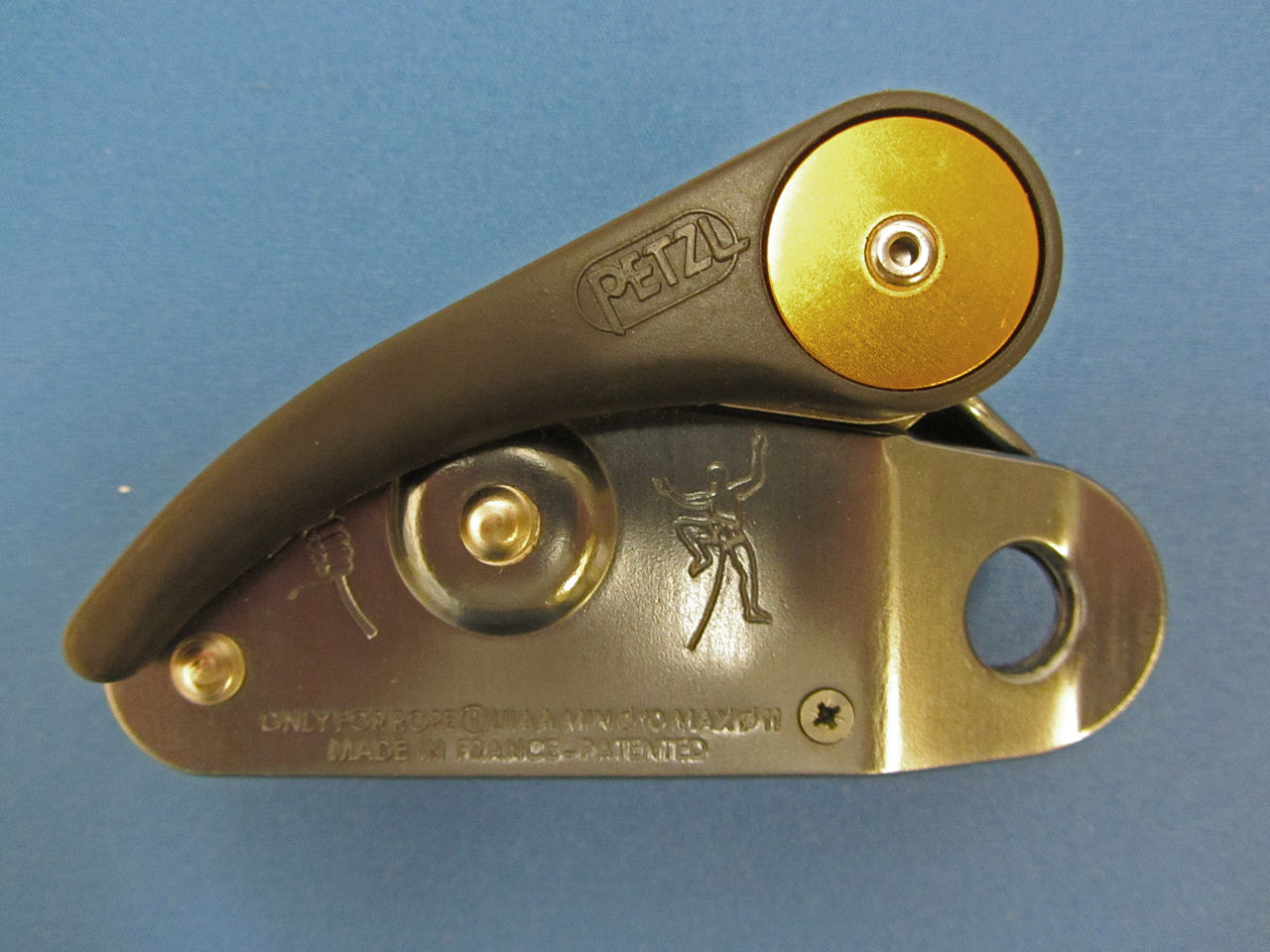


Design and operation
At the heart of the GriGri is a cam and slot that the rope runs through. Under steady or slow movement the rope can be pulled through the device; when a sudden force is applied the cam rotates and pinches the rope against the body of the device, creating friction and arresting the fall. A mechanical handle provides controlled lowering by partially uncamning the mechanism, allowing the belayer to pay out rope smoothly.
Typical parts and features
- Housing: metal body that contains the cam and slot.
- Camming unit: the moving part that locks the rope under load.
- Lowering handle: used to control descent; requires a steady hand.
- Attachment point: where a locking carabiner connects the device to the belayer.
History and naming
Petzl introduced the GriGri family as one of the first widely adopted assisted‑braking devices. Because it established a recognizable form and operating concept, climbers often call similar cam‑assisted devices "a Grigri" even when made by other manufacturers. Later Petzl models and competing designs expanded rope compatibility, weight, and feature sets, and some models offer a guided belay or anchor mode for belaying a second from above.
Uses, strengths and limitations
GriGri‑type devices are popular for sport lead climbing, top‑rope belaying and indoor gyms because they reduce the physical effort required to hold a fall and make lowering easier. They are intended for single ropes within a specified diameter range; using ropes outside that range can affect locking performance. They are not fully automatic — the belayer must maintain a braking hand on the rope and stay attentive at all times.
Safety and best practices
- Always read the manufacturer's instructions and verify rope compatibility.
- Keep a firm braking hand on the rope; never rely solely on the cam.
- Be cautious when guiding rope or lowering: mishandling the handle can lead to rapid descent.
- Be aware of correct device orientation and carabiner alignment to avoid cross‑loading.
For general information on belay devices and climbing technique, see introductory resources about rock climbing and belaying principles; for descriptions of other securing tools, consult material on securing devices. Manufacturer guidance and training remain essential — the device is a tool that assists the belayer but does not replace proper technique or vigilance. Additional technical and regulatory details are available from the manufacturer and climbing organizations (trademark and product information).
Related articles
Author
AlegsaOnline.com GriGri — assisted‑braking belay device for rock climbing Leandro Alegsa
URL: https://en.alegsaonline.com/art/40925