
Hawksbill sea turtle (Eretmochelys imbricata): biology, habitat, and conservation
Overview of the hawksbill sea turtle, its appearance, diet, habitat, reproduction, threats from trade and habitat loss, and conservation measures to protect this endangered species.
Overview
The hawksbill sea turtle (Eretmochelys imbricata) is a medium-sized marine turtle recognized for its sharp, curved beak and striking patterned shell. Globally listed as endangered, it plays a distinctive ecological role on tropical reefs and coastal ecosystems. For more on its conservation status see conservation listings and its relationship to other marine turtles at sea turtle resources.
Image gallery
10 Images




Physical characteristics
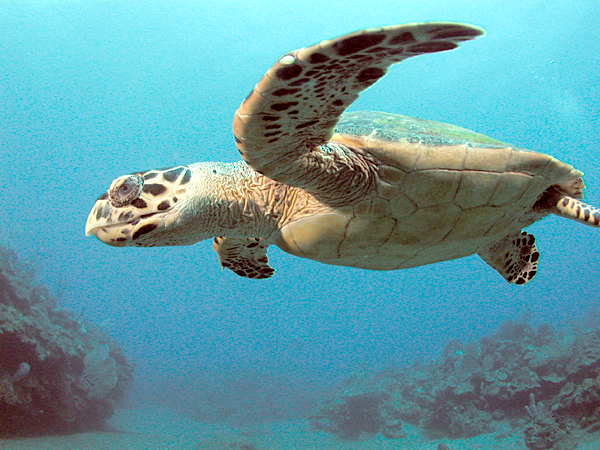
Hawksbills are notable for a tapered head and a pronounced, hawk-like beak that helps them extract prey from crevices. The carapace is often serrated at the rear and composed of overlapping scutes that create a mottled, tortoiseshell appearance prized in historic ornament trade. The beak and skull anatomy are distinctive; for detailed morphology see beak and skull notes. In size they are generally smaller than some other species — for example the Australian flatback (flatback turtle) — and are often compared in field guides such as regional turtle comparisons.
Habitat and diet
Hawksbills inhabit shallow coastal waters, especially around coral reefs and in lagoons where shelter and food are abundant. Typical habitats include shallow lagoons and coral reef systems. Their diet is specialized: they feed largely on sponges and other benthic invertebrates, using the pointed beak to reach into narrow crevices.
- Primary prey: sponges
- Supplementary prey: shrimp, squid, and various benthic invertebrates
Reproduction and life cycle
Hawksbills nest on sandy beaches in warm regions, with females returning to the same or nearby beaches to lay clutches of eggs. Most nesting occurs in tropical zones close to the equator, where sea temperatures and beach conditions favor egg incubation; see nesting and climate data at nesting records and tropical nesting zones. They are occasionally observed in subtropical and temperate areas, including parts of American waters where transient or feeding individuals turn up (regional sightings).
Threats and conservation
The hawksbill has faced major declines due to hunting, habitat loss, and illegal trade. Historically and currently, the patterned shell has been carved into decorative objects and jewelry, driving targeted exploitation; see discussions of trade impacts at tortoiseshell trade. Other pressures include coastal development, coral reef degradation, bycatch in fisheries, and climate-related changes to nesting beaches and sex ratios. Conservation measures include protected nesting beaches, fisheries regulations, trade bans, and reef conservation programs described at conservation links.
Notes, distinctions and further reading
Hawksbills are an important part of coral reef health because their sponge-eating helps maintain space and biodiversity on reefs. They are often studied alongside other species to understand variations in size, behavior, and regional threats; see comparative resources: sea turtle overview, flatback comparison, and field reports at regional guides. For more data and monitoring reports consult these resources: reef studies, lagoon habitat reports, sponge ecology, invertebrate prey surveys, cephalopod prey notes, benthic community studies, and regional sighting indexes at sighting records. Additional conservation policy and nesting records are available at nest databases, climate and nesting, and trade monitoring at trade archives. General species summaries can also be found via equatorial marine species lists.
Author
AlegsaOnline.com Hawksbill sea turtle (Eretmochelys imbricata): biology, habitat, and conservation Leandro Alegsa
URL: https://en.alegsaonline.com/art/139550