
Brachiosaurs — long‑necked sauropod dinosaurs with elevated forelimbs
Brachiosaurs were large, herbivorous sauropods noted for longer forelimbs and high shoulders. They lived from the Middle Jurassic to the Early Cretaceous and include genera such as Brachiosaurus and Giraffatitan.
Overview
Brachiosaurs are members of the sauropod group of dinosaurs most commonly placed in the family Brachiosauridae. These animals were herbivorous quadrupeds distinguished by relatively long forelimbs, which gave them a distinctive steep-shouldered silhouette and elevated head position. Fossils assigned to brachiosaurs appear in Mesozoic strata from the Middle Jurassic through the Early Cretaceous, and the group includes some of the tallest and most striking dinosaurs known from the fossil record.
Image gallery
10 Images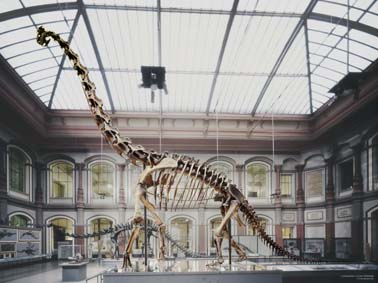


Anatomy and distinguishing features
Brachiosaurs are characterized by a combination of skeletal traits rather than a single diagnostic feature. Their forelimbs are proportionally longer than their hind limbs, producing an oblique trunk angle and a high dorsal region. Neck vertebrae are elongated, supporting a long neck used to browse vegetation at heights unreachable by many other herbivores. Like other large sauropods, brachiosaurs had pneumatic (air-filled) vertebrae and other skeletal adaptations that reduced weight while maintaining structural strength.
Evolution and fossil record
The group first appears in the Middle Jurassic and persisted into the Early Cretaceous. Early possible members are known from several continents, indicating a wide geographic distribution. Fossil material ranges from partial skeletons and isolated bones to near-complete mounts. Because preservation varies and key elements are sometimes missing, paleontologists debate which taxa should be included in Brachiosauridae and how the family relates to other sauropod lineages.
Notable species and discoveries
- Brachiosaurus — a well-known North American genus often used to illustrate the group's general body plan.
- Giraffatitan — originally described as a species of Brachiosaurus, this African form is represented by one of the largest mounted dinosaur skeletons on display in Berlin.
- Sauroposeidon — a later, very large North American form that shows the persistence of tall, long-necked brachiosaur-like sauropods into the Early Cretaceous.
- Lapparentosaurus — a Middle Jurassic African taxon sometimes cited as an early brachiosaurian representative.
Paleoecology and behavior
Brachiosaurs were browsers that fed on vegetation at heights above ground level that other herbivores could not easily reach. Their long necks and elevated shoulders allowed access to tree canopies and tall foliage. Respiratory adaptations associated with vertebral pneumaticity likely helped sustain a large body size by reducing skeletal mass. As with many aspects of sauropod biology, posture and feeding behavior have been the subject of scientific debate; some studies favor a generally elevated neck carriage while others argue for more horizontal neck postures depending on feeding strategy and neck flexibility.
Classification and notable distinctions
Taxonomic boundaries around Brachiosauridae have been revised repeatedly as new fossils and analytical methods appear. Brachiosaurs are set apart from other sauropod groups such as diplodocids and titanosaurs by limb proportions, vertebral structure, and skull features where known. Because many taxa are known from incomplete remains, relationships among genera remain tentative in some cases, and new finds continue to refine our understanding of brachiosaur diversity and evolution.
Further reading and resources
- Overview of Brachiosauridae
- General sauropod information
- Giraffatitan (formerly Brachiosaurus brancai)
- Museum displays and major specimens
- European fossil sites
- Middle Jurassic faunas and context
- Early Cretaceous survivors and turnover
- Lapparentosaurus and African records
- Sauroposeidon and Late brachiosaur-like forms
- North American brachiosaur discoveries
Readers interested in skeletal anatomy, mounted specimens, or the shifting taxonomy of brachiosaurs will find that new discoveries and analytical techniques continue to clarify the picture of these remarkable long‑necked dinosaurs.
Related articles
Author
AlegsaOnline.com Brachiosaurs — long‑necked sauropod dinosaurs with elevated forelimbs Leandro Alegsa
URL: https://en.alegsaonline.com/art/13575