
Brittle star (Ophiuroidea): biology, diversity and ecology
Brittle stars are echinoderms in the class Ophiuroidea. About 1,500 species live from shallow reefs to deep-sea plains; they have a distinct central disk, five slender arms, varied feeding modes, and important ecological roles.
Overview
Brittle stars are marine invertebrates belonging to the echinoderm group: echinoderms. They form the class Ophiuroidea, a lineage closely related to but distinct from starfish (sea stars). Superficially similar to starfish because of their radial body plan, brittle stars have a clearly defined central disk and long, flexible arms that are set off from the disk. Around 1,500 species have been described, occupying a wide range of marine environments from coral reefs to abyssal plains.
Image gallery
10 Images


Anatomy and distinguishing features
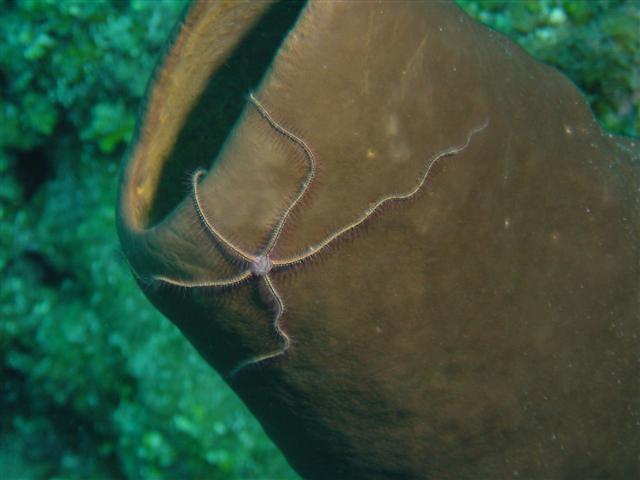
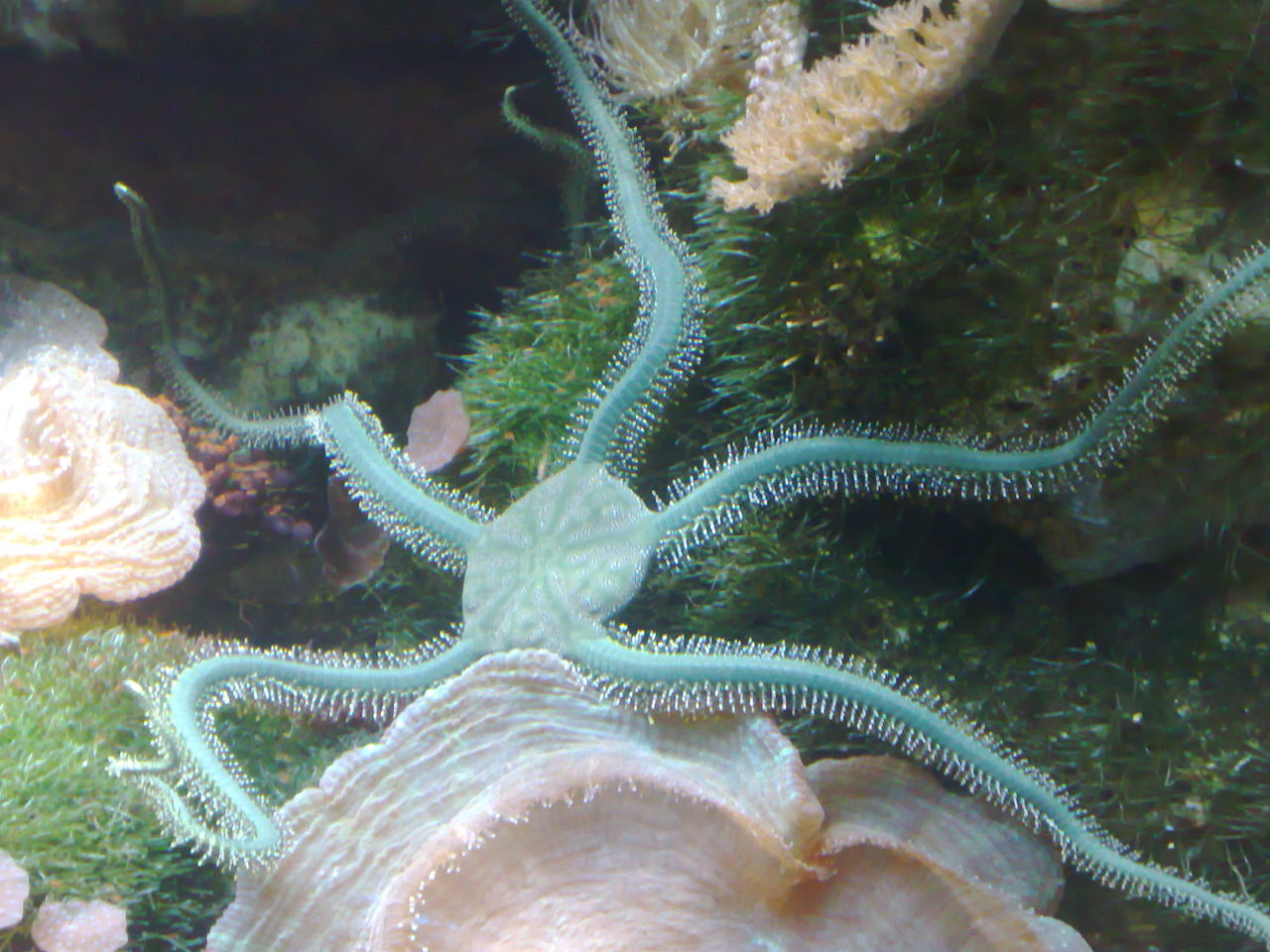
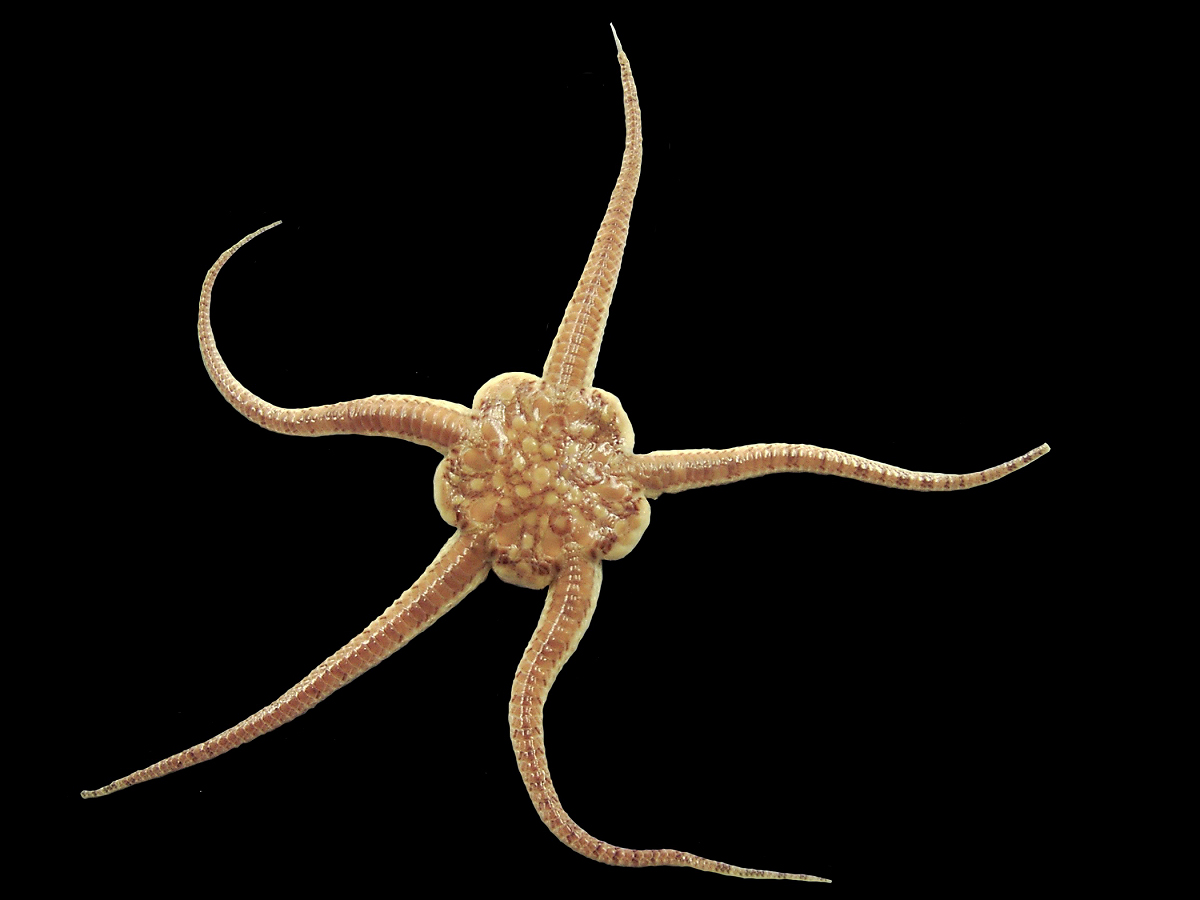
Brittle stars have a hard endoskeleton made of calcareous plates, like other echinoderms, but their arms are constructed from articulated joints that allow rapid, snake-like movements. Most species have five arms, though some forms can have more. Arms may be thin and whip-like or highly branched; in the latter case the animals are commonly called basket stars. The central disk usually houses the mouth and internal organs, while the arms function in locomotion, feeding and sensory perception.
- Skeleton: calcareous ossicles forming plates and joints.
- Symmetry: fivefold radial symmetry in adults, typical of echinoderms.
- Movement: arms move laterally to crawl; some species can swim short distances.
- Size: many are modest in size, but in the largest species arms can reach lengths of up to about 60 cm, while disks measure a few centimeters to several inches across.
Life cycle, classification and history
Brittle stars have distinct developmental stages. Their larvae differ from those of starfish and other echinoderms in form and behavior; larval biology plays a role in dispersal and species distributions. The class Ophiuroidea is commonly divided into brittle stars (often grouped as Ophiurida) and basket stars (Euryalida or Eurialida), which possess more highly branched arms adapted for suspension feeding. Fossil records show ophiuroids have existed for hundreds of millions of years, with many morphological forms preserved in marine sediments.
Habitat, diet and ecological role
Brittle stars inhabit a broad vertical range. While many species are common on shallow reefs—often hiding under rocks, inside crevices or among coral—they are also abundant on continental slopes and the deep sea, including abyssal depths beyond 6,000 meters. Feeding strategies vary: many are scavengers or detritivores that sweep organic particles with their arms, others are suspension feeders (particularly basket stars) or opportunistic predators of small invertebrates. Their activities contribute to benthic nutrient recycling and they are important prey for fish and other predators.
Uses, research and notable facts
Brittle stars are subjects of ecological and developmental research because of their regenerative abilities and distinctive larval forms. Some species are kept in marine aquaria for study or display. They can regenerate lost arms, sometimes rapidly, which is an adaptive response to predation. Taxonomists and ecologists continue to describe new species and clarify relationships within the class. For further general context on echinoderm biology see starfish resources and larval studies at larval development collections.
Notable resources and distinctions: see comparative overviews on echinoderm diversity at largest species details, reef community interactions via reef ecology, and taxonomic keys referenced at Ophiuroidea classification and general echinoderm portals at echinoderm guides.
Questions and answers
Q: What are brittle stars?
A: Brittle stars are Echinoderms of the Class Ophiuroidea. They have a skeleton of calcareous plates and radial symmetry.
Q: How are brittle stars different from starfish?
A: Brittle stars are superficially like starfish but they are a different group with different larvae. Unlike starfish, they live deeper in the ocean.
Q: How many different species of brittle stars are there?
A: There are about 1500 different species of brittle stars.
Q: How long can the arms of the largest species of brittle stars grow?
A: The arms of the largest species of brittle stars can grow up to 60 cm long.
Q: Where do brittle stars usually live?
A: Generally, brittle stars live below 500m of depth in the ocean. They are also common members of reef communities, where they hide under rocks and even within other living organisms.
Q: How do brittle stars catch their prey?
A: Brittle stars are mostly scavengers and detrivores, but they are able to catch some small prey on occasion.
Q: What are the two related groups of Ophiuroids and where do they usually live?
A: The two related groups of Ophiuroids are the Ophiurida (brittle stars) and the basket stars (Eurialida). Basket stars usually live in the deeper parts of the range.
Related articles
Author
AlegsaOnline.com Brittle star (Ophiuroidea): biology, diversity and ecology Leandro Alegsa
URL: https://en.alegsaonline.com/art/14583
Sources
- books.google.com : The Human, The Orchid and The Octopus