
Sauroposeidon: the giant brachiosaur-like sauropod
Sauroposeidon, a giant Early Cretaceous sauropod from North America, is known from exceptionally long neck vertebrae and is notable for its great height, pneumatic bones, and limited fossil record.
Overview
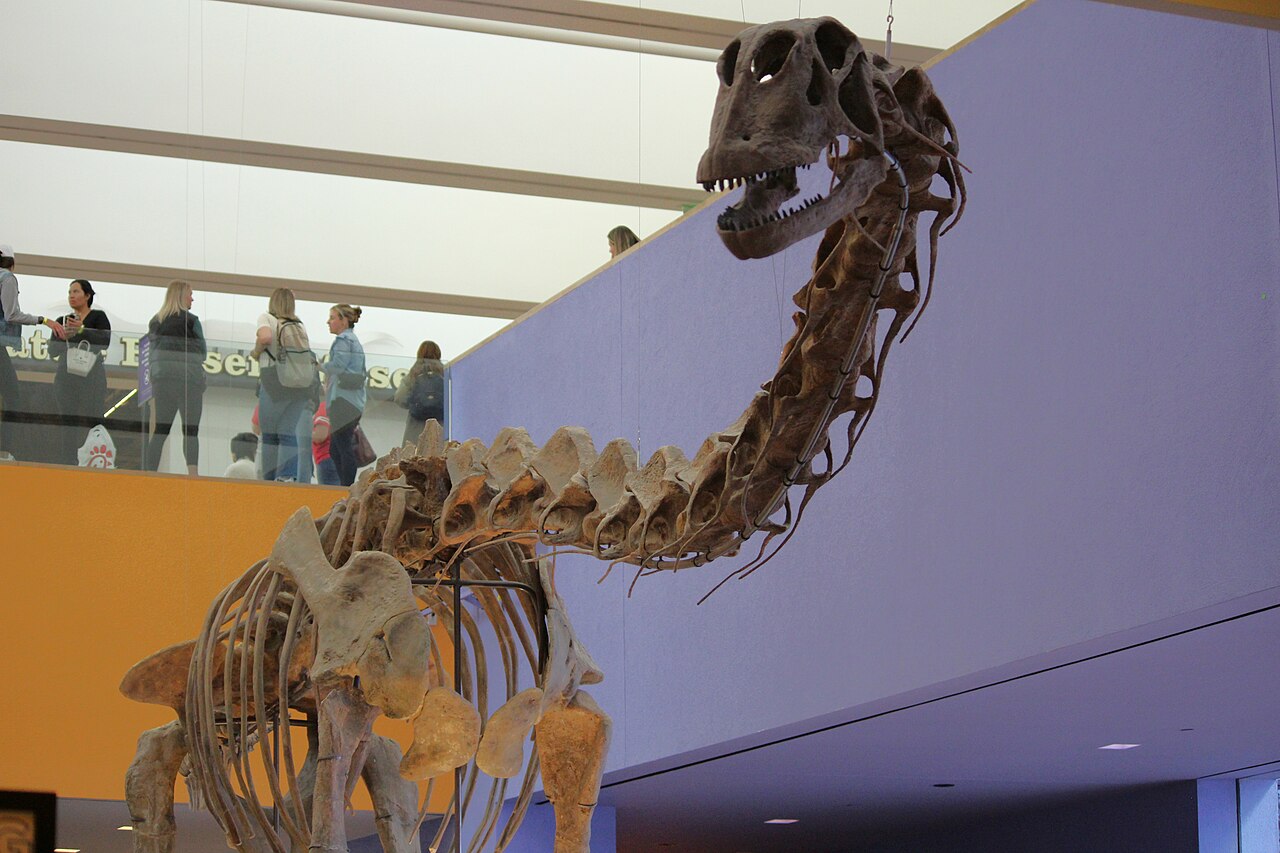
Sauroposeidon is a genus of large sauropod dinosaur first described from fossils found in Oklahoma. It lived in the Early Cretaceous and is celebrated for its extremely long neck vertebrae. Although known from relatively few bones, Sauroposeidon is often cited as one of the tallest dinosaurs yet recognized.
Image gallery
10 Images




Characteristics
Only partial remains—mainly several cervical (neck) vertebrae—are securely assigned to the genus. These vertebrae are elongated and show extensive internal pneumatic cavities, which are air-filled spaces that lightened the skeleton. No complete skull or full skeleton is known, so many size estimates are provisional and vary among researchers.
- Neck: very long cervical vertebrae with complex air sacs
- Pneumatic bones: reduced weight despite large size
- Known material: a small number of vertebrae and associated elements
Discovery and naming
Remains attributed to Sauroposeidon were discovered in the early 1990s and formally named in the late 1990s. The genus name combines "sauro-" (lizard) with "Poseidon," a reference to the Greek god often associated with earthquakes; the name evokes the animal's great size. Early specimens were at times misidentified or overlooked, and it took careful study to recognize their sauropod affinities.
Classification and significance
Most analyses place Sauroposeidon close to brachiosaurid sauropods, a group characterized by long forelimbs and elevated shoulders enabling a high browsing posture. Its presence in North America during the Early Cretaceous provides evidence that large, long-necked sauropods persisted on the continent after the Jurassic, filling ecological roles as high-browsing herbivores.
Notable facts: Because interpretations rely on limited material, estimates of overall length, mass, and neck height vary. Paleontologists continue to compare the vertebrae with better-known genera to refine its place in sauropod evolution. For further reading about sauropod anatomy and research methods, see the linked resources above.
Related articles
Author
AlegsaOnline.com Sauroposeidon: the giant brachiosaur-like sauropod Leandro Alegsa
URL: https://en.alegsaonline.com/art/87576